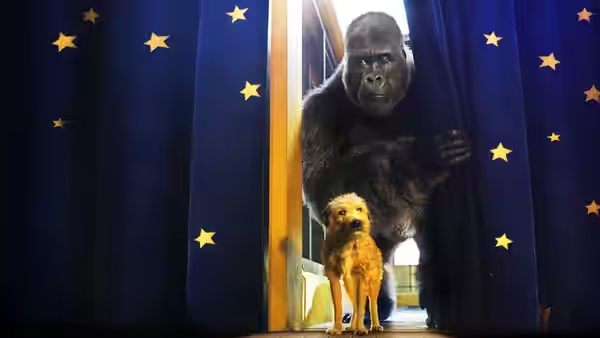
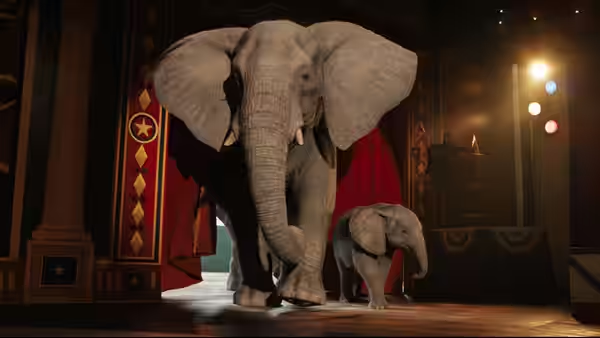
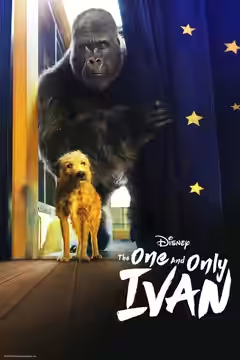
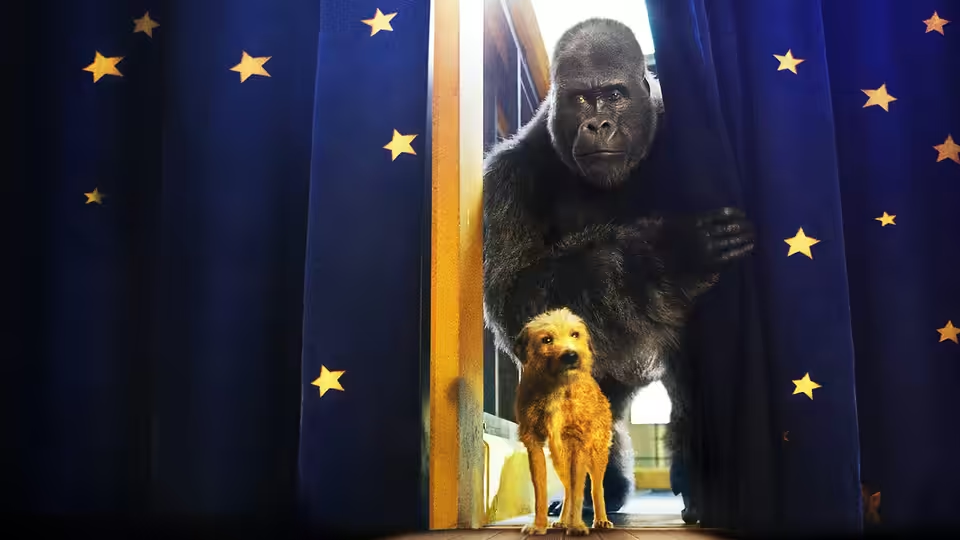
Ivan and Bob stand between star-patterned curtains at the circus
Film review

The One and Only Ivan

2020 · Directed by Thea Sharrock · 1h 33m

In a sentenceThe gorilla looks sad enough without the rest of the film joining in

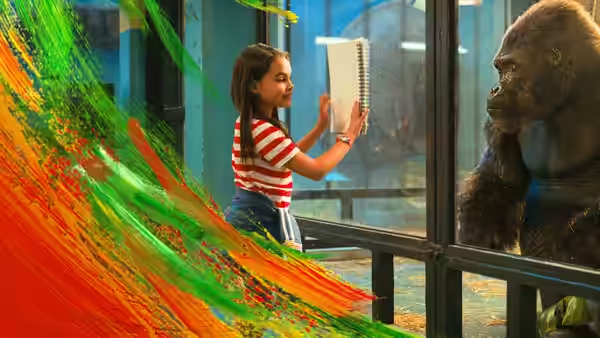
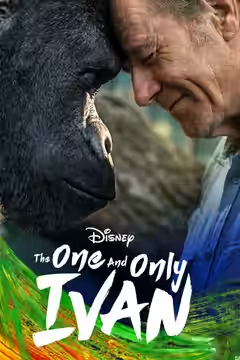
Ivan (voiced by Sam Rockwell) is a gorilla living in captivity, dependent on people for his care and unable to choose how he lives. Mack (Bryan Cranston), Julia (Ariana Greenblatt) and Ruby (voiced by Brooklynn Prince) are part of a story in which animals’ needs compete with human interests. Ivan’s circumstances make the restrictions of captivity difficult to ignore. The people involved can feel affection for the animals while also benefiting from keeping them captive, leaving Ivan’s welfare dependent on the judgement of those who control his life.

Plays from YouTube when you press play; nothing loads from them until then.

Fi1m review

Sam Rockwell gives The One and Only Ivan a sadness worth taking seriously. Thea Sharrock’s family drama is less convincing when it softens the conditions behind that sadness or hurries towards the next emotional cue.

Thea Sharrock’s The One and Only Ivan is a gentle family drama about the affection people can feel for animals they continue to exploit. It is decent, sometimes touching, and too keen to make that difficulty manageable. Mike White’s screenplay allows sadness into the story without giving the reasons for it quite enough scrutiny. There is enough here to reward anyone drawn to the animal performances, though the writing repeatedly reassures us when it might usefully make us uncomfortable.

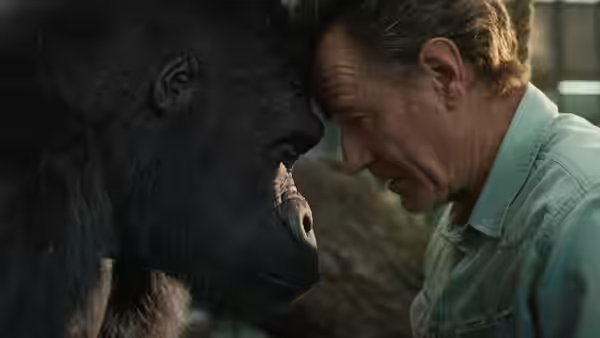
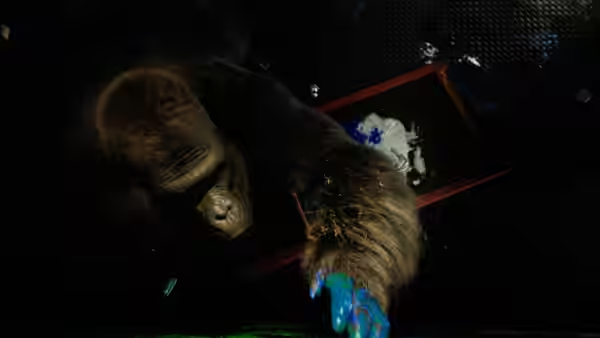
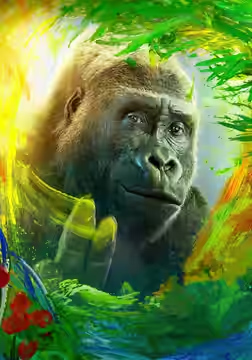
Sam Rockwell’s voice performance as Ivan does much of the useful work. He gives the gorilla personality without making every moment an invitation to applaud the actor behind it. The digitally animated face contributes something the dialogue cannot quite supply: an unhappiness that needs no explanation to be understood. We were moved by that face, because Ivan’s sadness remains readable without his having to announce it. The film is more affecting when it allows that expression to hold our attention.

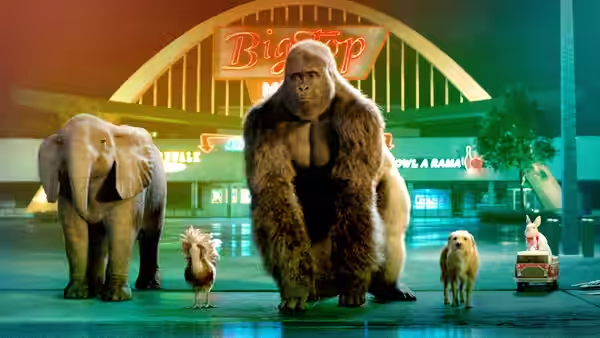
The effects work because the animals retain recognisable animal movement while carrying feelings an audience can read. Florian Ballhaus’s cinematography and Molly Hughes’s production design are less persuasive in making their surroundings feel restrictive. The images accommodate the animals comfortably, which becomes a problem when their comfort is precisely what the story asks us to question. The treatment of captivity is too soft, and the physical world does little to challenge that softness.

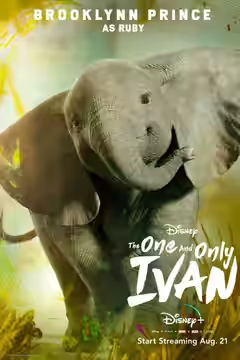
Bryan Cranston’s restrained performance as Mack helps avoid an easy division between lovable animals and plainly wicked people. That is worth attempting: a person can care about an animal while making its life worse. The trouble is that the film’s sympathy for the humans sometimes makes their responsibility seem less pressing. Brooklynn Prince brings sweetness to Ruby, and the voice casting generally gives the dialogue an ease that the larger emotional turns do not always have.

At 93 minutes, this should be a modestly scaled story with time enough to settle. Barney Pilling’s editing keeps it moving, but some emotional passages arrive before the relationships have acquired the weight required to support them. The film wants us to spend time considering the animals’ feelings, then becomes impatient to move us along. Important moments consequently depend heavily on the performers, whose work deserves more breathing space than it receives.

Craig Armstrong’s score contributes to the film’s difficulty with sentiment. We would have preferred less encouragement towards tears; the sadness in Ivan’s face already gives us enough to respond to. That complaint applies just as much to Mike White’s writing as to the music. The film keeps pressing an emotion after the animal performances have made it clear, and its gentler passages suggest a less insistent approach would have worked.

The willingness to admit melancholy into a family film is welcome. The animals’ unhappiness matters here, even if the treatment of their captivity stops short of examining it closely enough. Those interested in the expressive effects and the voice performances will find something to value, provided they can tolerate the reassurance around them. Families ready to discuss why a well-loved animal might still be unhappy will have more to talk about than the film is prepared to settle.

Critical consensus AI synthesised

62
Positive
5
Mixed
6
Negative
2
IndieWire
18 August 2020 · B · Kate Erbland
77

Erbland finds the film a smart, touching family feature that slips serious ideas into a children’s story. She praises the voice performances and visual effects, while noting the third act’s uneven pacing and shifting tone.

Read the full review →
Los Angeles Times
20 August 2020 · Katie Walsh
75*

Walsh finds the film sweet, effectively moving and emotionally grounded, despite its familiar Disney story. She especially praises the computer-generated animals’ expressive performances, which blend believable animal movement with human emotion.

Read the full review →
Variety
19 August 2020 · Owen Gleiberman
75*

Gleiberman finds the film familiar but unexpectedly soulful and moving, praising its quiet, old-fashioned storytelling. He singles out Ivan’s expressive digital-animated face for conveying the gorilla’s sadness.

Read the full review →
Screen Daily
21 August 2020 · Tim Grierson
64*

The accessible page identifies this as a review but does not reveal the critic’s verdict. No specific praise or complaint is available in the visible text.

Read the full review →
The New York Times
20 August 2020
64*

The page returned only a JavaScript and ad-blocker notice, so the critic’s verdict is unavailable. I cannot determine what the review praises or criticizes.

Read the full review →
Evening Standard
21 August 2020 · ★★★ · Charlotte O'Sullivan
60

O'Sullivan finds the film technically brilliant but says it could have been grittier. She praises its moving, unsettling ending, while noting that it is extremely sad.

Read the full review →

Straight answers AI written, from our review

Is The One and Only Ivan worth watching?
The One and Only Ivan is worth considering for families drawn to expressive animal animation and gentle drama; we score it 64 out of 100. Sam Rockwell’s voice performance and Ivan’s visibly unhappy face give it feeling, but the film softens its treatment of captivity and pushes too insistently for tears.
How long is The One and Only Ivan, and what is it rated?
The One and Only Ivan runs 1h 33m. It is a family and comedy film.
Where can I watch The One and Only Ivan in Iceland?
The One and Only Ivan is not on any streaming or rental service in Iceland at the moment. It is available in 17 other countries; change your country at the top of the page to see where. Availability is checked daily.
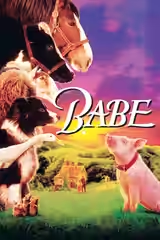
How does The One and Only Ivan compare to Babe?
The One and Only Ivan is a sadder, less assured family film than Babe, which we recommend for its firmer comic timing and better-earned sentiment. Both take their animals’ feelings seriously, but Ivan’s story offers too much reassurance about captivity; Babe makes more room for laughter without losing its tenderness.
What should I watch after The One and Only Ivan?
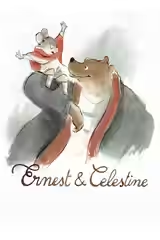
After The One and Only Ivan, try Babe (1995, Fi1m 88): Another animal finds a voice, with firmer comic timing and less reassurance. Then Ernest & Celestine (2012, Fi1m 84): A bear and a mouse make friendship feel worth breaking rules for; and Paddington (2014, Fi1m 84): An expressive digital creature meets human failings with greater comic precision.

Cast

If you liked this, try…

  1. Babe (1995, Fi1m 88)Another animal finds a voice, with firmer comic timing and less reassurance.

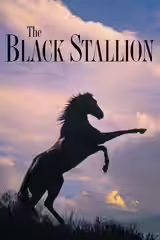
  2. The Black Stallion (1979) · not reviewed yetPatient images give the bond between child and animal room to develop.

  3. Ernest & Celestine (2012, Fi1m 84)A bear and a mouse make friendship feel worth breaking rules for.

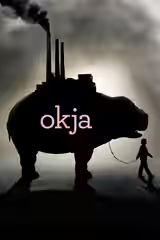
  4. Okja (2017) · not reviewed yetFor older viewers, a much less comforting story about loving captive animals.

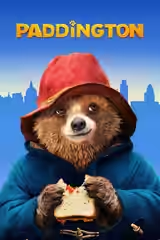
  5. Paddington (2014, Fi1m 84)An expressive digital creature meets human failings with greater comic precision.