Sam Rockwell gives The One and Only Ivan a sadness worth taking seriously. Thea Sharrock’s family drama is less convincing when it softens the conditions behind that sadness or hurries towards the next emotional cue.
Thea Sharrock’s The One and Only Ivan is a gentle family drama about the affection people can feel for animals they continue to exploit. It is decent, sometimes touching, and too keen to make that difficulty manageable. Mike White’s screenplay allows sadness into the story without giving the reasons for it quite enough scrutiny. There is enough here to reward anyone drawn to the animal performances, though the writing repeatedly reassures us when it might usefully make us uncomfortable.
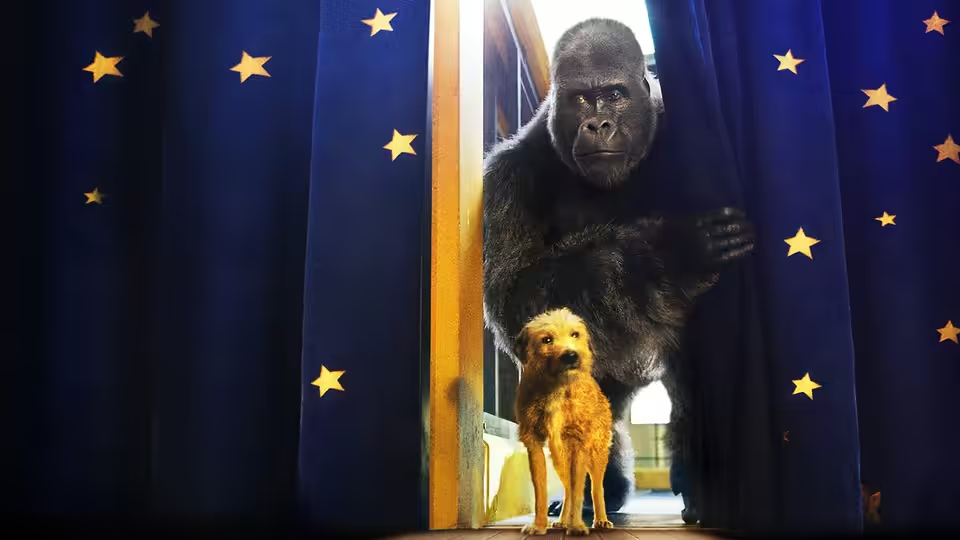
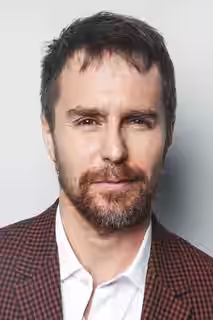
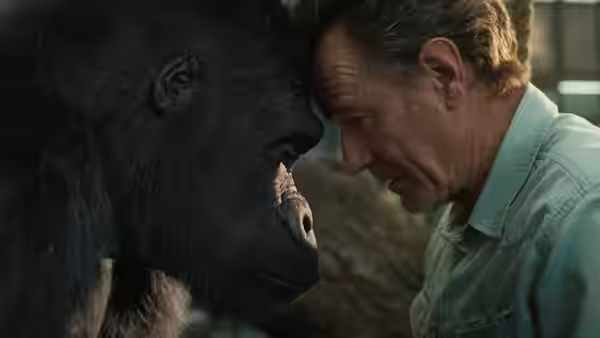
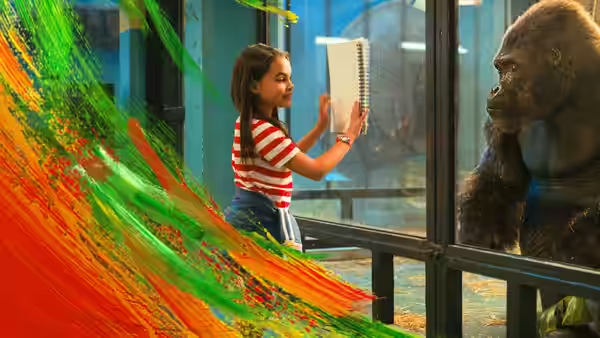
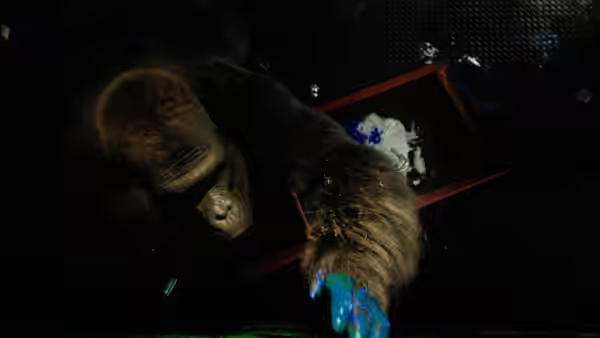
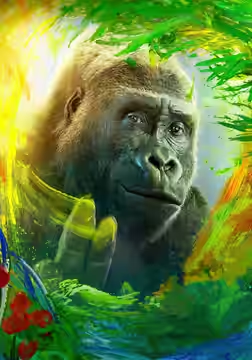
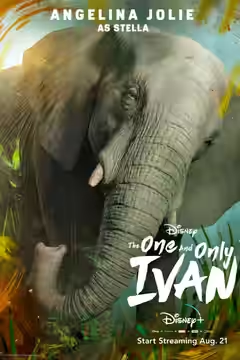
Sam Rockwell’s voice performance as Ivan does much of the useful work. He gives the gorilla personality without making every moment an invitation to applaud the actor behind it. The digitally animated face contributes something the dialogue cannot quite supply: an unhappiness that needs no explanation to be understood. We were moved by that face, because Ivan’s sadness remains readable without his having to announce it. The film is more affecting when it allows that expression to hold our attention.
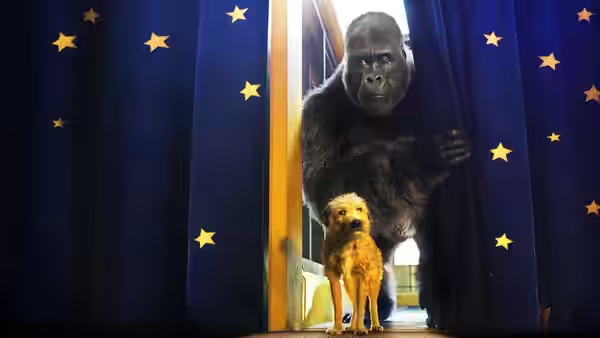
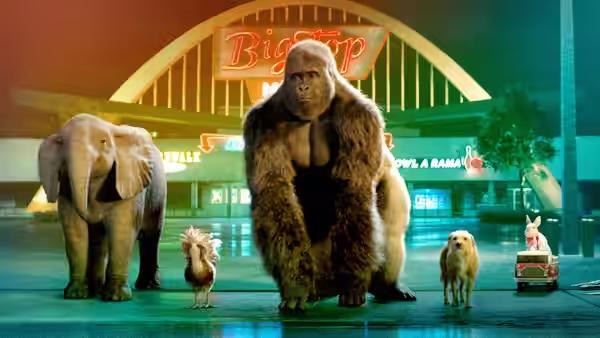
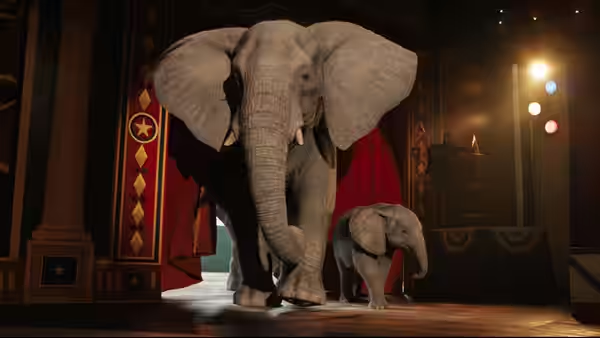
The effects work because the animals retain recognisable animal movement while carrying feelings an audience can read. Florian Ballhaus’s cinematography and Molly Hughes’s production design are less persuasive in making their surroundings feel restrictive. The images accommodate the animals comfortably, which becomes a problem when their comfort is precisely what the story asks us to question. The treatment of captivity is too soft, and the physical world does little to challenge that softness.
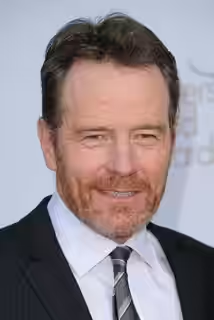
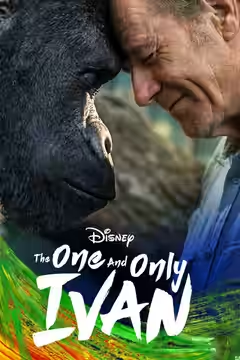
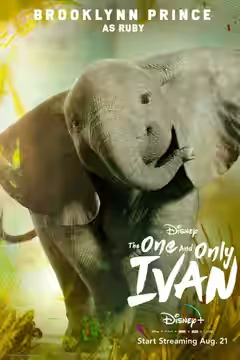
Bryan Cranston’s restrained performance as Mack helps avoid an easy division between lovable animals and plainly wicked people. That is worth attempting: a person can care about an animal while making its life worse. The trouble is that the film’s sympathy for the humans sometimes makes their responsibility seem less pressing. Brooklynn Prince brings sweetness to Ruby, and the voice casting generally gives the dialogue an ease that the larger emotional turns do not always have.
At 93 minutes, this should be a modestly scaled story with time enough to settle. Barney Pilling’s editing keeps it moving, but some emotional passages arrive before the relationships have acquired the weight required to support them. The film wants us to spend time considering the animals’ feelings, then becomes impatient to move us along. Important moments consequently depend heavily on the performers, whose work deserves more breathing space than it receives.
Craig Armstrong’s score contributes to the film’s difficulty with sentiment. We would have preferred less encouragement towards tears; the sadness in Ivan’s face already gives us enough to respond to. That complaint applies just as much to Mike White’s writing as to the music. The film keeps pressing an emotion after the animal performances have made it clear, and its gentler passages suggest a less insistent approach would have worked.
The willingness to admit melancholy into a family film is welcome. The animals’ unhappiness matters here, even if the treatment of their captivity stops short of examining it closely enough. Those interested in the expressive effects and the voice performances will find something to value, provided they can tolerate the reassurance around them. Families ready to discuss why a well-loved animal might still be unhappy will have more to talk about than the film is prepared to settle.