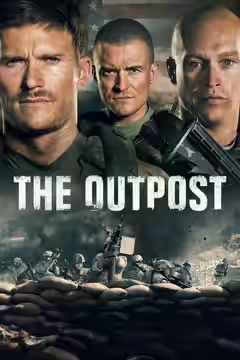
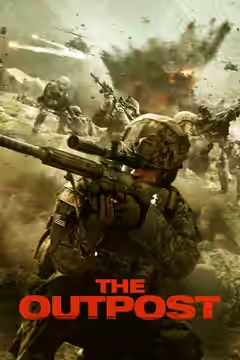
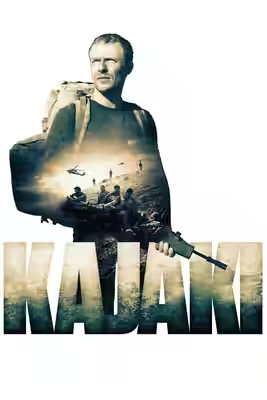
Rod Lurie’s account of the men defending an indefensible outpost is thinly written for an hour and then, once the attack comes, as frightening and as clearly staged as recent war films get. Caleb Landry Jones is the reason to care about anyone in it.
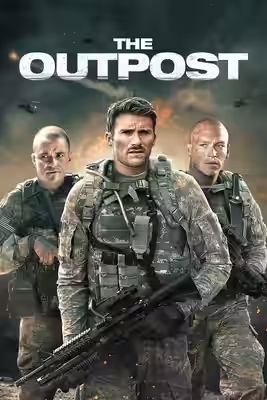
Rod Lurie’s film is about Combat Outpost Keating, an American base built at the bottom of a valley in eastern Afghanistan with mountains on three sides, and about what happened to it in October 2009. The screenplay, by Paul Tamasy and Eric Johnson, is taken from Jake Tapper’s book of the same name. The film has one great subject, the attack, and it takes an hour to reach it. That hour is ordinary. The attack is not, and it is why we recommend the film, with a reservation we will come to.
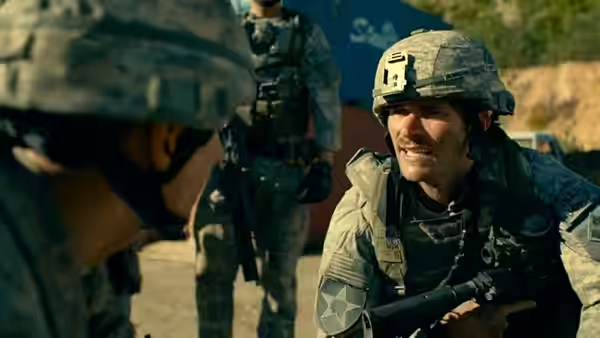
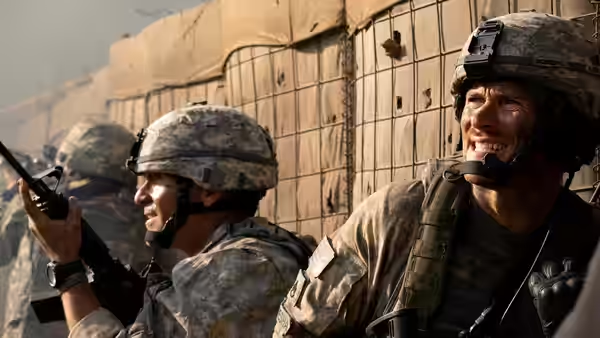
The waiting is handled in routines. Lurie shows us the mortar pit, the latrines, the meetings with elders at which promises are made and translated and half believed, and the daily potshots from the ridge that the men have learned to treat as weather. Orlando Bloom’s Keating runs the place with care and a weariness he keeps from his men, and he tells them the outpost will be closed soon, which is the line the whole film turns on. Scott Eastwood’s Romesha arrives, looks at the mountains and says what we have been thinking. Tamasy and Johnson introduce the rest of the unit by the surnames on their helmets, give each man a joke or a wife on a video call, and move on. When the shooting starts we could not have told you much about Gallegos (Jacob Scipio) or Kirk (Jack Kesy) beyond their names, and that costs the film later.
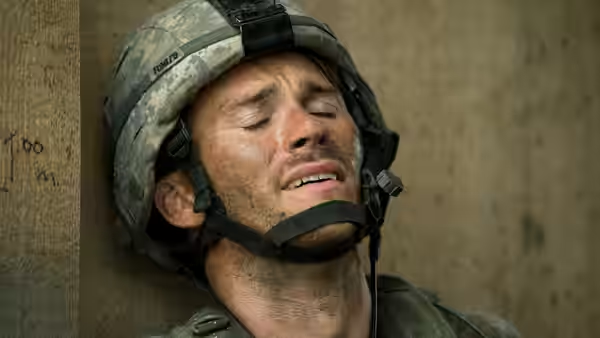
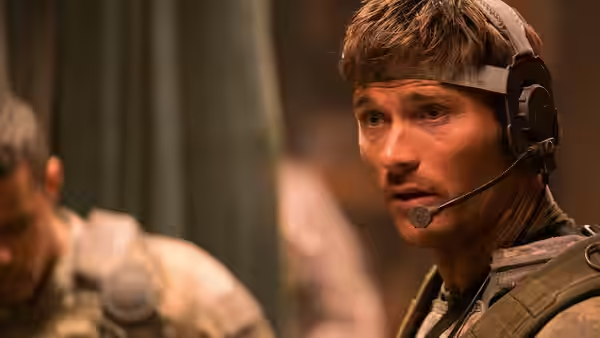
The exception is Carter. Caleb Landry Jones plays him as a man the others do not like and who does not blame them for it: twitchy, literal, slow to take an order and quick to notice something nobody asked him to notice. He is the only person the first hour builds, and when the film needs a face to hold in the second it has his. Eastwood is steady and square and sounds, in the quieter lines, very like his father, which is not a complaint; the part asks for a sergeant who will do the sensible thing under fire and he does it. It asks for nothing more.
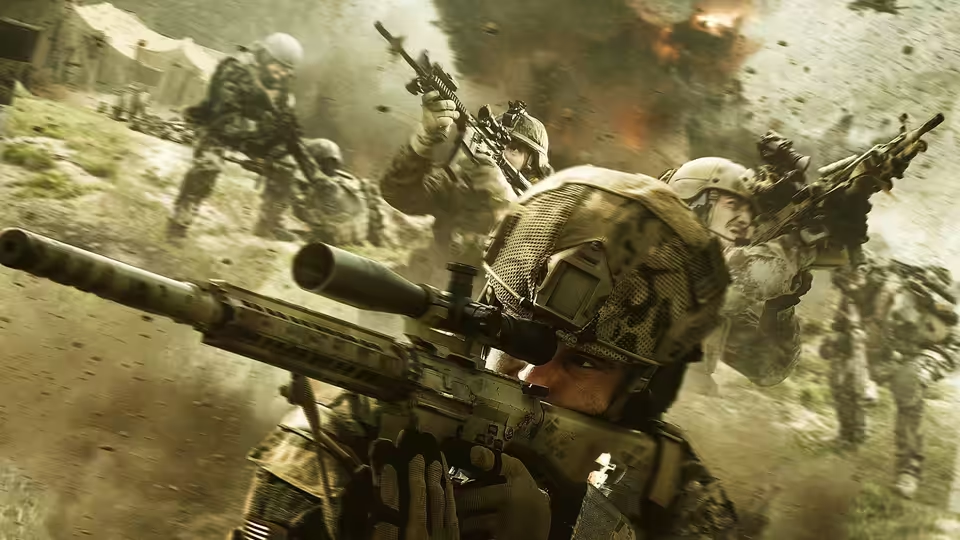
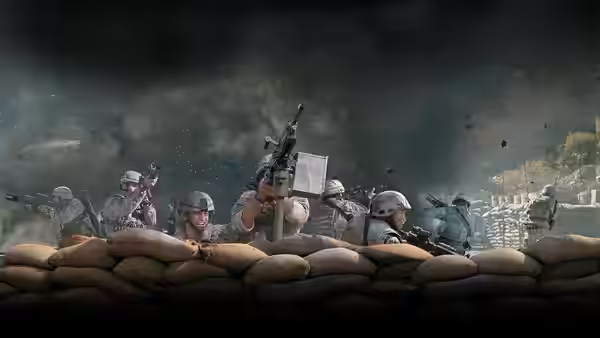
Lorenzo Senatore shoots the camp in long handheld takes, following a man from the barracks to the mortar pit and back, so that by the time the geography matters we have walked it with him. When the attack comes the camera stays at shoulder height and inside the wire. We barely see the enemy; we see the hillsides spitting and the dust kicking off the sandbags, and we learn where the fire is coming from by watching which way the men flinch. Michael J. Duthie cuts very little within these takes, so minutes pass as minutes. P. Erik Carlson has built the outpost out of plywood, sandbags and earth-filled wire baskets, and every flimsy thing about it reads on screen. Larry Groupé’s score mostly stays out of the way and lets the gunfire do the work.
We were frightened. Not tense, not impressed, but frightened in the way war films rarely manage, because the camera never gave us a vantage the men did not have and the film had already taught us how far it is from the barracks to the ammunition and how open the ground between them is. A run of forty yards became unbearable. Then a second feeling arrived, anger at whoever put these men at the bottom of a bowl, and the film declined to share it.
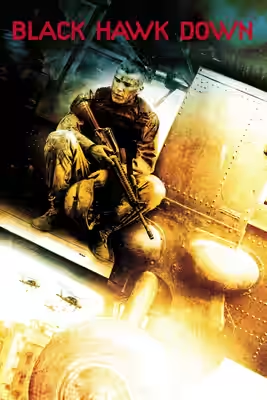
That is the reservation. The outpost’s purpose is dealt with in a line or two and the decision to leave it open until it could be closed is nobody’s in particular. Lurie has chosen to stay with the men and to leave the men in offices out of frame, and we understand the choice; it is their film, and it keeps faith with them. It also leaves the film smaller than its subject. Black Hawk Down (2001) is the obvious comparison, and this is cheaper and narrower and, in the battle, far better at telling you where everyone is and why it matters.
See it, and see it with the sound up, because the sound is where half the staging lives. It runs 123 minutes and carries a 15 certificate, and the second hour earns every minute of both.