Victor Sjöström’s ghost story remains frightening because its effects make human suffering feel close. The double exposures and his patient performance earn a strong recommendation, though the warnings about alcohol can become too insistent.
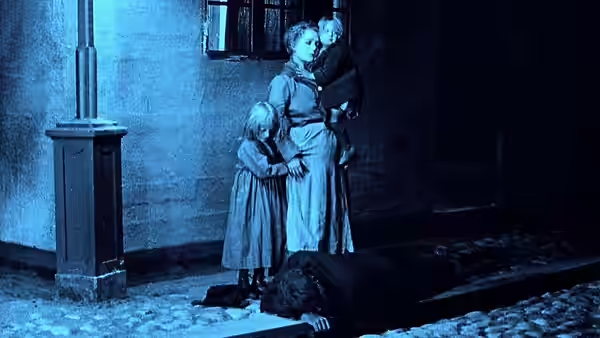
The Phantom Carriage is a frightening ghost story whose moral instruction sometimes gets too loud, and we recommend it with that reservation. Victor Sjöström writes, directs and plays David Holm, adapting a novel by Selma Lagerlöf into a film about drinking, suffering and the possibility of change. It takes that possibility seriously, including the uncomfortable question of what other people are expected to endure while someone improves. The supernatural gives that question a force that a straightforward cautionary drama might struggle to find.
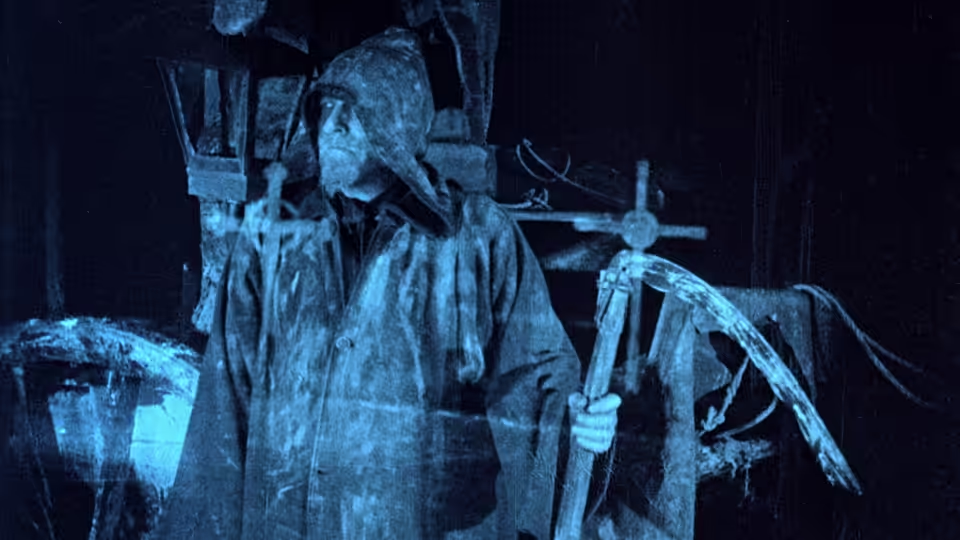
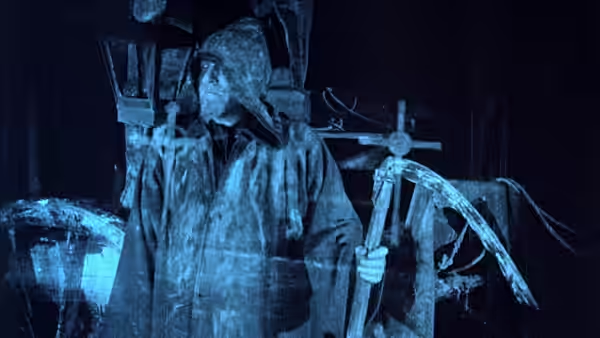
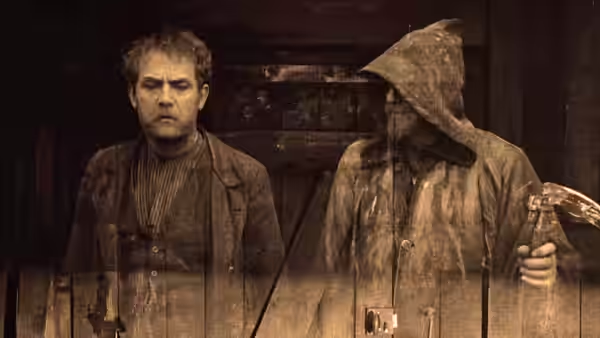
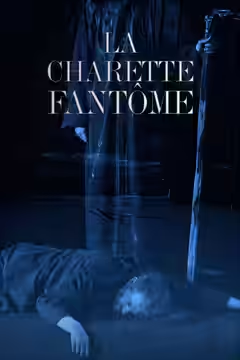
The double exposures are the first reason to watch, and their effectiveness does not depend on allowances for the film’s age. A ghost can be visible without becoming solid, so the eye has to accept a figure and the space seen through it at once. We were frightened by those transparent presences; being able to see through them does nothing to make them feel safely distant. The effect is simple enough to understand, but understanding how it works does little to make it comfortable.
Julius Jaenzon’s cinematography gives these overlapping images the clarity they need. The photography remains crisp enough for the ghostly layer to register without making the whole image dissolve into a vague blur. We keep looking between the transparent figure and what remains visible behind it, trying to separate what the camera has joined. This is painstaking photographic work, and its success lies in how quickly we stop inspecting the technique and start accepting the disturbing thing it shows us.
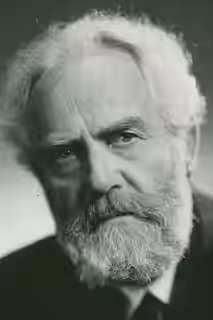
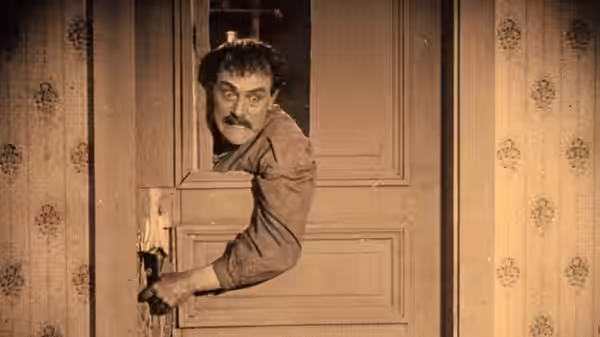
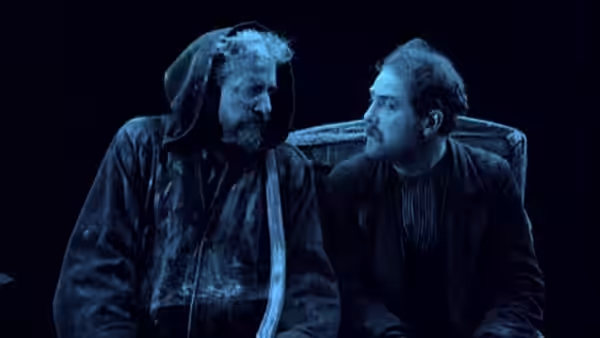
Victor Sjöström’s performance holds the attention just as firmly. His restraint gives the growing emotion somewhere to go, and the intensity accumulates without every change having to be announced at full strength. There are silent-era stylisations, but his acting is subtle enough to make the character’s distress feel personal. We can follow a human being through the moral lesson because the performance allows him to be difficult, uncomfortable company, even when the writing presses us towards a particular judgement.
The layered storytelling is another reason the film holds our attention across its 108 minutes. It asks us to reconsider what we have understood as the narrative shifts, giving the supernatural material more emotional weight than a simple succession of apparitions would provide. Those changes demand concentration, but following them gives us more to think about than the mechanics of a haunting. The film trusts us to keep up with its storytelling more readily than it trusts us to grasp its warning about drink.
That warning is where the writing becomes less persuasive. The treatment of alcoholism can grow so emphatic that behaviour begins to feel arranged to secure our agreement, and the distress needs little help making its point. Its faith in personal reform also asks for more confidence than we can always give it, considering the suffering involved. These reservations matter, although the photographic invention and the seriousness of the central performance keep the film from becoming merely a lecture.
As supernatural horror, it gives the apparitions a firm purpose by keeping human cruelty and suffering close at hand. There is pleasure in the technical ingenuity, but little comfort in what it serves. The heavy emphasis will trouble some viewers more than the shifts in the narrative, and we would not dismiss that objection as impatience with an old film. Give it a quiet evening and enough attention to follow those shifts; the ghosts can still make themselves felt.