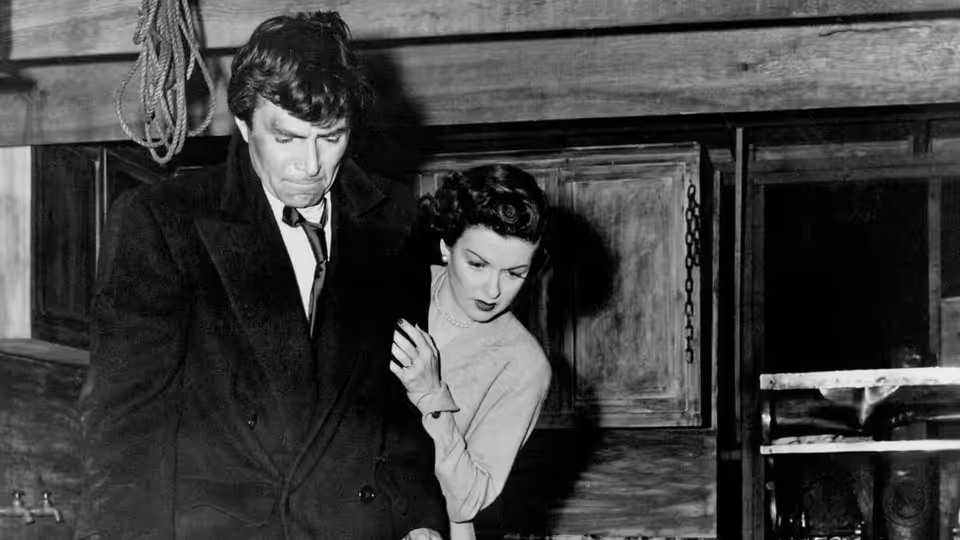
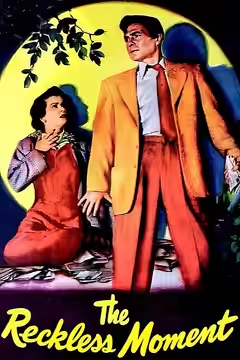
Max Ophüls keeps this blackmail thriller tense and Joan Bennett’s distress unforced. James Mason is a persuasive threat, but the film’s coolness keeps us at a distance when it needs us to care.
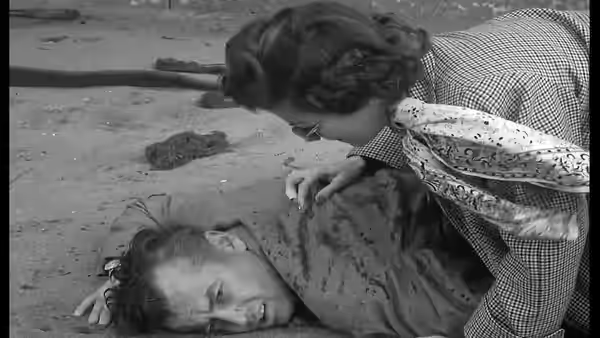
The Reckless Moment is an engaging thriller with an emotional chill it never quite overcomes. Max Ophüls puts a worried mother at the centre of a blackmail story and declines to make her distress a spectacle. That is a sound choice, particularly with Joan Bennett playing Lucia Harper, but the restraint also limits how much we feel for anyone beyond her. The suspense holds our attention even when the people struggling through it seem remote.
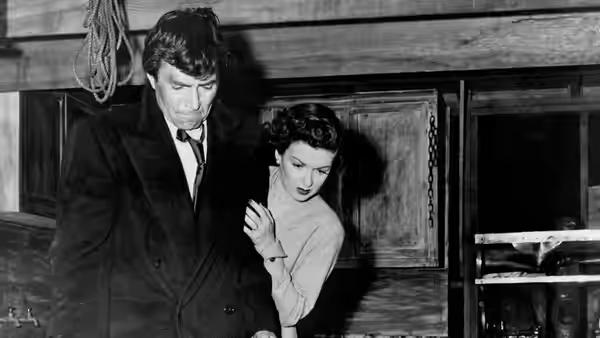
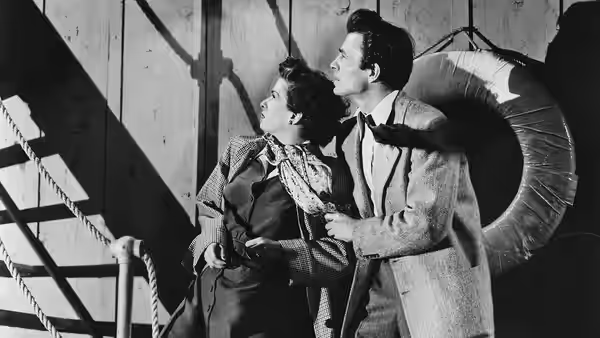
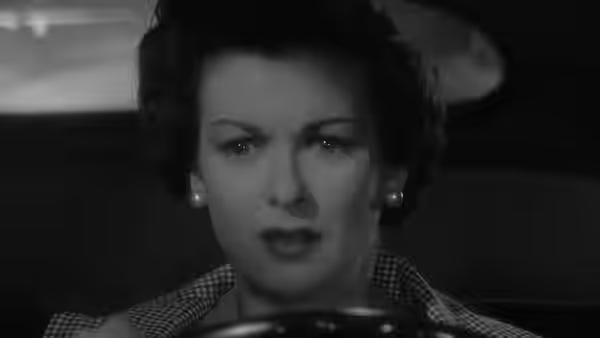
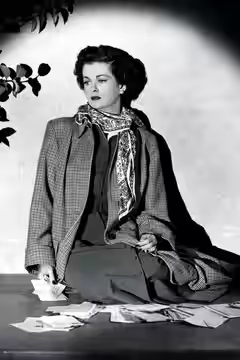
Joan Bennett gives the film its strongest reason to keep watching. We were troubled by her efforts to remain composed under the blackmailer’s pressure; she makes that effort look tiring without advertising the exhaustion. The ordinary responsibility of being a mother becomes something that cannot be set down while a more pressing problem is dealt with. Her performance needs no grand display of suffering, and the director is right to leave it contained.
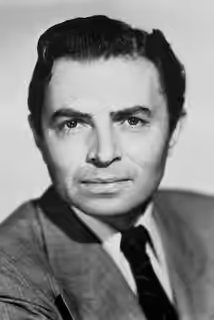
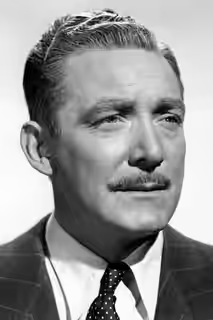
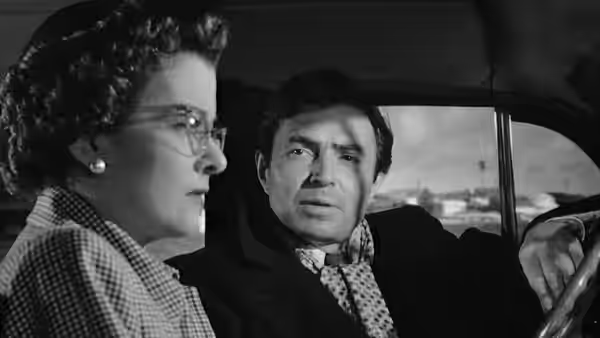
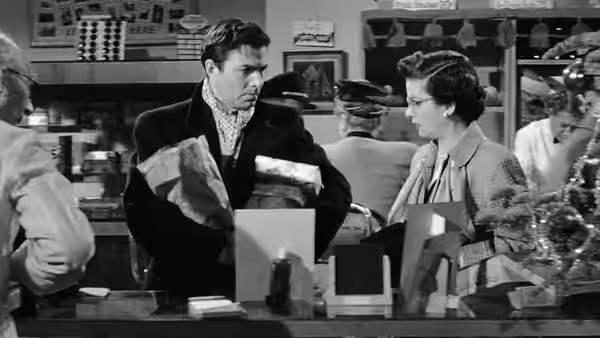
James Mason’s Martin Donnelly provides the necessary threat without making the character merely unpleasant company. His smoothness is unsettling because it encourages us to listen before remembering why the woman facing him has little choice. The performance is persuasive enough to expose a weakness elsewhere: the film cannot always make its other characters equally interesting. When these two actors have our attention, however, the business of blackmail needs little embellishment.
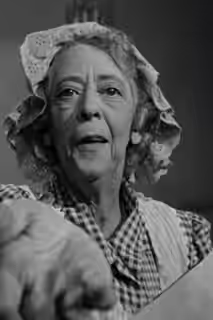
The screenplay by Robert Soderberg and Henry Garson supplies absorbing complications, but its matter-of-fact handling can make the people seem secondary to their predicament. Geraldine Brooks, as Bea Harper, has less opportunity to register with the force of the central pair. We can understand the pressure on the mother without feeling equally close to everyone affected by it. The writing relies heavily on our concern for her to carry us through the surrounding trouble.
Burnett Guffey’s cinematography suits the restraint, giving the actors room to hold our attention without making the atmosphere feel insistent. That works particularly well for a performance as controlled as Joan Bennett’s, where additional emphasis would be unwelcome. Gene Havlick’s editing gives the complications enough room to register without making this 82-minute film feel hurried. The economy is welcome, although a little more time spent making the secondary characters matter would not have hurt.
Hans J. Salter’s music helps the suspense along, though it does little to soften the film’s emotional chill. By the standards of a crime thriller, the steady pressure and threatening central performance are substantial virtues. The difficulty comes when apprehension is expected to do all the work of sympathy. We remain alert to what might happen without always feeling that we know the people to whom it might happen.
This is worth considering for an evening of restrained crime drama, particularly when patient acting is more appealing than a succession of shocks. Max Ophüls trusts the situation enough not to force its unpleasantness upon us, and that confidence deserves some patience in return. The caveat is that the distance can become wearing rather than intriguing. Watch it for Joan Bennett, whose anxious composure gives us something human to hold on to.