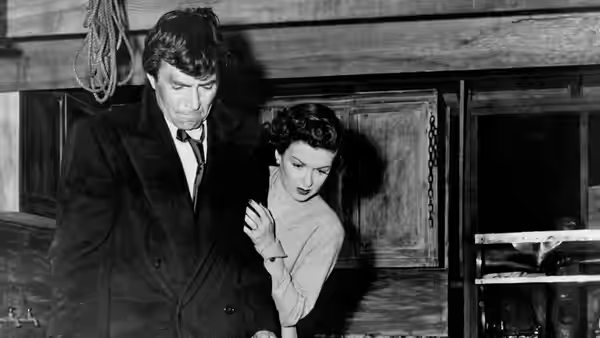
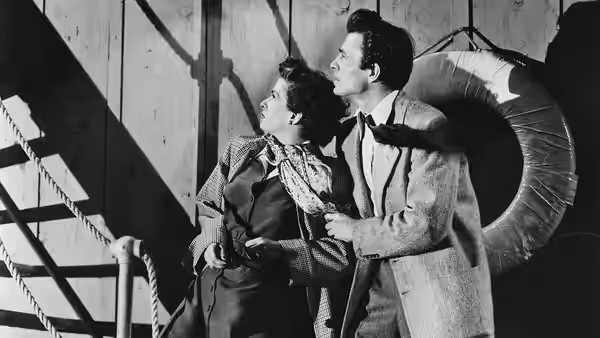
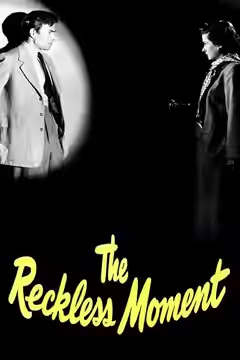
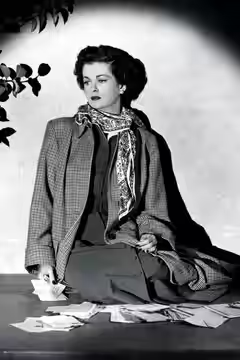
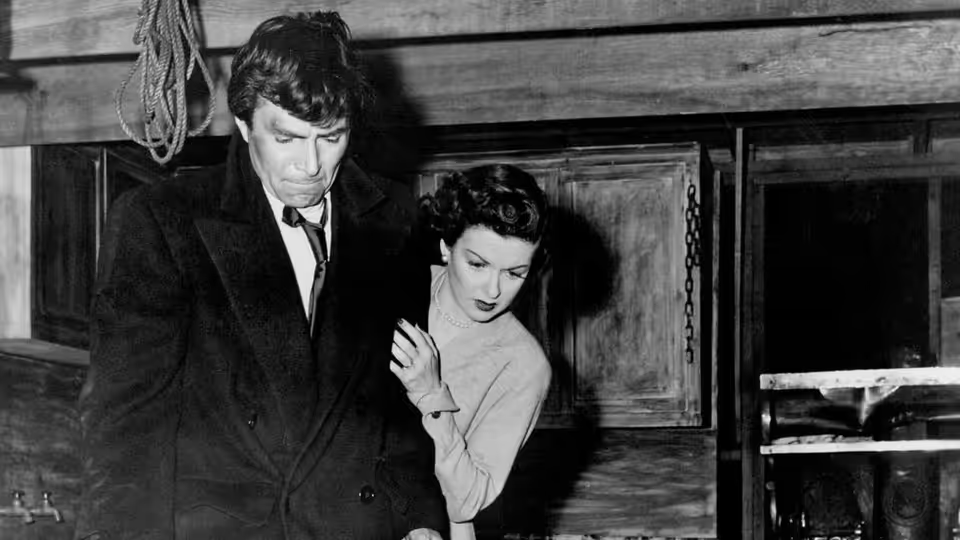
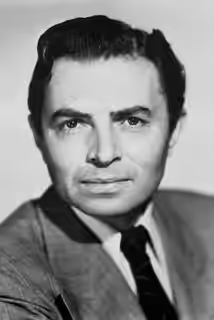
Martin Donnelly (James Mason) stands with Lucia Harper (Joan Bennett) in a room
Film review

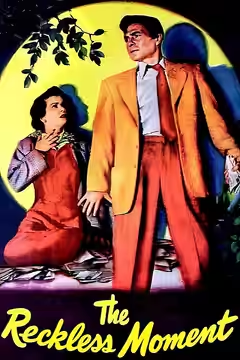
The Reckless Moment

1949 · Directed by Max Ophüls · 1h 22m

In a sentenceJames Mason is the sort of blackmailer who makes refusing him sound impolite

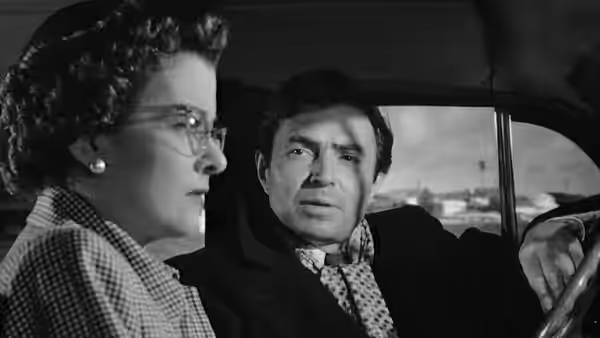
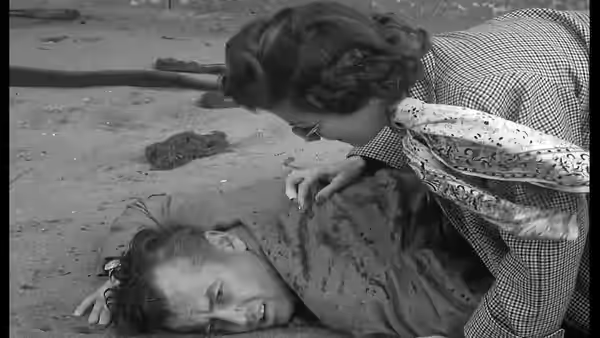
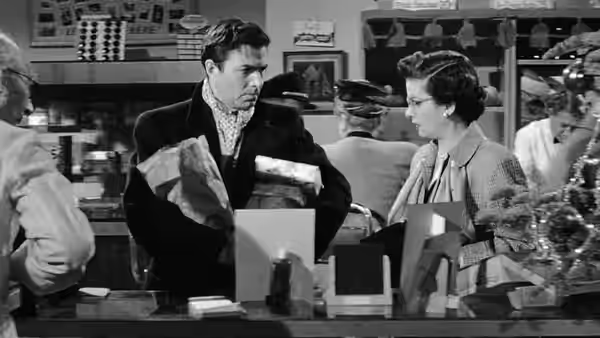
Lucia Harper (Joan Bennett), a mother caught in a case of murder and blackmail, faces demands from Martin Donnelly (James Mason). She has a family to consider as well as a blackmailer to deal with, and Donnelly’s smooth manner offers little reassurance. Bea Harper (Geraldine Brooks) and Ted Darby (Shepperd Strudwick) are among the people involved in the trouble. Lucia must decide how to respond to Donnelly without making her own position worse. His demands leave her trying to manage criminal threats alongside the responsibilities of motherhood.

Fi1m review

Max Ophüls keeps this blackmail thriller tense and Joan Bennett’s distress unforced. James Mason is a persuasive threat, but the film’s coolness keeps us at a distance when it needs us to care.

The Reckless Moment is an engaging thriller with an emotional chill it never quite overcomes. Max Ophüls puts a worried mother at the centre of a blackmail story and declines to make her distress a spectacle. That is a sound choice, particularly with Joan Bennett playing Lucia Harper, but the restraint also limits how much we feel for anyone beyond her. The suspense holds our attention even when the people struggling through it seem remote.

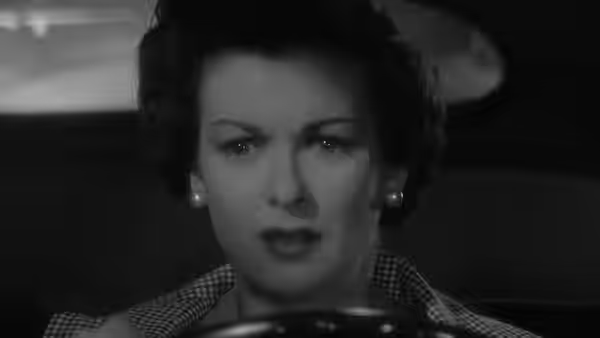
Joan Bennett gives the film its strongest reason to keep watching. We were troubled by her efforts to remain composed under the blackmailer’s pressure; she makes that effort look tiring without advertising the exhaustion. The ordinary responsibility of being a mother becomes something that cannot be set down while a more pressing problem is dealt with. Her performance needs no grand display of suffering, and the director is right to leave it contained.

James Mason’s Martin Donnelly provides the necessary threat without making the character merely unpleasant company. His smoothness is unsettling because it encourages us to listen before remembering why the woman facing him has little choice. The performance is persuasive enough to expose a weakness elsewhere: the film cannot always make its other characters equally interesting. When these two actors have our attention, however, the business of blackmail needs little embellishment.

The screenplay by Robert Soderberg and Henry Garson supplies absorbing complications, but its matter-of-fact handling can make the people seem secondary to their predicament. Geraldine Brooks, as Bea Harper, has less opportunity to register with the force of the central pair. We can understand the pressure on the mother without feeling equally close to everyone affected by it. The writing relies heavily on our concern for her to carry us through the surrounding trouble.

Burnett Guffey’s cinematography suits the restraint, giving the actors room to hold our attention without making the atmosphere feel insistent. That works particularly well for a performance as controlled as Joan Bennett’s, where additional emphasis would be unwelcome. Gene Havlick’s editing gives the complications enough room to register without making this 82-minute film feel hurried. The economy is welcome, although a little more time spent making the secondary characters matter would not have hurt.

Hans J. Salter’s music helps the suspense along, though it does little to soften the film’s emotional chill. By the standards of a crime thriller, the steady pressure and threatening central performance are substantial virtues. The difficulty comes when apprehension is expected to do all the work of sympathy. We remain alert to what might happen without always feeling that we know the people to whom it might happen.

This is worth considering for an evening of restrained crime drama, particularly when patient acting is more appealing than a succession of shocks. Max Ophüls trusts the situation enough not to force its unpleasantness upon us, and that confidence deserves some patience in return. The caveat is that the distance can become wearing rather than intriguing. Watch it for Joan Bennett, whose anxious composure gives us something human to hold on to.
Critical consensus AI synthesised

61
Positive
0
Mixed
4
Negative
0
Time Out
· GA
64*

The available page information does not reveal the critic’s verdict. It describes the blackmail premise but gives no specific praise or complaint.

Read the full review →
Radio Times
★★★ · David Parkinson
60

Parkinson describes Ophüls’s direction as cool and detached, with the film focused on Joan Bennett’s anxious mother. That restraint lets Bennett suffer without histrionics, though the available review text cuts off before stating its full verdict.

Read the full review →
The Guardian
1 July 2006 · Paul Howlett
60*

Howlett presents it as a knotty, engaging tale of murder and blackmail. He singles out James Mason’s smooth, threatening turn as the blackmailer who falls for the mother.

Read the full review →
Variety
31 December 1948 · Variety Staff
60*

The review finds the melodrama suspenseful but says its matter-of-fact approach leaves little warmth for the characters. It praises James Mason’s performance and notes the production’s authentic locations.

Read the full review →

Straight answers AI written, from our review

Is The Reckless Moment worth watching?
The Reckless Moment is worth considering for patient crime-drama viewers, particularly for Joan Bennett’s anxious composure and James Mason’s smooth threat; we score it 68 out of 100. The blackmail story sustains its tension across 82 minutes, but we find its emotional distance wearing and its secondary characters less absorbing than the central pair.
How long is The Reckless Moment, and what is it rated?
The Reckless Moment runs 1h 22m. It is a drama and thriller film.
Where can I watch The Reckless Moment in Ireland?
The Reckless Moment is not on any streaming or rental service in Ireland at the moment. It is available in 2 other countries; change your country at the top of the page to see where. Availability is checked daily.
How violent or frightening is The Reckless Moment, and is it suitable for children?
The Reckless Moment has no UK certificate supplied and is listed as NR in the US, so those labels offer no clear age guidance for children. Its murder-and-blackmail story creates sustained pressure through threats and a mother’s distress rather than a succession of shocks; we would not assume it is suitable for younger children, and cannot establish how graphic any violence is.
How does The Reckless Moment compare to Mildred Pierce?
The Reckless Moment is the cooler, more restrained crime thriller; we recommend Mildred Pierce more strongly for its sharp maternal melodrama and Joan Crawford’s commanding central performance. Both concern mothers facing trouble through family loyalty, but Joan Bennett’s contained distress and James Mason’s unsettling politeness make The Reckless Moment worth considering when quiet blackmail suspense is the preference.
What should I watch after The Reckless Moment?
After The Reckless Moment, try Mildred Pierce (1945, Fi1m 83): Another mother discovers how much trouble family loyalty can bring. Then A Separation (2011, Fi1m 93): Family responsibilities make every attempted solution create another difficult moral choice.

Cast

If you liked this, try…

  1. Mildred Pierce (1945, Fi1m 83)Another mother discovers how much trouble family loyalty can bring.

  2. The Housemaid (1960) · not on Fi1m yetDomestic routines become dangerous in a far less restrained household thriller.

  3. The Deep End (2001) · not on Fi1m yetAnother anxious mother faces criminal pressure, with family loyalty making everything harder.

  4. Le Corbeau (1943) · not on Fi1m yetAnonymous accusations turn respectability into a liability in a suspicious French town.

  5. A Separation (2011, Fi1m 93)Family responsibilities make every attempted solution create another difficult moral choice.