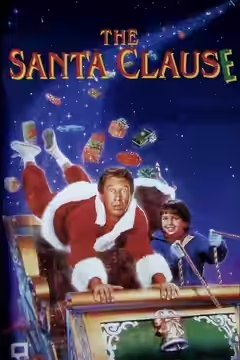
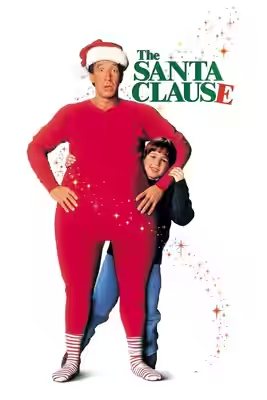
John Pasquin’s comedy has a sharp first hour and a soft second one, and Tim Allen’s sour, reluctant Santa is good enough to carry both. It is brisk, pleasant and not much more than that; the children will not mind.
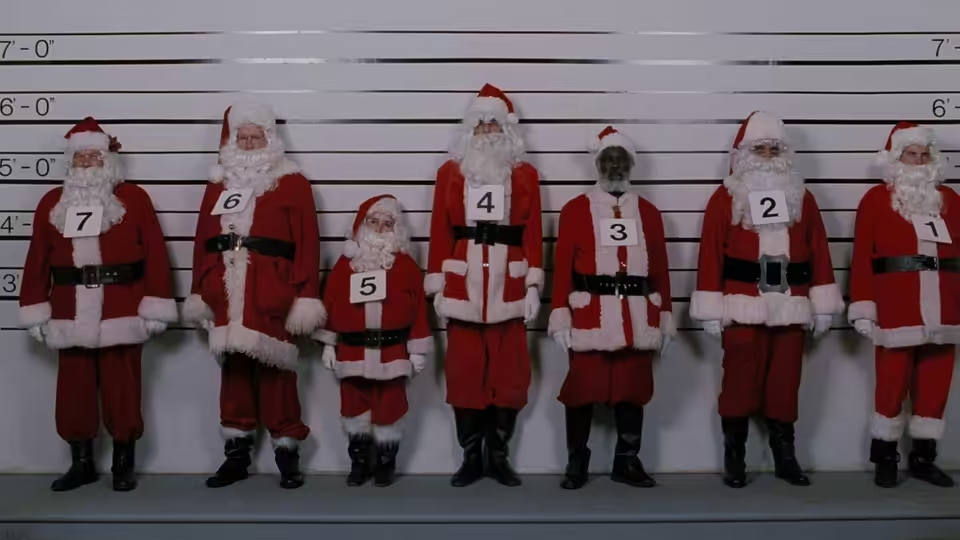
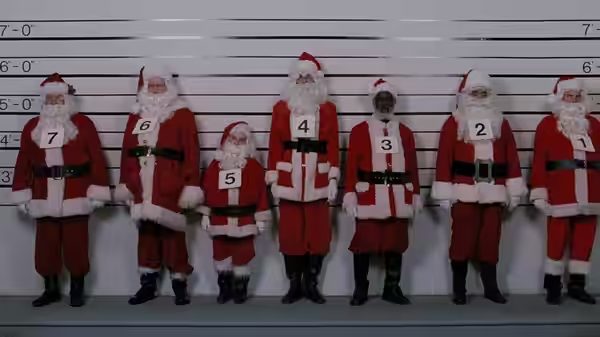
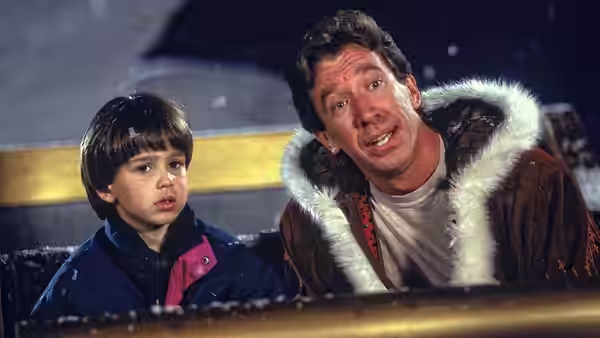
Scott Calvin (Tim Allen) has his son for Christmas Eve, one night in the year, and he is not good at it. Dinner at home fails, he takes Charlie (Eric Lloyd) to a diner where the waitress (Jayne Eastwood) has already served a dozen fathers like him that evening, and he goes to bed hoping it is over. Then a man falls off his roof. The screenplay, by Steve Rudnick and Leo Benvenuti, has one idea and it is a good one: that Santa Claus is not a person but a position, with terms and conditions, and that a man can accept it without having read the paperwork.
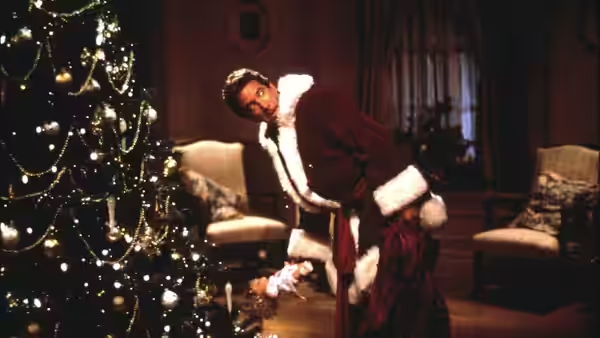
Allen carries the film, and he carries it because Scott does not want any of this. For an hour the comedy comes from a sour man being made kind against his will. He wakes with a beard, shaves it off, and it is back by lunch. He eats what is put in front of him and his suits stop fitting. Children queue up to sit on his knee wherever he sits down. Allen plays the irritation straight and lets the warmth come up underneath it, and the film is funniest when he is at his least pleasant. Peter Boyle, as his boss Mr. Whittle, has a couple of scenes and makes them count.
Carol Spier builds the North Pole as a workshop sunk under the ice, all varnished wood, brass pipes and sweet-shop colours, and Walt Lloyd lights it in a warm amber that makes the Calvins’ suburban house look like a waiting room by comparison. The elves are played by children, which is a better joke than it sounds, since they are centuries old and tired of adults. David Krumholtz’s Bernard is a harassed middle manager in a tunic, as fed up with the new Santa as Scott is with him, and Paige Tamada’s Judy makes cocoa and takes no nonsense. Carol Ramsey’s red suit is the right one, heavy and worn and slightly too big until it is not. Michael Convertino’s score is sleigh bells and strings and does what it is told. Larry Bock keeps the whole thing to 97 minutes, which is the right length and still feels longer in the second half.
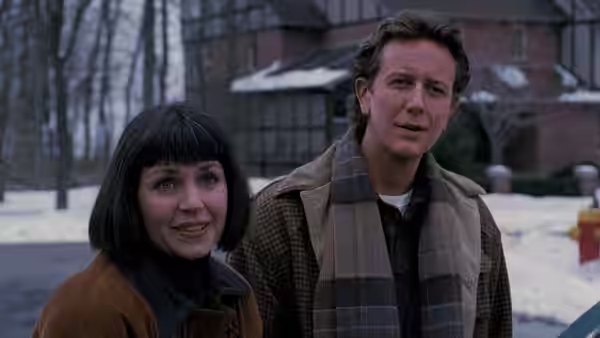
The trouble is back home. Laura (Wendy Crewson) and Neal (Judge Reinhold) decide that Charlie’s insistence that his father is Santa is a problem, and the film decides that Neal, a man in bad knitwear who says sensible things in a soft voice, is the villain. He is not a villain; he is an adult doing his job, and the film’s contempt for him, played as a running joke about jumpers, is the first sign of it going soft. The second is the plot. Once custody is on the table the comedy thins into sentiment, the dialogue starts telling us about belief, and the final stretch brings in gadgets and a chase the film had been doing perfectly well without. We will not describe it. We will say the sharpness leaves at about the same time.
We laughed in the diner, properly, and again at the beard. Somewhere past the hour mark we noticed we had stopped, and that we were waiting for the film to get on with it, and we were a little cross about it, because the opening had earned better than cocoa and a lecture. Then the last scene got to us anyway, which annoyed us further. The film knows exactly which button it is pressing and it presses it.
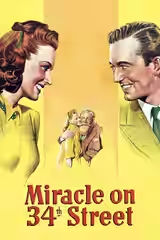
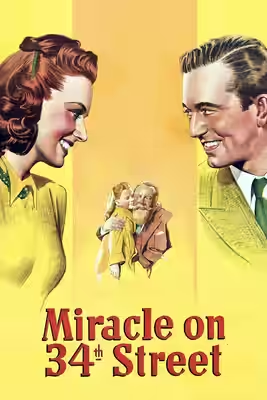
Miracle on 34th Street (1947) put a man who said he was Santa in front of a court and let the adults argue it out. Pasquin’s film settles the question in the first twenty minutes and spends the rest waiting for the adults to catch up, which is less interesting and easier on the children. That is the trade a U certificate asks for and it is the trade the film makes.
Put it on for the children, who will not notice the dip and will want the suit. Stay for Allen, for Krumholtz, and for the first hour, which is as sharp as a Christmas comedy with a U is allowed to be. If you drift off during the custody business you will not have missed much, and you will wake up in time for the sleigh.