Mohammad Rasoulof’s drama about a Tehran judge whose household cracks along with the country during the 2022 protests is as tense as any thriller for two hours, carried by Soheila Golestani. It is 167 minutes long, and we would have taken twenty of them away.
Mohammad Rasoulof shot The Seed of the Sacred Fig in secret and left Iran to avoid a prison sentence before it was first shown. It would be easy to review the circumstances instead, and we will try not to. It runs 167 minutes, most of them inside one Tehran flat, and for the first two hours it grips like a good thriller. The last hour is a different, lesser film, and we will come to that.
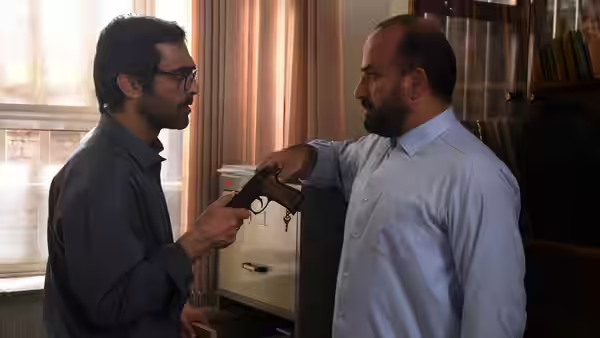
Rasoulof, who also wrote it, states the idea plainly. Iman (Missagh Zareh) is promoted to investigating judge and handed a gun. Outside, women are pulling off their headscarves and being shot at. Inside, his daughters Rezvan (Mahsa Rostami) and Sana (Setareh Maleki) are watching it happen on their phones. Iman’s colleague Ghaderi (Reza Akhlaghirad) tells him the job is to sign what he is given. He signs. Then the gun disappears, and we will say nothing about who has it, except that Iman’s first suspects are the three women he lives with.
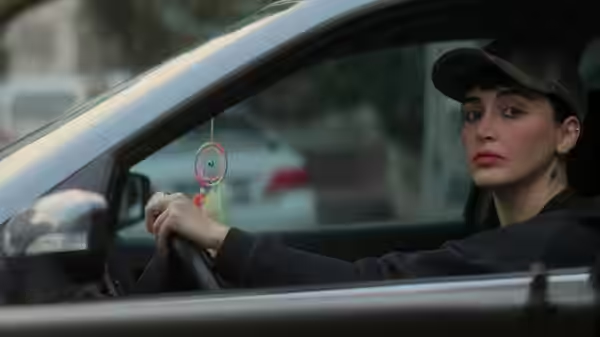
Soheila Golestani is the reason it works. Najmeh begins as the regime’s most useful citizen: a woman who believes what she is told and polices her daughters so their father does not have to. Golestani never plays her as stupid. Watch her at the door when Sadaf (Niousha Akhshi) arrives bleeding, weighing what it will cost the family to let the girl in, and then letting her in anyway. The scene that follows, Najmeh at the bathroom sink with tweezers, pulling pellets out of a young woman’s face, is the one we have not been able to shake. We flinched at every pellet, and then we noticed Najmeh’s hands were steady and her mouth was not, and we understood which way this woman was going to go.
Pooyan Aghababaei shoots the flat close and dim, in the yellow of overhead bulbs, so that the family seems to be in one another’s way. He does nothing to the phone footage, which is real, vertical and shaky, and editor Andrew Bird cuts it into the drama without softening it. The first time a clip of a real girl being beaten appeared inside a scripted scene, it stopped us cold, and we think Rasoulof wants it to. Karzan Mahmood’s score is sparse, low and mostly absent from the flat. Amir Panahifar dresses the place as respectable and slightly too small, the home of people who have done what they were told and are waiting to be rewarded.
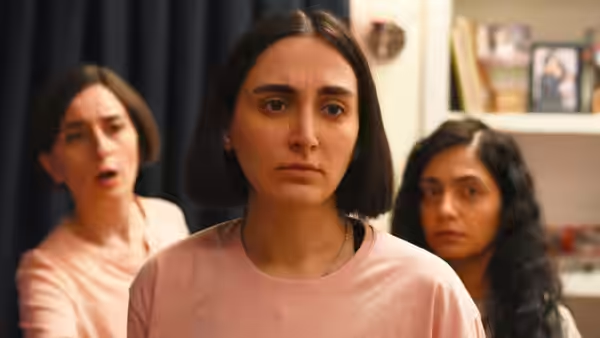
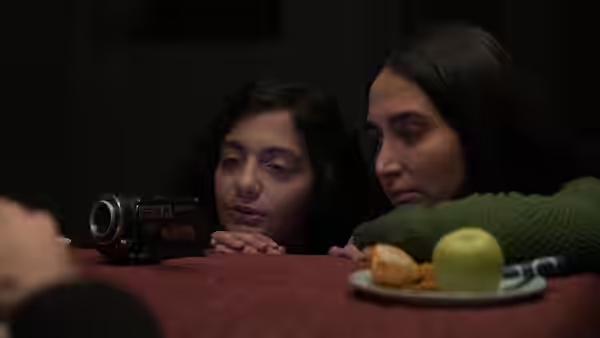
Zareh has the harder job. Iman is a weak man handed a little power, and for a long stretch Zareh plays him as tired rather than cruel, a father who wants his daughters to stop making things difficult. The dinner-table confrontations, in which Rostami’s Rezvan will not let a lie pass and Maleki’s Sana watches her mother for a sign, are the best-written scenes in the film. Nazanin Tavasoli’s costumes do quiet work here: the daughters’ clothes loosen, scene by scene, while Najmeh’s stay exactly as they were.
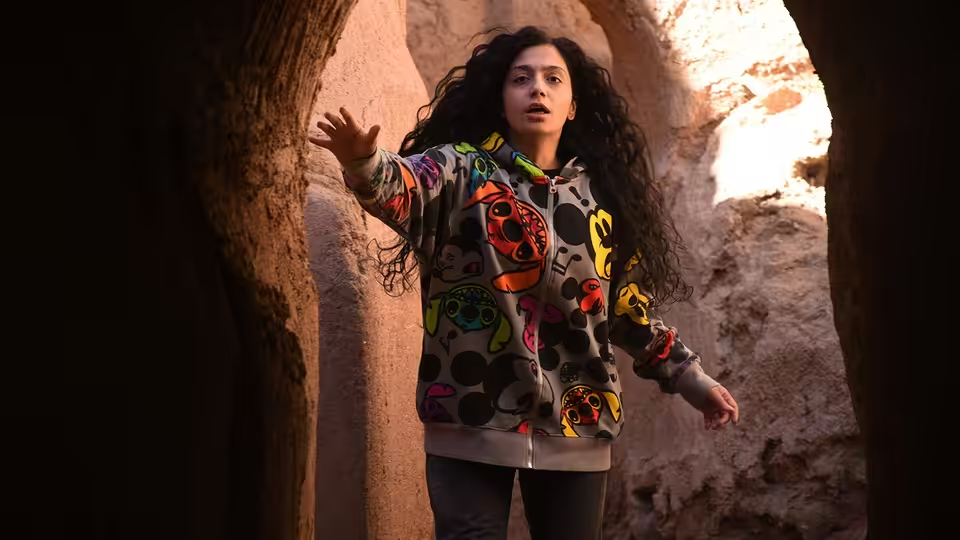
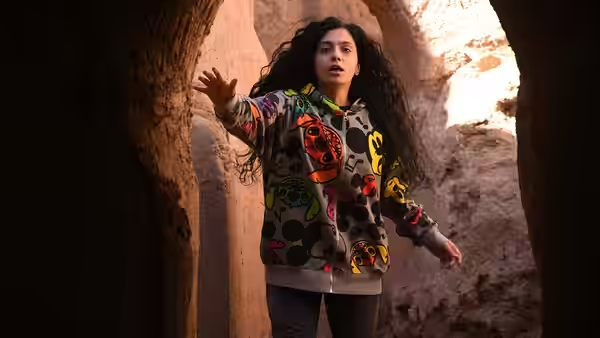
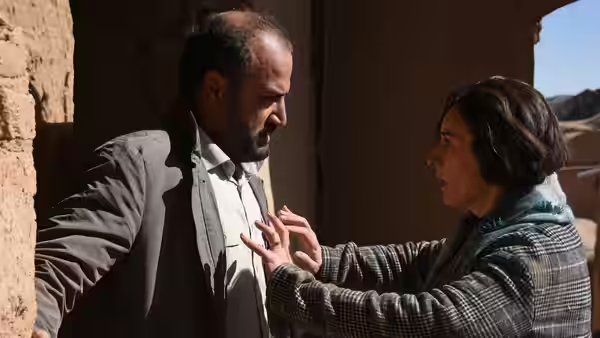
The last stretch is a different film, and we will not describe it. Rasoulof leaves the flat, and once the gun is out of the drawer Iman sits his wife and daughters down and questions them one by one, and they answer him in speeches about duty, God and what a father owes, aimed at the camera as much as at him. Some of Aghababaei’s daylight is striking, bleached until stone looks like bone, but we had been frightened for two hours by a family at a table, and we were not frightened by what replaces it. It runs twenty minutes too long, and every one of them is here.
Rasoulof’s earlier work was quieter and more oblique, and this is his angriest film. We do not hold that against it; there is a great deal to be angry about, and the anger is what puts the bathroom scene and the dinner table on screen. It is also what tips the ending into melodrama.
It is a 15 certificate, and the phone footage is the reason. See it for Golestani, and for the first two hours, and forgive it the third. We did.