Coralie Fargeat’s horror about a television star who splits herself into a younger model is loud, bright and superbly made, and Demi Moore is remarkable in it. It says one thing many times over 141 minutes. If you can stomach it, it is worth your evening.
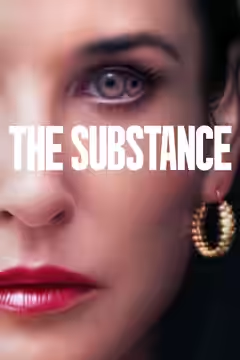
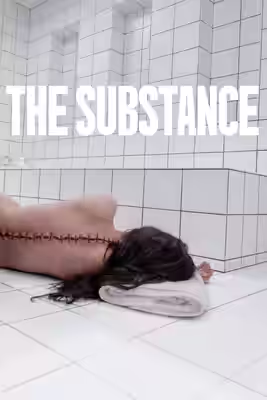
Elisabeth (Demi Moore) has hosted a television aerobics show for years, and on her fiftieth birthday she loses it. She overhears Harvey (Dennis Quaid), the producer, saying so on the telephone in the gents, and the word “fifty” comes out of him like a diagnosis. There is a car accident, a hospital, and a nurse who slips a flash drive into her coat pocket. On it is an advertisement for the Substance, a serum that promises a younger, better version of you. The rules are simple: one week each, then switch, no exceptions. She injects it, and Sue (Margaret Qualley) climbs out of her back.
That is the film’s one idea, and Coralie Fargeat, who wrote and directed, spends 141 minutes saying it as loudly as she can. The result is a good horror film, superbly built, often funny and about twenty minutes too long. Moore is the reason to see it.
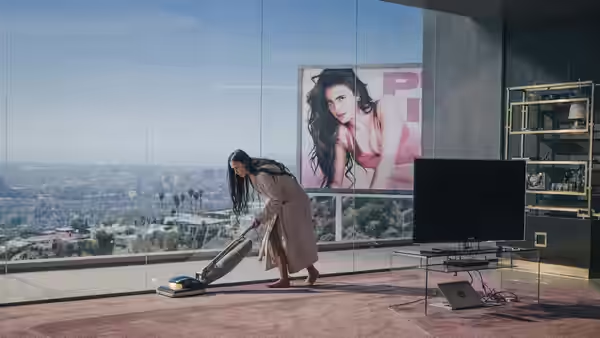
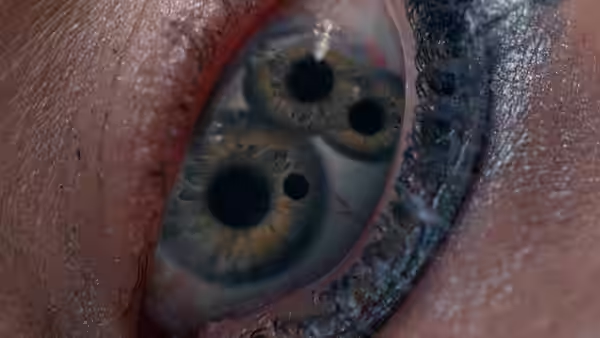
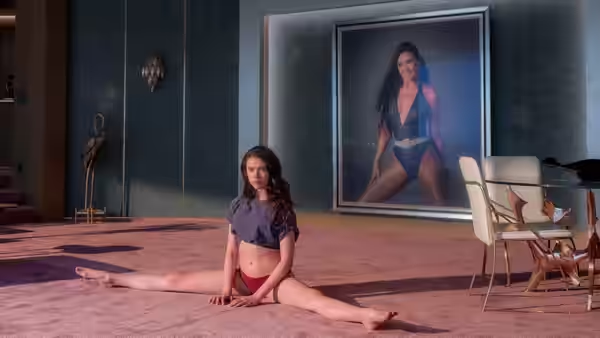
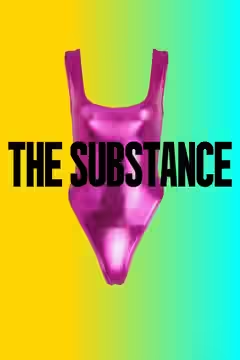
Fargeat’s previous film, Revenge (2017), used wide lenses and a great deal of blood, and The Substance uses more of both. Benjamin Kračun puts the camera so close to faces that pores become craters, and he lights Elisabeth’s flat in a hard afternoon white so that every line shows. Stanislas Reydellet gives that flat one enormous window facing a billboard, and the billboard has Elisabeth on it, and then it does not. Emmanuelle Youchnovski dresses Elisabeth in a yellow coat she wears like armour, and Sue in a pink leotard that fits like paint.
Quaid’s Harvey is the film’s cleanest target. There is a lunch scene early on where he eats prawns and talks about ratings, and Kračun shoots it from below with the lens a few inches from his mouth, so we can see the shells and hear them. We laughed, then felt slightly sick, then laughed at feeling sick. Harvey gets three or four more scenes and each is a variation on the lunch.
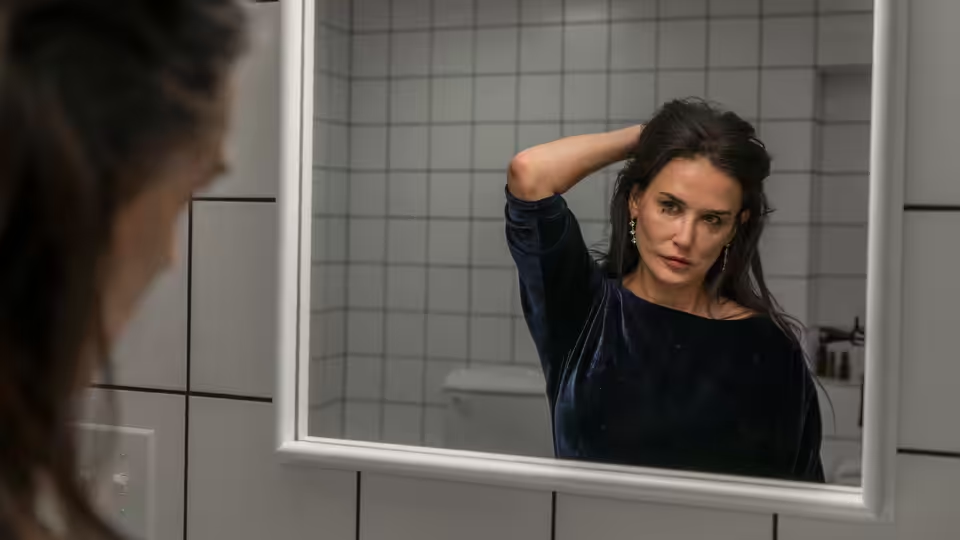
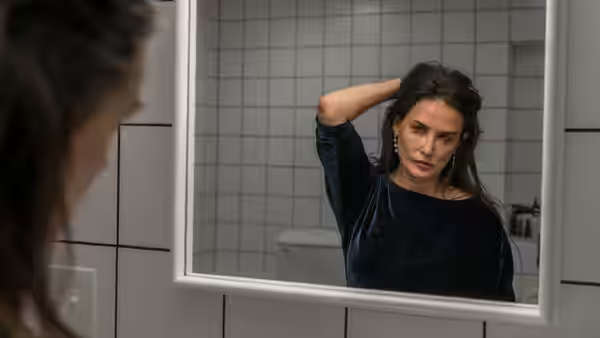
Moore’s best moment has no dialogue at all. Elisabeth is dressed for a date, and on her way out she catches sight of herself and goes back to the mirror. She adds lipstick, then wipes it away, then adds more, and keeps going until her face is smeared and the evening is gone. Raffertie’s score, which elsewhere pounds like a gym class, drops out, and Kračun holds still. It moved us more than we expected, because nothing pushed us: Moore does it with her hands and her breathing, and she is a star we have been looking at for forty years, in a film that knows we remember.
The trouble is repetition. The switch, with its needle, its stitching and its long split down the spine, is shown again and again, and the three editors, Jérôme Eltabet, Valentin Féron and Fargeat herself, cut each one to Raffertie’s electronics like an advertisement for the product. It is a joke the first twice. By the fifth time we were checking our watch. Qualley is asked to be a surface and is a persuasive one, but Sue has nothing to want except more of the same, and the leotard routines are filmed with the same lingering close-ups on thighs and lips that the film is supposed to be mocking.
The last half hour goes further than we thought a film with this certificate would go, and we will not describe it. We can say that the prosthetics are practical and extraordinary, that we were horrified in the way Fargeat meant us to be, and that the film stops arguing and starts throwing things. Set beside David Cronenberg’s The Fly (1986), the standard for this sort of thing, it has the same appetite for flesh and much less interest in the person inside it. Elisabeth has a flat, a show and a mirror, and no friends, books or history that we hear of, and so for two hours and twenty minutes we are watching a woman we are told about rather than one we know.
See it in a cinema if you can, with an audience, where the noise and the flinching are part of the evening. At home it becomes smaller and slightly silly. Do not eat first.