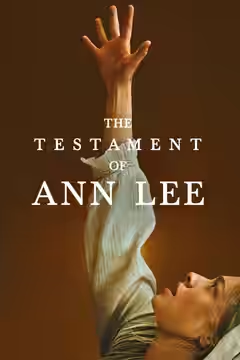
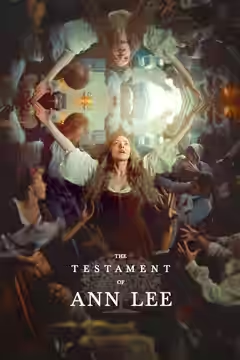
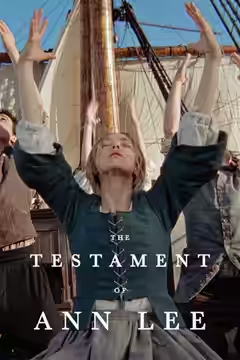
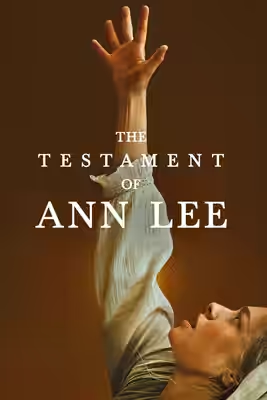
The Testament of Ann Lee poster

The Testament of Ann Lee

2025 · Directed by Mona Fastvold
2h 17mHistoryDramaMusic15
73
Fi1m score
78
Critics · 18
Audience · not yet

Where to watch in the UK

Checked 10 September at 22:28. Prices and availability change; the service’s page is the last word.

Plays from YouTube when you press play; nothing loads from them until then.

Synopsis

Manchester, the eighteenth century. Ann Lee (Amanda Seyfried), a blacksmith’s daughter, joins a small dissenting church led by Jane Wardly and James Wardley (Stacy Martin, Scott Handy), whose members shake and cry out in worship. Married to Abraham Standerin (Christopher Abbott) and grieving the children she has lost, she comes to believe that she has been chosen to lead, that sex is the root of sin, and that God is a mother as well as a father. Her brother William (Lewis Pullman) follows her; the town does not. Mona Fastvold’s film, written with Brady Corbet, tells her story through the Shakers’ own hymns, sung and danced by the congregation, with Thomasin McKenzie’s Mary Partington as narrator.

Fi1m review

In a sentenceThe stamping says everything; the narrator then says it again

Fastvold’s musical life of the Shaker founder is at its best when the congregation is singing and stamping, and Amanda Seyfried is remarkable throughout. Between the hymns it explains itself, at length, through a narrator who does not trust the pictures.

Mona Fastvold has made a musical about the woman who founded the Shakers, and she has made it out of the Shakers’ own hymns. Ann Lee was a Manchester blacksmith’s daughter who came to believe she was Christ returned in a woman’s body, preached celibacy, and took a handful of followers to America in 1774. Fastvold and her co-writer Brady Corbet stage her life as a series of services: people in plain wool sing, stamp, spin and fall down, and the film stops everything else to watch them. When it is singing it is unlike most musicals we have seen. When it is talking, which is more often than it needs to be, it is a careful period drama with a narrator who does not trust us.

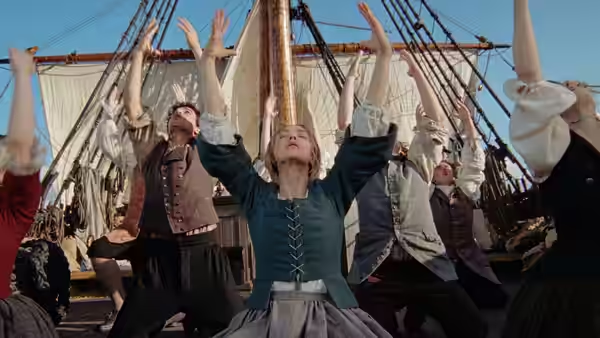
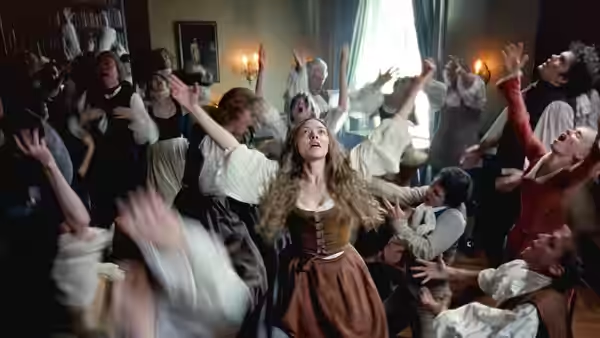
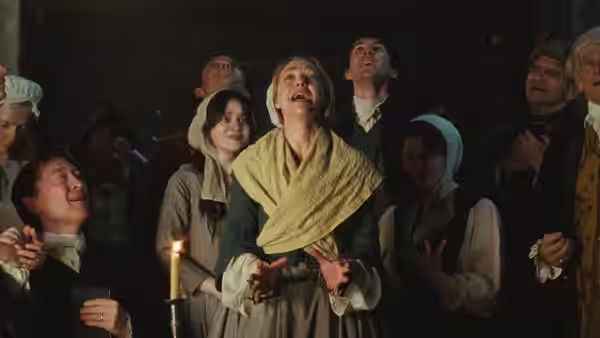
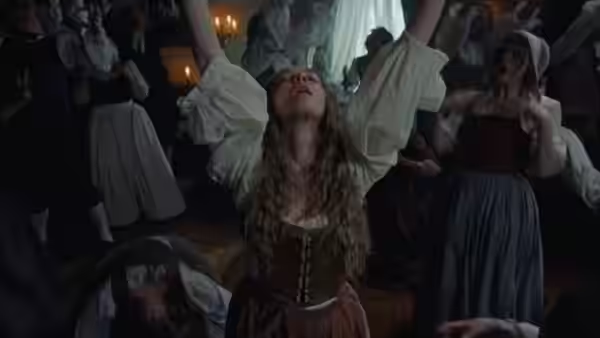
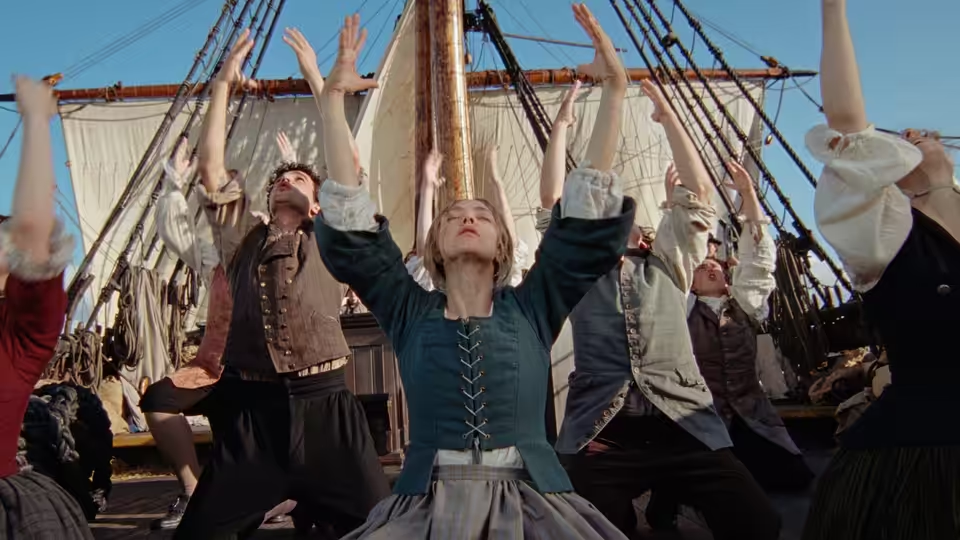
The worship is the reason to go. Daniel Blumberg has taken the hymns and rebuilt them for a crowd, so a tune that begins as one woman’s voice in a kitchen swells into a hall of people breathing on the same beat. The choreography is not stage dancing. It is work made into rhythm: hands shaken out as if drying, feet driven into boards, bodies turning until they drop. Sofía Subercaseaux cuts these sequences long, staying with the whole room rather than picking out faces, so we feel inside the crowd rather than in front of it. The first big number, in a Manchester meeting room, took us by the throat. We had come in doubtful and found ourselves holding our breath with the congregation, which is presumably what it felt like to be there.

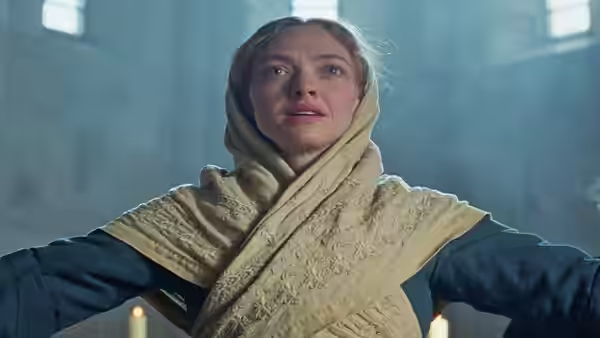
Amanda Seyfried carries this. Her Ann Lee is not serene. She is tired, hoarse, often in pain, and she preaches the way someone might argue with a landlord. Seyfried sings in a plain, unshowy voice and moves like someone who has never been taught to, which is right, and when the visions come she plays them as something that happens to her body first and her mind second. It is a physical performance from a performer we had mostly seen in lighter things, and it changed our mind about her.

Around her the casting is careful. Lewis Pullman, as her brother William, is the film’s warmest presence, a big man who follows his sister because he cannot think what else to do. Christopher Abbott plays her husband Abraham Standerin as a decent man baffled by a wife who has decided, for God, that they will not share a bed again, and the film is fairer to him than we expected. Stacy Martin and Scott Handy, as Jane Wardly and James Wardley, run the small church Ann first joins. Tim Blake Nelson turns up as a pastor. Blumberg, the composer, appears on screen as a deacon, which we mention because it is the kind of detail this film enjoys.

The trouble is Thomasin McKenzie, or rather what she has been asked to do. She plays Mary Partington, a follower, and she also narrates, and the narration tells us what the pictures have already shown. A woman collapses in worship and we are told the spirit has moved her. Ann is set upon in the street and the voice explains that the town has turned against her. Every time the film risks being strange the narrator arrives to make it clear, and by the second hour we resented her. The scenes between the songs, of prison, of travel, of meetings, are shot with the same care as the services but written as connective tissue, and 137 minutes is long for connective tissue.

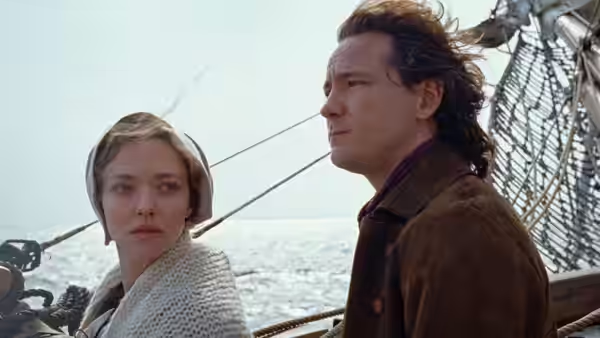
William Rexer lights Manchester brown and wet and America white and cold, and there is a shot of the crossing, lit from a single hatch above, that we will keep. Sam Bader’s rooms are bare and true to their period. Małgorzata Karpiuk dresses everyone in the same three colours from first scene to last.

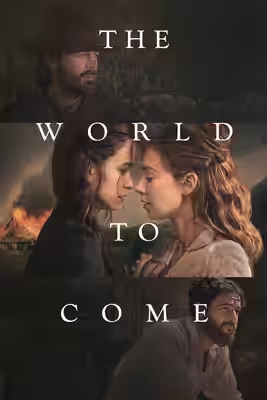
Fastvold’s The World to Come was a quiet film about two women on a farm. This is her loud one. Most critics are warmer than we are, and one or two have found the shaking funny; we did not, though we noticed the film working hard to make sure we would not.

See it in a cinema, where the hymns fill the hall. At home the singing gets smaller and the narrator does not.

Critical consensus AI synthesised

78
Positive
15
Mixed
2
Negative
1

Most critics are won over, and the praise gathers in two places: the worship sequences, with their hymns and choreography, and Amanda Seyfried’s performance as Ann Lee, which several reviews describe as physical, primal and fully committed. The word strange recurs, nearly always as a compliment; the film is treated as a musical unlike anything else around, and its eighteenth-century world as fully built. Reservations cluster around what happens between the songs. The New Yorker finds the plainer dramatic scenes a let-down, Screen Daily wants more character and narrative drive, and The Hollywood Reporter thinks it repeats itself and keeps Lee at arm’s length. The spread is wide for a film this well received. The Times is the one outright dissenter, finding the self-seriousness unintentionally comic. The Wrap notes the Venice premiere drew walkouts as well as applause, which is roughly the pattern the reviews since have followed.

Little White Lies
23 February 2026 · 4/5/5 · David Jenkins
100

Fastvold creates a bold and intoxicating meta-musical that chronicles Ann Lee’s life and expands the possibilities of filmed biography through its visceral, ecstatic exploration of Shaker worship and historical contradictions.

Read the full review →
IndieWire
1 September 2025 · A- · David Ehrlich
90

The critic hails the film as a rapturous, ecstatic quasi-musical that celebrates the birth of the Shaker movement through propulsive hymns and choreography, with Amanda Seyfried delivering a career-best performance as the visionary leader.

Read the full review →
Evening Standard
26 February 2026 · Nick Howells
85*

The critic finds the film a wild, wonderful musical tribute to Ann Lee and her Shaker movement, with Fastvold delivering ecstatic song-and-dance sequences alongside darker moments of trauma and resistance. Seyfried delivers a ferociously physical, career-topping performance as the visionary leader.

Read the full review →
Sight and Sound
26 February 2026
85*

Mona Fastvold’s musical-biopic delivers an almost spiritual experience through Amanda Seyfried’s brilliant, primal performance as Ann Lee and its sensorial, epic style of cinema focused on ecstatic worship and personal trauma.

Read the full review →
Vulture
25 December 2025 · Bilge Ebiri
85*

The critic calls the film one of the strangest and most singular musicals ever made, praising its immersive 18th-century world, hybrid choreography blending traditional and modern dance, emotional Shaker spirituals, and Amanda Seyfried’s intense performance that fills in emotional details despite historical gaps.

Read the full review →
Empire
27 February 2026 · Sophie Butcher
80*

Fastvold crafts a one-of-a-kind cinematic experience that immerses viewers in the Shakers' ecstatic worship through music and choreography adapted from real hymns. The film highlights prescient themes of equality and bodily autonomy while showcasing Seyfried's committed triple-threat performance.

Read the full review →

Cast

Lewis Pullman
William Lee
Thomasin McKenzie
Mary Partington / Narrator
Matthew Beard
James Whittaker
Christopher Abbott
Abraham Standerin
David Cale
John Hocknell
Stacy Martin
Jane Wardly

Stills

If you liked this, try…

The Devils poster

The Devils

1971 · Russell’s convent frenzy: the same fever, none of the restraint, and a louder finish.

Ordet poster

Ordet

1955 · Dreyer takes a Danish farm and asks, without irony, whether faith works.

The World to Come poster

The World to Come

2020 · Fastvold’s earlier frontier film, whispered where this one shouts.

The Passion of Joan of Arc poster

The Passion of Joan of Arc

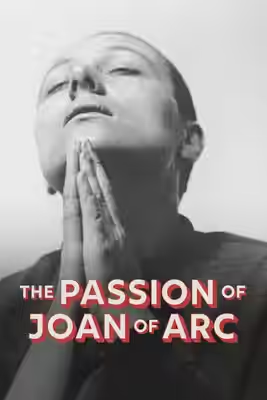
1928 · Another woman told by men she is wrong about God, in close-up.

Jesus Christ Superstar poster

Jesus Christ Superstar

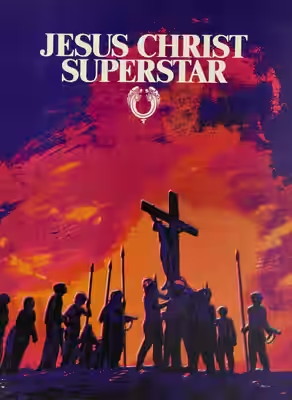
1973 · Belief as a musical, sung in a desert by people who mean it.