Margo Martindale and Johnny Vegas make the Twits as foul as Dahl wrote them, and the film spends the rest of its length apologising for them. Grubby, noisy and funny in patches, it is a black comedy with the black rinsed out.
Roald Dahl’s The Twits is a short book: a couple of hairy, spiteful people play tricks on each other and on the monkeys they keep in a cage, and the monkeys are not as helpless as they look. Phil Johnston, who directs and shares the writing with Meg Favreau from a story by Kirk DeMicco, has stretched it to 99 minutes, and to do that he has given the Twits a town to torment, a Mayor to needle and two young heroes to meet their match in. The couple survive the move. Almost nothing built around them does, and the result is a film that is funny for about a quarter of its length and busy for the rest.
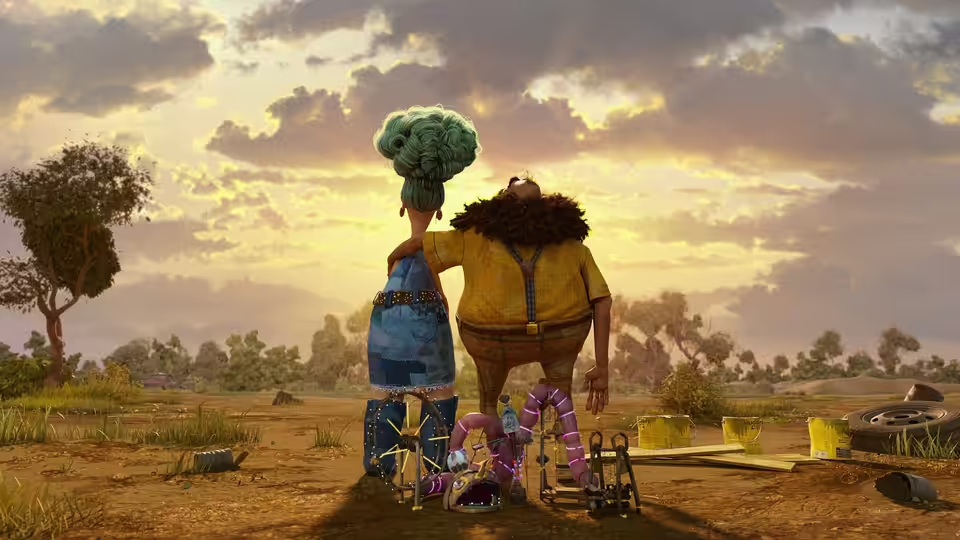
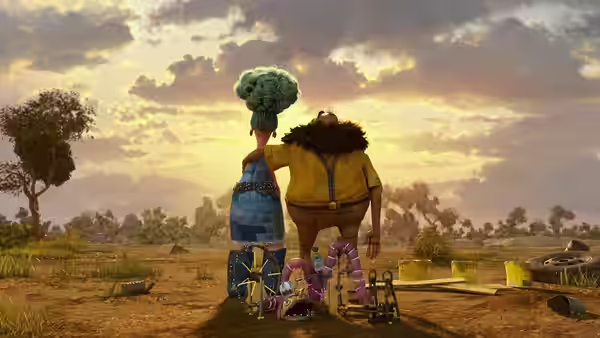
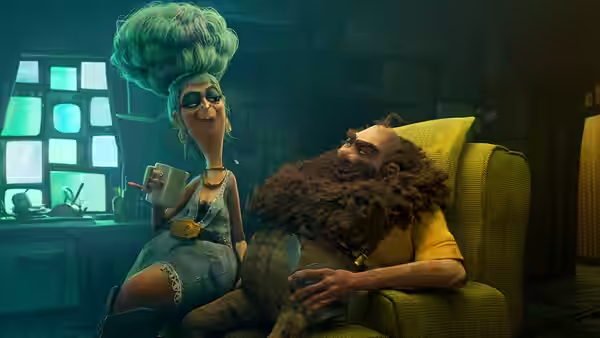
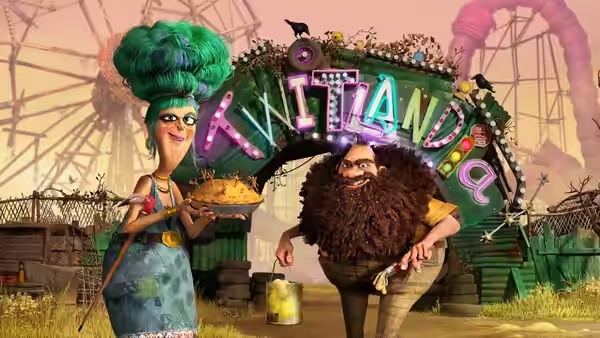
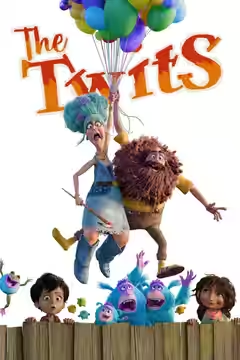
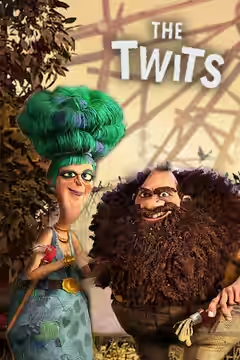
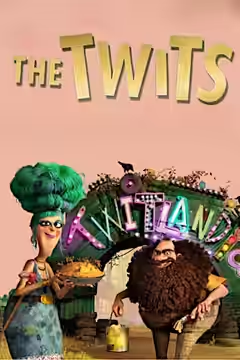
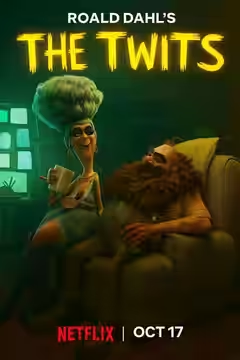
Margo Martindale and Johnny Vegas are the reason to watch, and they are a good reason. Vegas gives Jim Twit a wet, put-upon whine, a man permanently aggrieved that the world will not sit still for him to be horrible to it; Martindale’s Credenza is louder, cleverer and plainly the one in charge. Rémi Salmon’s designs keep them close to the book: the beard with old dinner in it, the hair nobody has washed, a house that looks as if it smells. The tricks the couple play on each other are the book’s engine, and when the film stays in the Twits’ kitchen it has real nastiness in it. We laughed, properly, at the beard business, and then spent the next hour waiting to laugh like that again.
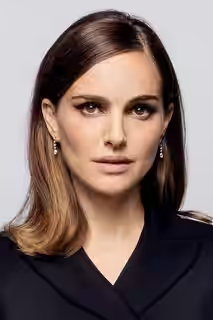
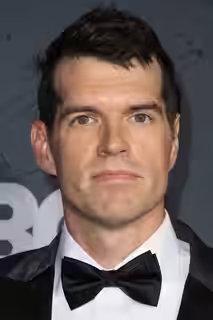
The rest of the cast are given a town to fill and fill it noisily. Jason Mantzoukas plays the Mayor, Wayne John John-John, as a man who has never finished a sentence, which is funny twice. Alan Tudyk’s Sweet-Toed Toad is the film’s oddest idea and could have been odder. Natalie Portman and Timothy Simons voice the Muggle-Wumps with a tired patience that is closer to the book than most of what surrounds them.
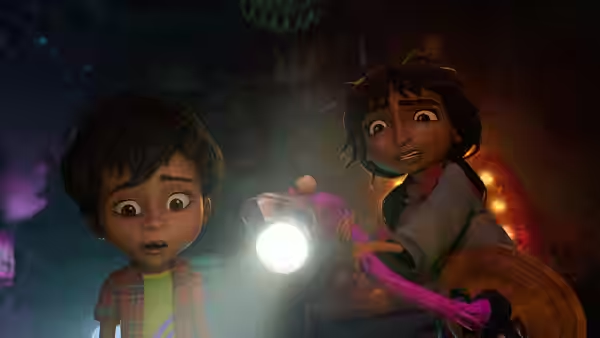
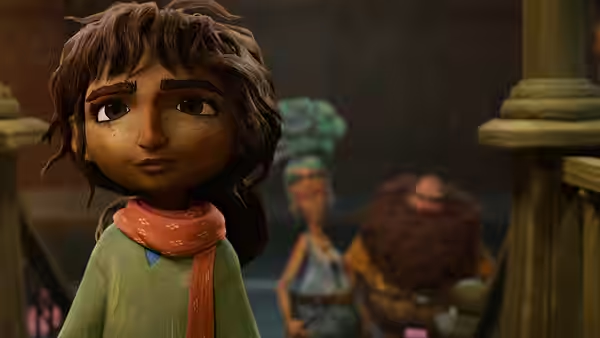
Then there are the children. Beesha Balti (Maitreyi Ramakrishnan) and Busby Mulch (Ryan Anderson Lopez) are young heroes of the standard animated kind, brave and lonely and forever explaining what they have learned, and the film has decided they are its heart. Every time it cuts to them the temperature drops. The script gives them a lesson about kindness and has them say it aloud, more than once, to people who have just heard it. Dahl’s book contains no such lesson. Its moral, if it has one, is that ugly thoughts make ugly faces, and that the ugly should be tricked and left where they fall.
The look of the film splits the same way. The Twits have texture: grease on the hair, grime in the creases, food where food should not be. The town around them is flat and bright and could belong to any of a dozen streaming cartoons, and the townsfolk have the smooth, wide-eyed sameness of a model reused. Erika Dapkewicz cuts everything at the same brisk pace, so a gag about a beard and a speech about belonging arrive with the same rhythm, and the songs, of which there are several, pass through without leaving a mark. Oli Julian’s score is cheerful and never off, which in a film about two people who hate everything is the wrong choice. There are a great many jokes about bottoms.
The additions do bring one thing the book lacks. The Twits’ campaign against the town is played as political satire, with a crowd, a grievance and a great deal of shouting, and the film is not shy about who it has in mind; most critics have noticed the same thing. It is the sharpest material here, and it is aimed well over the heads of the audience the PG certificate is for. The children get the bottoms; the adults get the satire; neither gets a whole film.
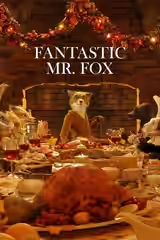
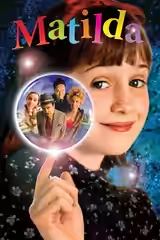
Wes Anderson’s Fantastic Mr. Fox and the 1996 Matilda understood that Dahl’s villains are the point, and that children like them because they are allowed to be awful without a lesson attached. This film likes its Twits and then spends an hour saying sorry for them. Put it on for a seven-year-old who wants monsters and does not mind being told to be nice; the beard will hold them. Anyone older could read the book aloud in the time it takes the second act to get going, and they would get the tricks without the speeches.