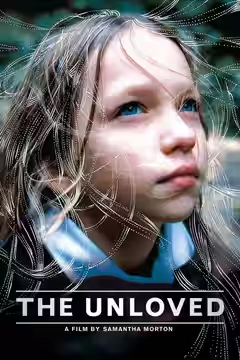
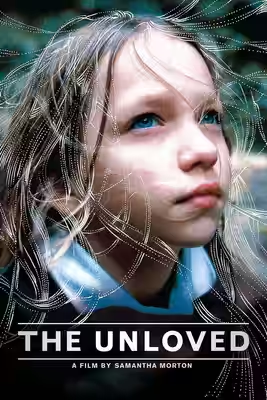
Samantha Morton’s first film as director puts an eleven-year-old girl into care and watches, closely and without comment, for 106 minutes. It is patient to the point of monotony in places, but Molly Windsor and Lauren Socha make it an evening worth having.
Samantha Morton grew up in care, and her first film as director, written with Tony Grisoni, is about a girl who is sent there. It is not a message film. It follows an eleven-year-old called Lucy from her father’s flat into a Nottingham children’s home and stays at her shoulder for 106 minutes, listening to what adults say about her and watching what they do. It is a good film, slow and hard and well acted, and it is worth your evening if you can stand to be left alone with it.
The opening is the hardest thing in it. Lucy’s father (Robert Carlyle) comes home, finds something not done, and takes his belt to her. Morton lets the scene run, and Carlyle plays him not as a monster but as a tired man who believes he is being firm, which is worse. We were horrified, and we were still thinking about it an hour later, because Molly Windsor’s face does almost nothing while it happens. Lucy has learnt that reacting makes it last longer.
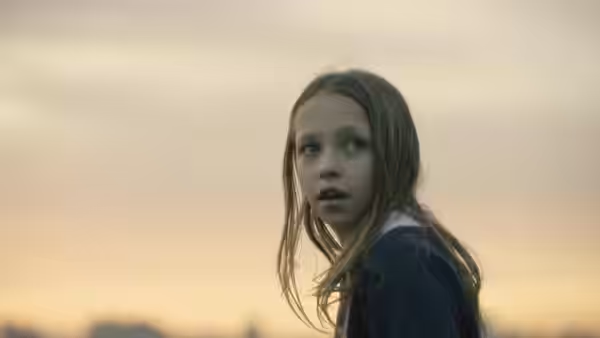
Windsor carries the film with that stillness. She is in nearly every shot, she rarely has more than a line at a time, and she makes a watching child into a point of view, so that every adult who leans down to tell her it will be all right is seen from below and found out. Lauren Socha, as the older girl who shares her room, is the opposite kind of presence, loud and quick and generous and already half gone to the streets outside, and the two of them together are the best thing here. There is something between Lauren and one of the staff, Ben (Craig Parkinson), that Lucy sees before she understands it. We will leave it there. Susan Lynch has one long scene as Lucy’s mother, a woman who has decided she cannot cope and would like the decision to be somebody else’s, and it is the one time the film raises its voice.
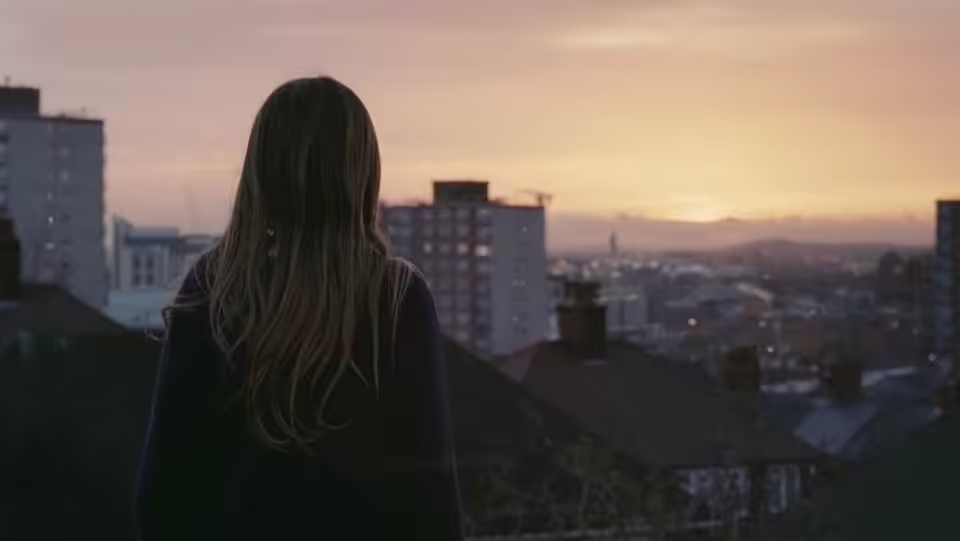
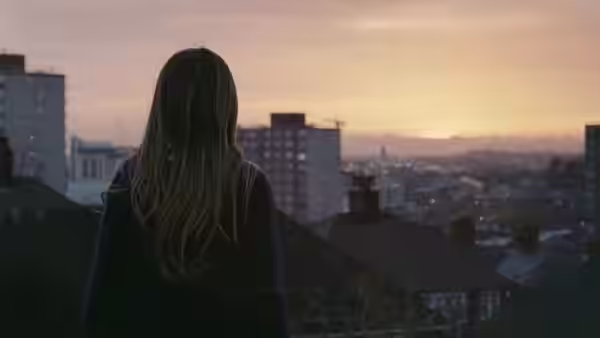
Thomas Townend shoots in what looks like the light that was there: grey Nottingham afternoons, orange streetlit nights, strip lighting in the home’s corridors. He holds takes long enough for a room to become familiar, and he keeps the focus shallow so that Lucy is sharp and the adults behind her often are not. Jane Levick’s children’s home is magnolia walls, a locked office, a television nobody has chosen the channel on; it is not squalid, which is the point. The music is by Colleen. Colin Monie cuts with the same patience, holding on a face for a beat after the line, and most of the time that is right.
Most of the time. Somewhere past the hour the film settles into a rhythm of corridor, bedroom, street, church, and we noticed we had stopped waiting for anything. Morton gives Lucy a private faith, and the church scenes are the one place where the film tells us what to feel rather than letting us find it. The pace that is a virtue in the first half becomes a habit in the second. We were never bored exactly, but we were aware of the running time, and a film this careful should not let that happen.
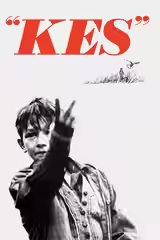
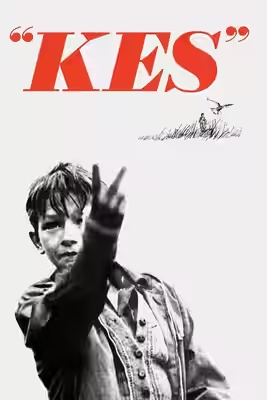
Set against the British films it will be compared with, Ken Loach’s Kes (1969) above all, this is a smaller, quieter thing, and it is a first film, and it shows in the middle. It does not show in the performances or in the way Morton trusts a child’s face to carry a scene. It was made for television and it belongs there: watch it at home, with the lights off, and do not plan anything cheerful for afterwards. It carries a 15 certificate, and the opening is the reason.