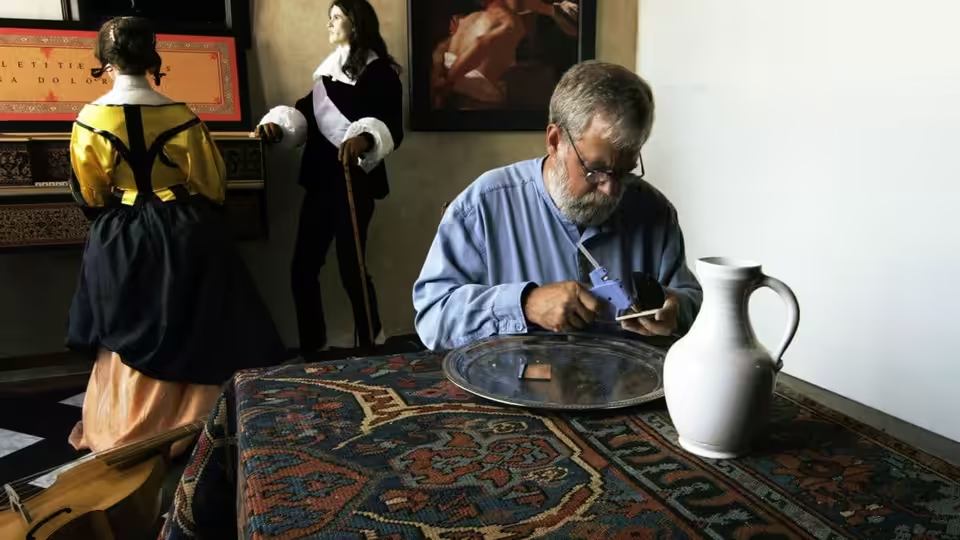
Teller’s documentary makes the painstaking business of copying a painting surprisingly engaging. Tim Jenison’s patience and dry humour carry it, though his theory about Vermeer deserves tougher questions than the film asks.
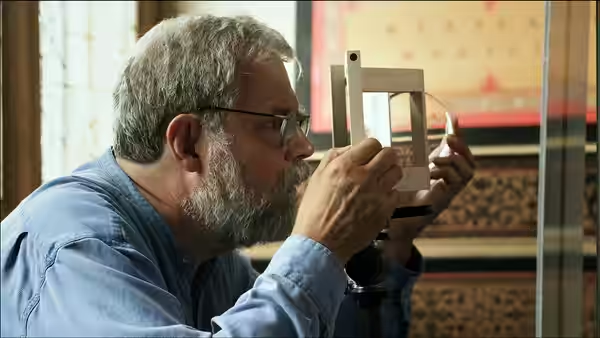
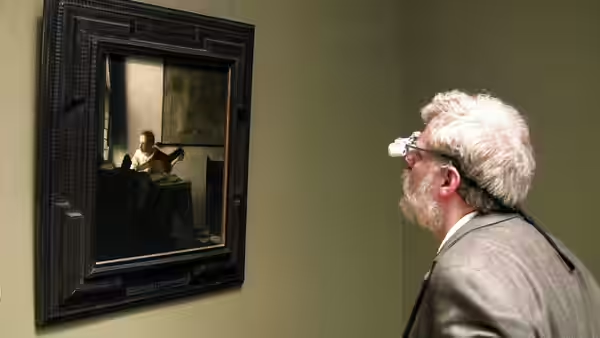
Tim’s Vermeer is an engaging documentary about a man willing to do an unreasonable amount of work to test an idea. Tim Jenison wants to understand how Vermeer painted, and attempts a recreation of The Music Lesson as a way of finding out. Teller gives that undertaking enough attention for the effort itself to become interesting. We would happily recommend it to anyone curious about how pictures are made, provided they can tolerate a shortage of scepticism.
Tim Jenison’s dry humour helps, because painstaking reconstruction could easily make for a punishing evening. His enthusiasm makes the technical questions approachable, and he gives us a reason to care about the next stage of work without demanding that we already care about Vermeer. We were unexpectedly moved by his persistence as the painting became arduous. The sheer willingness to keep going gives the film a human subject beyond the question of how accurately an image can be reproduced.
Shane F. Kelly’s cinematography serves the investigation by making the painting process something we can examine, and the plain usefulness of that is worth appreciating. Patrick Sheffield’s editing keeps the technical material manageable without making the undertaking seem easy. The balance slips as the work continues, and the later stretch drags despite the 80-minute running time. Repetition helps us appreciate the patience involved, but we do not need quite so much help.
Conrad Pope’s music provides amiable company, though it is the humour that does most to relieve the grind. David Hockney’s appearance brings another welcome touch of wit to a film that might otherwise become too solemn about its experiment. Penn Jillette and Teller share the writing credit, and the explanations remain accessible even when the subject threatens to become specialised. There is pleasure in understanding what Tim Jenison is trying to do and then watching how much work it requires.
The weakness is how little resistance the central theory meets. Teller makes the pursuit easy to enjoy, but leaves us wanting somebody to ask harder questions about what this recreation can establish about Vermeer’s methods. What would count against the explanation? We need more evidence before drawing conclusions about how the original was painted, however much we admire the person attempting to reproduce it. The film allows our affection for Tim Jenison to do too much of the persuading.
The film makes a useful case for technology as part of artistic work. Seeing how much patience a proposed technique demands makes copying seem sufficiently daunting, before anyone has to decide what to paint. That is a worthwhile subject for an art documentary, even one that leaves the appeal of the original picture underexplored. We wanted more about The Music Lesson itself, but the attention paid to making a replica has value.
Watch it with someone who likes making things and is prepared to argue afterwards. There is plenty here to enjoy without accepting every implication of the experiment. Anyone tempted to try something similar may want to clear more than an evening.