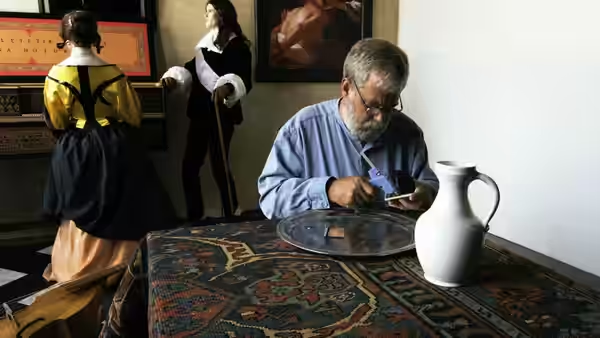
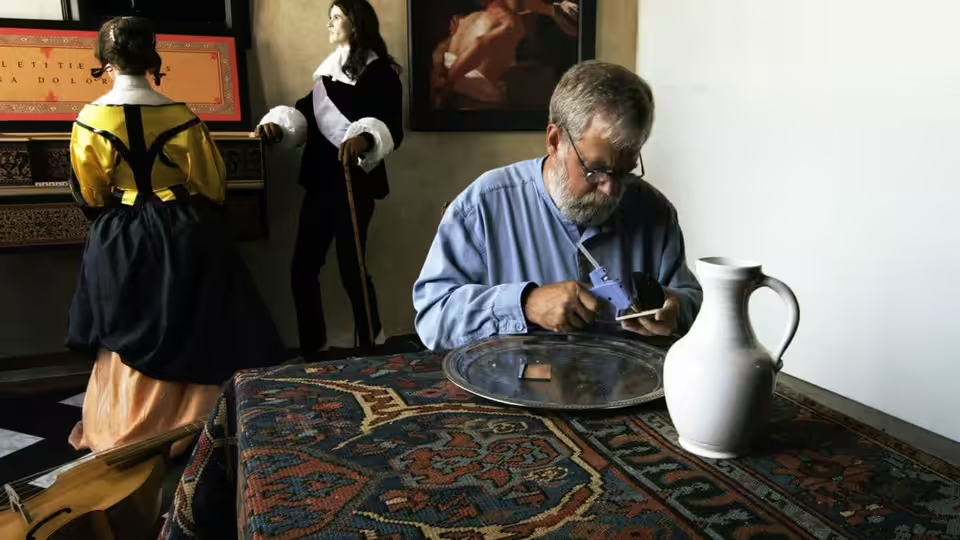
Tim Jenison works at a table beside figures arranged in a painted interior
Film review

Tim's Vermeer

2013 · Directed by Teller · 1h 20m

In a sentenceA man copying a painting should not be this absorbing, or make our unfinished shelves quite so embarrassing

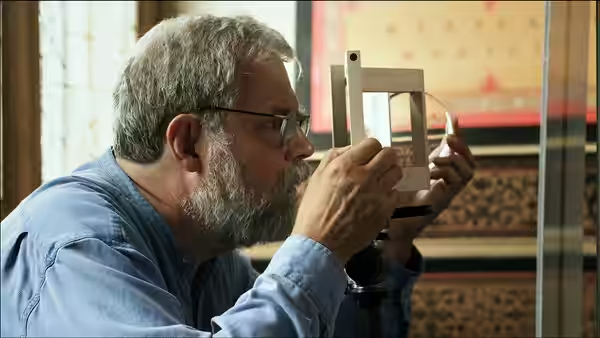
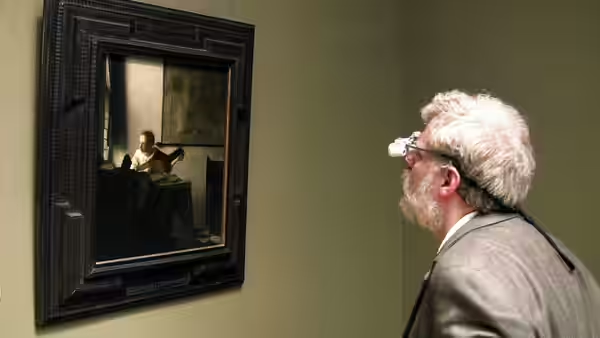
Tim Jenison wants to understand how Johannes Vermeer made paintings with such a photographic quality. He sets out to recreate The Music Lesson, turning a question about technique into a practical experiment in painting. Tim Jenison, Penn Jillette and David Hockney appear as themselves as the documentary follows his investigation into the possible connections between art and technology. Making a replica requires more than finding a plausible explanation, however. He has to commit to the painstaking work of painting it, testing his ideas against the demands of the image.

Fi1m review

Teller’s documentary makes the painstaking business of copying a painting surprisingly engaging. Tim Jenison’s patience and dry humour carry it, though his theory about Vermeer deserves tougher questions than the film asks.

Tim’s Vermeer is an engaging documentary about a man willing to do an unreasonable amount of work to test an idea. Tim Jenison wants to understand how Vermeer painted, and attempts a recreation of The Music Lesson as a way of finding out. Teller gives that undertaking enough attention for the effort itself to become interesting. We would happily recommend it to anyone curious about how pictures are made, provided they can tolerate a shortage of scepticism.

Tim Jenison’s dry humour helps, because painstaking reconstruction could easily make for a punishing evening. His enthusiasm makes the technical questions approachable, and he gives us a reason to care about the next stage of work without demanding that we already care about Vermeer. We were unexpectedly moved by his persistence as the painting became arduous. The sheer willingness to keep going gives the film a human subject beyond the question of how accurately an image can be reproduced.

Shane F. Kelly’s cinematography serves the investigation by making the painting process something we can examine, and the plain usefulness of that is worth appreciating. Patrick Sheffield’s editing keeps the technical material manageable without making the undertaking seem easy. The balance slips as the work continues, and the later stretch drags despite the 80-minute running time. Repetition helps us appreciate the patience involved, but we do not need quite so much help.

Conrad Pope’s music provides amiable company, though it is the humour that does most to relieve the grind. David Hockney’s appearance brings another welcome touch of wit to a film that might otherwise become too solemn about its experiment. Penn Jillette and Teller share the writing credit, and the explanations remain accessible even when the subject threatens to become specialised. There is pleasure in understanding what Tim Jenison is trying to do and then watching how much work it requires.

The weakness is how little resistance the central theory meets. Teller makes the pursuit easy to enjoy, but leaves us wanting somebody to ask harder questions about what this recreation can establish about Vermeer’s methods. What would count against the explanation? We need more evidence before drawing conclusions about how the original was painted, however much we admire the person attempting to reproduce it. The film allows our affection for Tim Jenison to do too much of the persuading.

The film makes a useful case for technology as part of artistic work. Seeing how much patience a proposed technique demands makes copying seem sufficiently daunting, before anyone has to decide what to paint. That is a worthwhile subject for an art documentary, even one that leaves the appeal of the original picture underexplored. We wanted more about The Music Lesson itself, but the attention paid to making a replica has value.

Watch it with someone who likes making things and is prepared to argue afterwards. There is plenty here to enjoy without accepting every implication of the experiment. Anyone tempted to try something similar may want to clear more than an evening.
Critical consensus AI synthesised

72
Positive
12
Mixed
5
Negative
1

Most critics find Tim’s Vermeer an engaging, often funny account of Tim Jenison’s attempt to recreate a Vermeer painting. Praise centres on his patience, inventiveness and dry humour, and on filmmaking that makes painstaking technical work accessible. The reviews repeatedly find pleasure in watching the experiment develop, with several also finding it unexpectedly moving. For the more enthusiastic critics, its exploration of art and technology deepens appreciation of the skill involved rather than explaining away the achievement.

The reservations concern how much the experiment proves, and how closely the film examines its own claims. Some critics find the larger questions about Vermeer unanswered; others note that the reconstruction eventually loses momentum. The spread is fairly wide, though clearly weighted towards approval. IndieWire questions the lack of a critical voice, while The New Yorker offers the sharpest dissent, finding that a fascinating process becomes a mechanically presented stunt.

Los Angeles Times
12 December 2013 · Betsy Sharkey
90*

Sharkey presents the documentary as extraordinary. Its fascinating focus is Tim Jenison’s attempt to recreate a Johannes Vermeer painting.

Read the full review →
IndieWire
31 January 2014 · B+ · Eric Kohn
83

Kohn finds the documentary surface-deep but engaging, with Jenison’s creative quest making the journey worthwhile. He praises Jenison’s infectious enthusiasm while faulting the film for lacking a critical voice on its central theory.

Read the full review →
Evening Standard
17 January 2014 · The Standard
80*

The critic finds the documentary bizarre, moving and witty, and says it makes viewers reconsider Vermeer’s work. They praise its generous spirit and its exploration of creativity, while singling out Jenison’s detailed recreation of The Music Lesson.

Read the full review →
The Hollywood Reporter
16 September 2013 · Todd McCarthy
80*

McCarthy finds the documentary entertaining and accessible, and sees Jenison’s experiment as making Vermeer’s methods more understandable without diminishing his achievement. He particularly praises the remarkable likeness Jenison creates and the film’s engaging exploration of art and technology.

Read the full review →
Variety
2 September 2013 · festival review · Peter Debruge
80*

Debruge finds the documentary an exceptionally entertaining, lean account of Jenison’s obsessive experiment. He praises its lively presentation of the painstaking recreation, while noting that it leaves the larger questions about art and Vermeer largely unresolved.

Read the full review →
Vulture
31 January 2014 · Bilge Ebiri
78*

Ebiri finds the documentary charming and thoughtful, concluding that its attempt to demystify art leaves viewers with even greater awe. He praises its exploration of how technology and artistic inspiration can work together.

Read the full review →

Straight answers AI written, from our review

Is Tim's Vermeer worth watching?
Tim's Vermeer is worth watching for anyone curious about how pictures are made; we score it 74 for its accessible explanations, dry humour and absorbing practical experiment. Tim Jenison’s persistence moves us, though the later stages drag and we wish the film asked harder questions about what his recreation proves about Vermeer’s methods.
How long is Tim's Vermeer, and what is it rated?
Tim's Vermeer runs 1h 20m. It is a documentary film.
Where can I watch Tim's Vermeer in India?
Tim's Vermeer is available to rent from Amazon Prime Video and Apple TV from ₹99.00. Availability is checked daily; the links above go straight to each service.
How violent or frightening is Tim's Vermeer, and is it suitable for children?
Tim's Vermeer carries a UK 12 certificate, so we would not treat it as an unrestricted choice for younger children. Its painstaking painting experiment is better suited to curious teenagers and adults interested in art or making things. The certificate alone does not tell us what specific violent, frightening or adult material it contains.
How does Tim's Vermeer compare to The Gleaners and I?
Tim's Vermeer offers a more focused account of creative work than The Gleaners and I, following one painstaking painting experiment rather than people finding uses for discarded things. We would choose The Gleaners and I for its broader human curiosity, despite some wandering, and Tim's Vermeer for approachable technical detail, with the caveat that its central theory needs tougher questioning.

Cast

If you liked this, try…

  1. F for Fake (1973) · not on Fi1m yetA playful investigation of authorship and deception, with healthy distrust built in.

  2. Rivers and Tides (2001) · not on Fi1m yetPatient attention to an artist working makes the practical difficulties absorbing.

  3. The Mystery of Picasso (1956) · not on Fi1m yetWatch paintings take shape, with the fascination concentrated on the act of making.

  4. The Gleaners and I (2000, Fi1m 85)Another curious documentary that finds creativity in work most people overlook.

  5. Jiro Dreams of Sushi (2011) · not on Fi1m yetAnother exacting craftsman makes repetition compelling, though perfection comes at a cost.