Lila Avilés follows a seven-year-old through one day in her grandfather’s house as the aunts prepare a party for her dying father. It is small, loud and exact, and it got to us. Only the last minutes reach for effects it had done without.
Lila Avilés’s first film, The Chambermaid, kept to one hotel and one woman cleaning it. Tótem keeps to one house and one day, and again she trusts that if you watch a place closely enough for long enough it will tell you everything. It does. We recommend it warmly, and to more people than its size suggests; a film about a dying man’s birthday party sounds like something to be got through, and this is not that. It is 95 minutes and it is frequently funny.
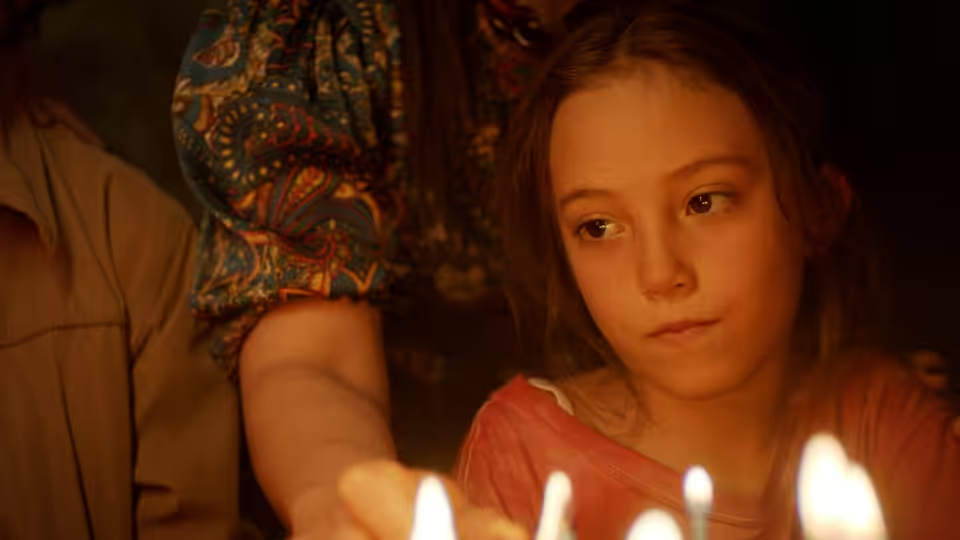
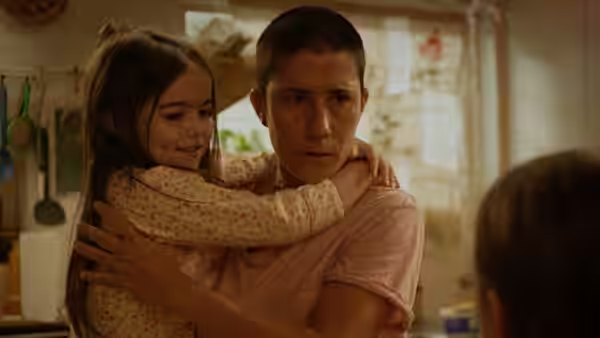
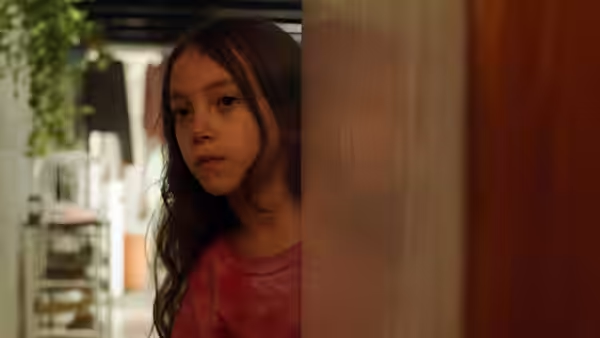
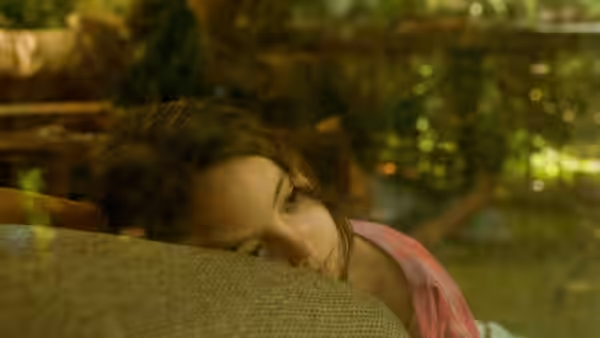
The day belongs to Sol, played by Naíma Sentíes, and Diego Tenorio’s camera stays at her height and mostly at her shoulder. The frame is close to square, so the house feels like a box with too many people in it, and the handheld camera goes where she goes: down a corridor, into the kitchen, up to a door that stays closed. We hear the whole house at once, a blender, a parrot, two aunts talking over each other in the next room, and Omar Guzmán cuts between rooms the way a child drifts between them, without announcing a scene has begun. Nothing is explained to Sol and so nothing is explained to us. We work out who is who by listening, which is exactly how she does it.
The adults are a comedy the film never quite laughs at. Nuri (Montserrat Marañon) is baking a cake and steadily emptying a bottle while she does it. Alejandra (Marisol Gasé) is dyeing her hair and has paid for Lúdica (Marisela Villaruel), a healer who arrives with smoke and instructions and a fee, to cleanse the rooms of whatever is in them. The grandfather, Roberto (Alberto Amador), has lost his voice to an illness of his own and speaks through a buzzing device pressed to his throat, which does not stop him giving opinions. Nohemi Gonzalez’s production design fills every shelf with plants, jars, books and half-finished things, so the house looks like a family has been living in it for forty years and nobody has thrown anything away. Jimena Fernández and Nora Solís dress everyone in ordinary clothes that have been worn before, and the party outfits, when they come, look new and slightly wrong, as party clothes do.
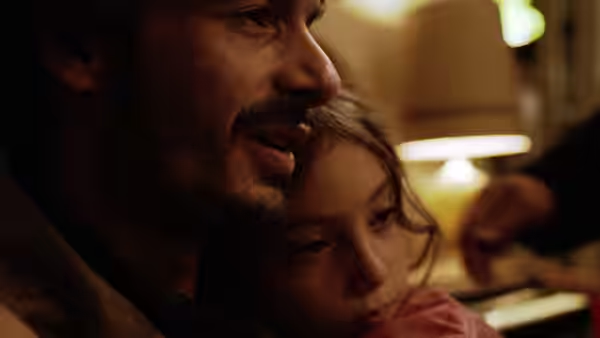
What moved us more than we expected was a small scene in which Sol, alone, asks the assistant on a phone when the world is going to end. Sentíes does not play sadness. She plays waiting, with the flat patience children have when adults have told them something will happen and have not said when, and it is worse than tears. Earlier, in the car, she holds her breath through a tunnel and makes a wish, and we knew what the wish was before she said it. The film’s one clear glimpse into the father’s room, with Teresa Sánchez’s Cruz moving calmly around a man who can barely sit up, lasts less than a minute and told us more about the family than an hour of the party.
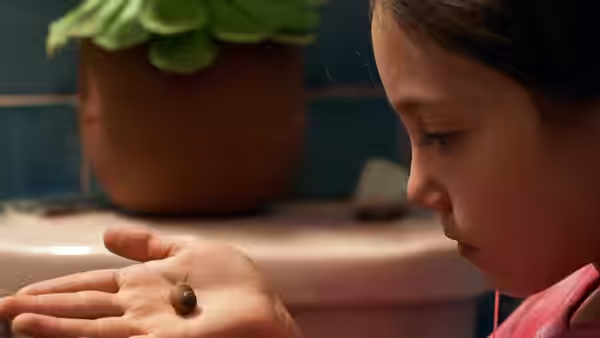
Not all of it holds. Avilés is fond of the small creatures in the house, a snail on a hand, an insect on a wall, a fish in a bowl, and by the third or fourth one we could feel the point being made. Some of the adults, Napo (Juan Francisco Maldonado) among them, are faces at the table rather than people. And in the closing minutes Thomas Becka’s music, which has stayed almost silent all day, comes in fully, and the camera does something we will not describe except to say that the film had earned its feeling already and did not need to insist on it. It is a few minutes’ lapse in a film that otherwise refuses every easy move.
Films about children and death usually make the child wiser than any child is. Avilés never asks Sol to understand more than a seven-year-old would, and never asks us to feel more than Sol does. That restraint is what makes the party, when it finally starts, so hard to watch and so pleasant at the same time: everyone is singing and the guest of honour can barely stand.
It is a 12A, and a child of Sol’s age could see it, though they would have questions afterwards. Sit close, and give up on catching every subtitle when the room is loud. The film has already decided you will miss some of it, because she does.