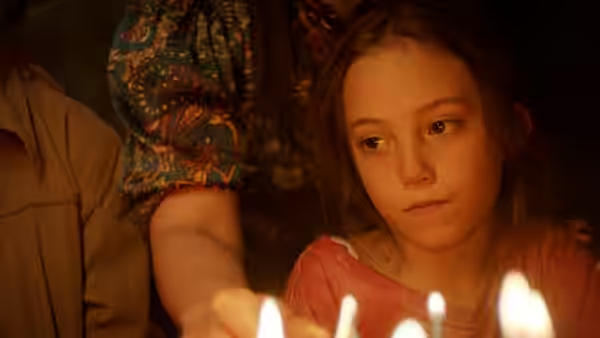
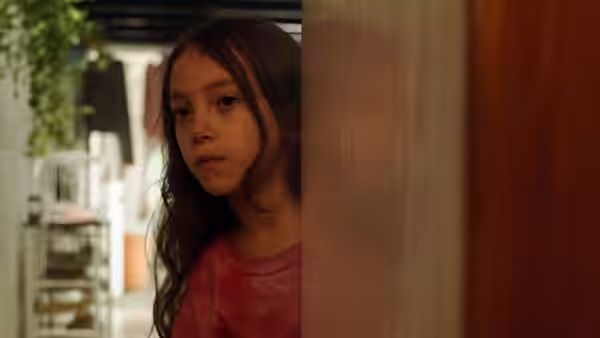
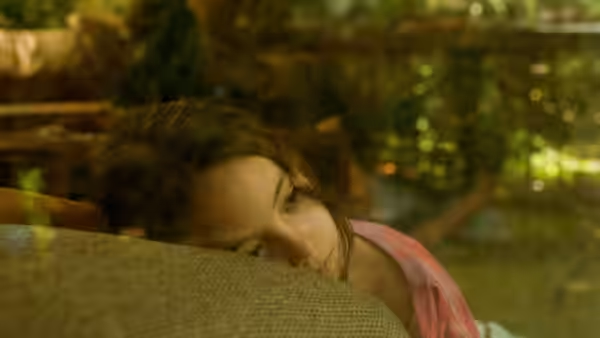
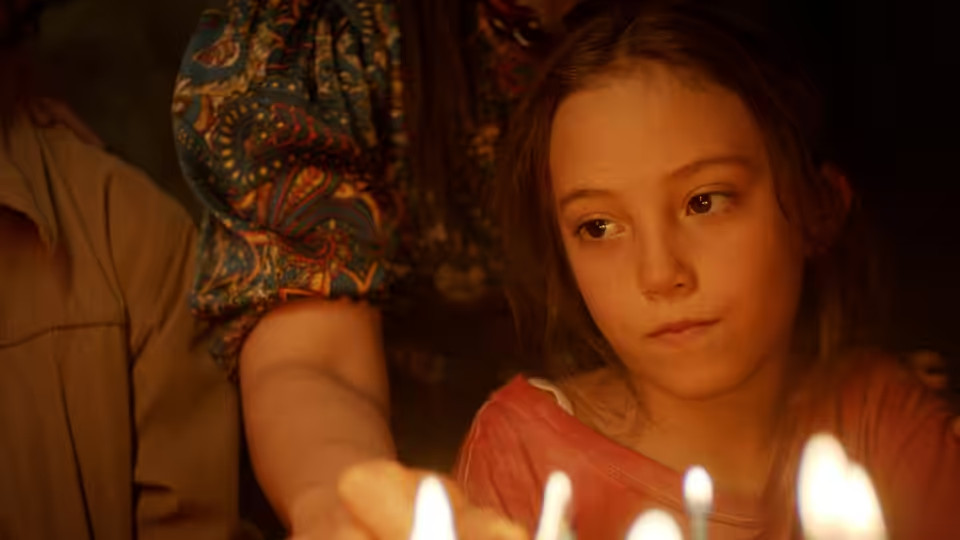
Sol (Naíma Sentíes) watches candle flames beside an adult in a colorful shirt
Film review

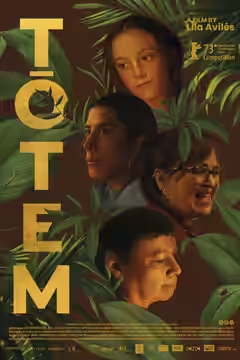
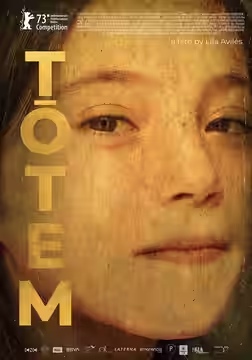
Tótem

2023 · Directed by Lila Avilés · 1h 35m

In a sentenceThe house is full of aunts, animals and bad energy, and the one person she wants is behind a shut door

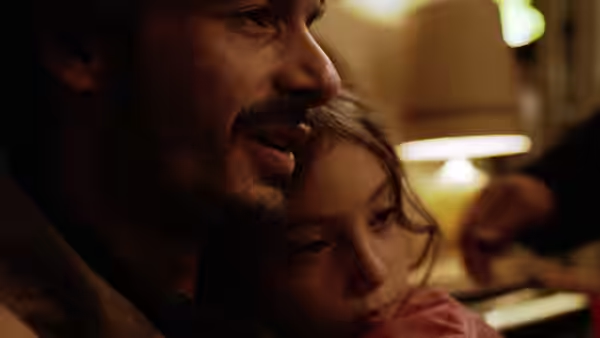
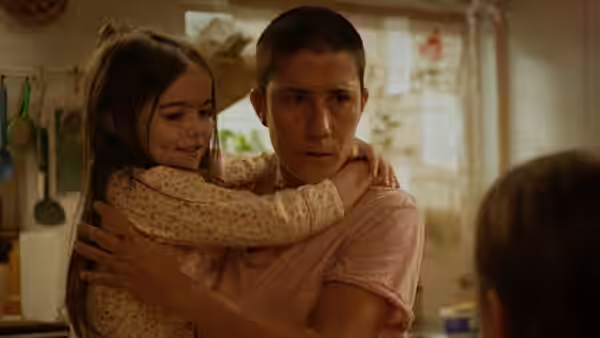
Sol (Naíma Sentíes), aged seven, is driven by her mother Lucía (Iazua Larios) to her grandfather’s house. Her father Tonatiuh (Mateo García Elizondo) is dying, and the family is giving him a birthday party that evening. Sol wants to see him; he is behind a shut door with his nurse Cruz (Teresa Sánchez), and the adults keep saying later. Her aunt Nuri (Montserrat Marañon) bakes a cake and opens the wine. Her aunt Alejandra (Marisol Gasé) dyes her hair and has hired a healer, Lúdica (Marisela Villaruel), to drive the bad energy out of the rooms. Her grandfather Roberto (Alberto Amador) speaks through a device held to his throat and tends his bonsai. The house fills with relatives, a cat, a parrot and snails while Sol waits.

Plays from YouTube when you press play; nothing loads from them until then.

Fi1m review

Lila Avilés follows a seven-year-old through one day in her grandfather’s house as the aunts prepare a party for her dying father. It is small, loud and exact, and it got to us. Only the last minutes reach for effects it had done without.

Lila Avilés’s first film, The Chambermaid, kept to one hotel and one woman cleaning it. Tótem keeps to one house and one day, and again she trusts that if you watch a place closely enough for long enough it will tell you everything. It does. We recommend it warmly, and to more people than its size suggests; a film about a dying man’s birthday party sounds like something to be got through, and this is not that. It is 95 minutes and it is frequently funny.

The day belongs to Sol, played by Naíma Sentíes, and Diego Tenorio’s camera stays at her height and mostly at her shoulder. The frame is close to square, so the house feels like a box with too many people in it, and the handheld camera goes where she goes: down a corridor, into the kitchen, up to a door that stays closed. We hear the whole house at once, a blender, a parrot, two aunts talking over each other in the next room, and Omar Guzmán cuts between rooms the way a child drifts between them, without announcing a scene has begun. Nothing is explained to Sol and so nothing is explained to us. We work out who is who by listening, which is exactly how she does it.

The adults are a comedy the film never quite laughs at. Nuri (Montserrat Marañon) is baking a cake and steadily emptying a bottle while she does it. Alejandra (Marisol Gasé) is dyeing her hair and has paid for Lúdica (Marisela Villaruel), a healer who arrives with smoke and instructions and a fee, to cleanse the rooms of whatever is in them. The grandfather, Roberto (Alberto Amador), has lost his voice to an illness of his own and speaks through a buzzing device pressed to his throat, which does not stop him giving opinions. Nohemi Gonzalez’s production design fills every shelf with plants, jars, books and half-finished things, so the house looks like a family has been living in it for forty years and nobody has thrown anything away. Jimena Fernández and Nora Solís dress everyone in ordinary clothes that have been worn before, and the party outfits, when they come, look new and slightly wrong, as party clothes do.

What moved us more than we expected was a small scene in which Sol, alone, asks the assistant on a phone when the world is going to end. Sentíes does not play sadness. She plays waiting, with the flat patience children have when adults have told them something will happen and have not said when, and it is worse than tears. Earlier, in the car, she holds her breath through a tunnel and makes a wish, and we knew what the wish was before she said it. The film’s one clear glimpse into the father’s room, with Teresa Sánchez’s Cruz moving calmly around a man who can barely sit up, lasts less than a minute and told us more about the family than an hour of the party.

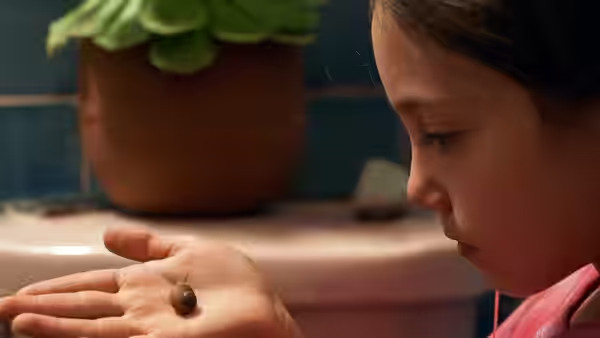
Not all of it holds. Avilés is fond of the small creatures in the house, a snail on a hand, an insect on a wall, a fish in a bowl, and by the third or fourth one we could feel the point being made. Some of the adults, Napo (Juan Francisco Maldonado) among them, are faces at the table rather than people. And in the closing minutes Thomas Becka’s music, which has stayed almost silent all day, comes in fully, and the camera does something we will not describe except to say that the film had earned its feeling already and did not need to insist on it. It is a few minutes’ lapse in a film that otherwise refuses every easy move.

Films about children and death usually make the child wiser than any child is. Avilés never asks Sol to understand more than a seven-year-old would, and never asks us to feel more than Sol does. That restraint is what makes the party, when it finally starts, so hard to watch and so pleasant at the same time: everyone is singing and the guest of honour can barely stand.

It is a 12A, and a child of Sol’s age could see it, though they would have questions afterwards. Sit close, and give up on catching every subtitle when the room is loud. The film has already decided you will miss some of it, because she does.

Critical consensus AI synthesised

84
Positive
15
Mixed
1
Negative
0

The reviews are close to unanimous. Fifteen of the sixteen critics are positive, and they agree on what the film is: a tender drama about a family gathered around a dying father that never turns into a tearjerker. The praise gathers around Lila Avilés’s direction and her camera, which most critics describe as restless and observant, moving through the crowded house at a child’s height and picking out small, solitary moments in the commotion. Several single out Naíma Sentíes as the young lead and the naturalistic ensemble around her, and many note that the film is funnier and livelier than its subject would suggest.

The spread is narrow. The only mixed score belongs to The New York Times, whose review could not be read, so it may not be a dissent at all. The cooler notices, from Eye for Film, Deadline and Paste, still find the film moving; they simply admire it a little less, and Eye for Film suggests the family gathering feels carefully arranged. Nobody calls it sentimental.

The Guardian
3 December 2023 · ★★★★★ · Wendy Ide
100

Ide calls the film an exquisite, tender ensemble drama that balances grief with joy and love. She praises its child-height perspective and the camera’s lyrical, observant movement through the family home.

Read the full review →
IndieWire
29 January 2024 · A · David Opie
95

Opie calls the film a bittersweet, quietly transformative celebration of life amid loss. He particularly praises its child’s-eye perspective and cinematography, which turns a family’s day into fleeting, memory-like moments.

Read the full review →
Los Angeles Times
1 February 2024 · Justin Chang
90*

Chang finds the film quietly devastating, praising its intimate, unsentimental portrait of a family gathered around a dying father. He singles out Avilés’ restless camera and sharp observation of the house’s crowded human and animal life.

Read the full review →
Vulture
26 January 2024 · Alison Willmore
90*

Willmore praises Tótem as a tender, vivid family drama that makes a goodbye gathering feel organic and deeply affecting. She singles out the fluid camera work and the film’s openhearted balance of love, pain, death, and life.

Read the full review →
Slant Magazine
19 March 2023 · ★★★½/4 · Gregory Nussen
88

Nussen praises the film as an unexpectedly beautiful, tender portrait of a family facing impending loss. He singles out its tactile, fly-on-the-wall style and the way Sol’s perspective illuminates the family’s grief.

Read the full review →
Variety
24 February 2023 · Critic's Pick · Peter Debruge
86*

Debruge praises the film as an intimate, emotionally rich portrait of a family confronting mortality, without resorting to overt sentimentality. He particularly highlights its lifelike, lived-in family dynamics and the emotional force of the farewell gathering.

Read the full review →

Straight answers AI written, from our review

Is Tótem worth watching?
Tótem is worth watching, and we scored it 85: a small, loud, exact film about a seven-year-old waiting all day to see her dying father while her aunts prepare his birthday party. It is frequently funny and it moved us more than we expected. Only the closing minutes reach for effects the film had done without.
How long is Tótem, and what is it rated?
Tótem runs 1h 35m. It is a drama film.
Where can I watch Tótem in Portugal?
Tótem is not on any streaming or rental service in Portugal at the moment. It is available in 19 other countries; change your country at the top of the page to see where. Availability is checked daily.
How violent or frightening is Tótem, and is it suitable for children?
Tótem is a UK 12A with no violence and nothing frightening in the usual sense; its weight comes from a dying man behind a shut door and a child who is not told when she can see him. A child of Sol's age could see it, though they would have questions afterwards. It is a film about death, not a film that shows it.
How does Tótem compare to The Spirit of the Beehive?
Tótem is the noisier, warmer film; The Spirit of the Beehive is the quieter and more unsettling one. Both watch a child work out the adult world from its edges in a big house, but Avilés fills every room with relatives, animals and talk, while Erice's images sometimes hold us at a distance. We recommend both; Tótem is the easier evening.

Cast

Awards

International Submission to the Academy Awards, 2024

Nominated
International Submission to the Academy Awards

If you liked this, try…

  1. The Chambermaid (2018) · not on Fi1m yetAvilés’s first film: one hotel, one worker, and the same patient way of watching.

  2. The Spirit of the Beehive (1973, Fi1m 87)A Spanish child works out the adult world from its edges, in a big quiet house.

  3. Still Walking (2008) · not on Fi1m yetKore-eda’s family gathers for a day and says everything without raising a voice.

  4. Summer 1993 (2017) · not on Fi1m yetA Catalan six-year-old, newly orphaned, spends a summer learning who her family now is.

  5. Ponette (1996) · not on Fi1m yetA four-year-old grieves her mother; Doillon films her without a trace of condescension.