Wally Pfister’s first film as director looks as good as you would expect from Christopher Nolan’s cinematographer and thinks about as hard as a pamphlet. Rebecca Hall is better than it deserves; everything around her explains itself to death.
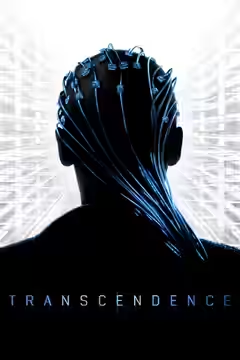
Wally Pfister was Christopher Nolan’s cinematographer for more than a decade, and Transcendence is his first film as director. Jack Paglen’s script asks a serious question: if you could copy a dying man’s mind into a computer, would what came out the other side still be him, and would his wife be able to tell. It is a good question. The film answers it by having people stand in front of monitors and tell each other what the monitors mean, for 119 minutes, and the result is a handsome, sincere film that has been talked to death.
Rebecca Hall is the reason to stay. Her Evelyn is a scientist who has decided, the way grieving people do, that the thing she wants to be true is true, and Hall plays every scene with that decision showing behind her eyes. When Will’s voice first comes out of a speaker, stammering and digitised, the camera stays on her rather than on the screen, and we were moved, not by the resurrection but by a woman hearing exactly what she needed to hear and knowing she should not trust it. It is the one moment where the film’s idea and its feeling are in the same room. Paul Bettany, as the friend Max who helped do it and wishes he had not, is the other grown-up on screen; he gives the doubts a tired, decent face.
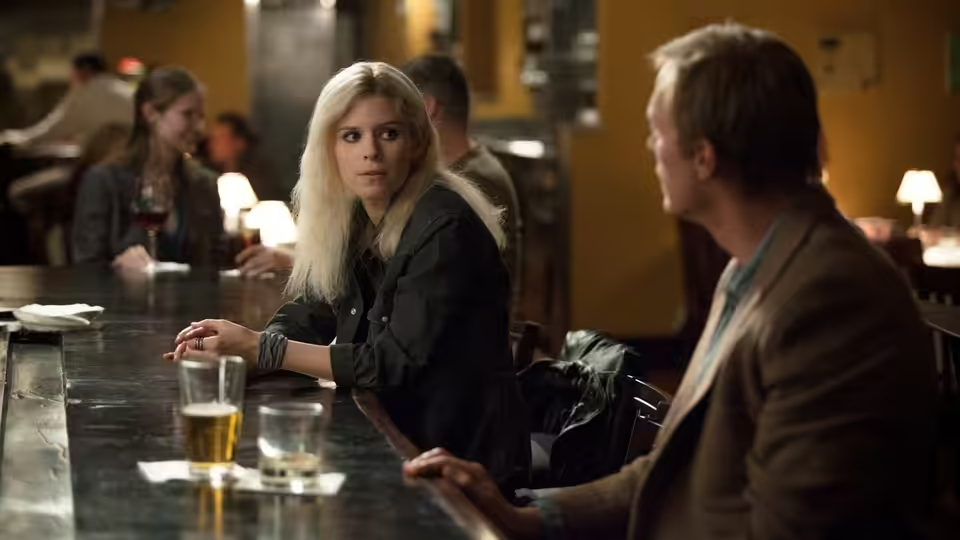
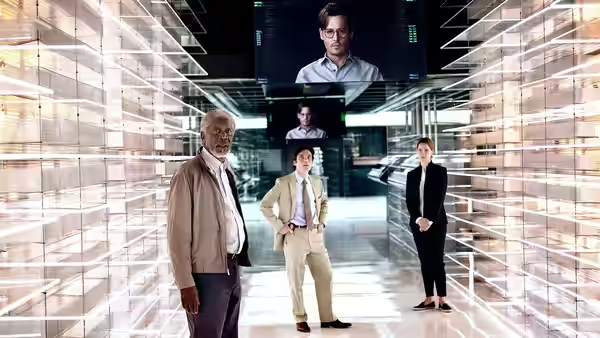
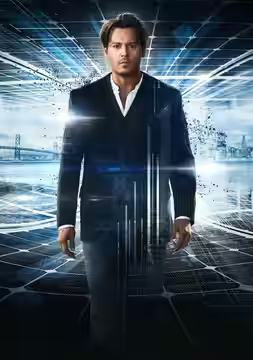
It looks as good as you would expect. Jess Hall shoots the Berkeley lab in soft white light with the sun always behind somebody, and the desert later in a hard noon glare that bleaches the sand to paper. Chris Seagers gives the second half an underground facility of long white corridors and a field of solar panels that tilt together like a congregation, and there are a few images, a drop of water, a sunflower, a server room lit like a chapel, that we would happily hang on a wall. Mychael Danna scores it with slow strings that keep insisting this is a tragedy. The film is never ugly.
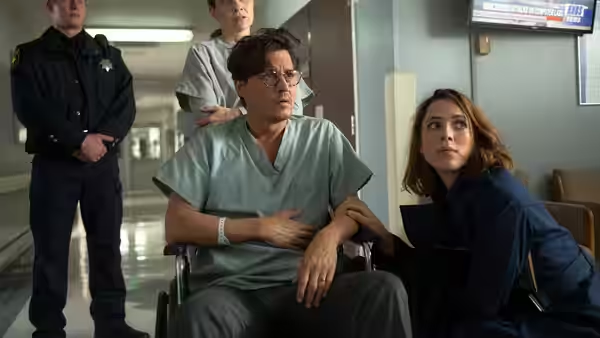
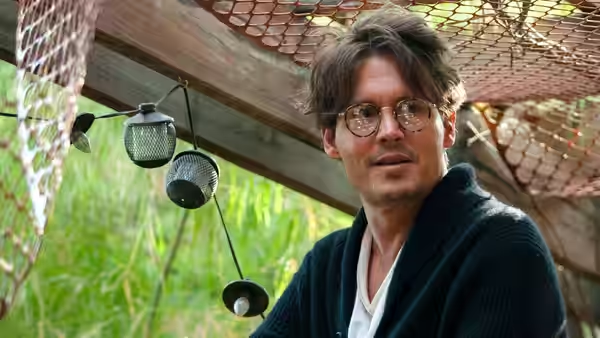
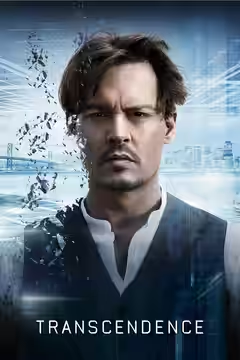
The trouble starts with Will. Johnny Depp plays him as a mild, tired man before the shooting and as a mild, tired face on a screen after it, and nothing we could see passes between the two states. The script needs us to wonder whether the machine is still him; Depp gives us no him to compare it with. He murmurs lines about curing disease and healing the planet in a voice that could be reading the weather. We kept waiting for the moment the digital Will wanted something, anything, and when it finally arrives it is announced in a line of dialogue.
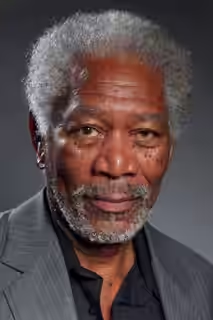
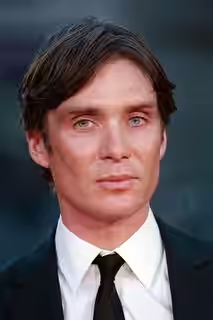
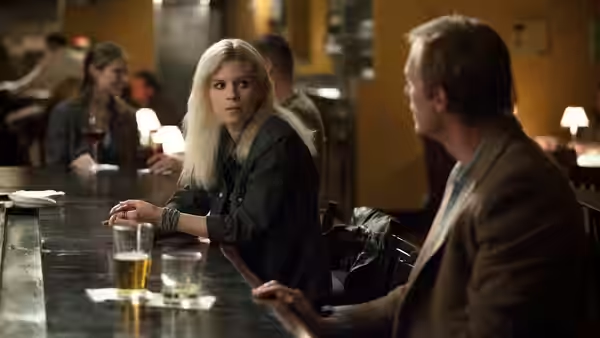
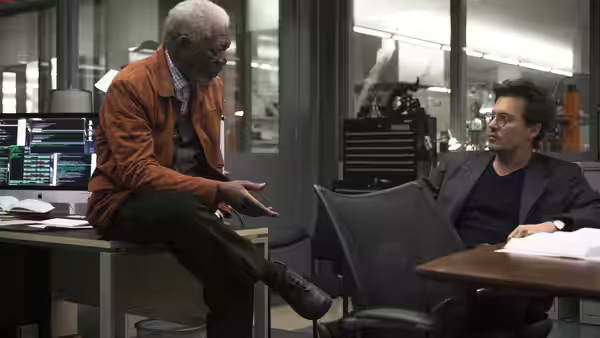
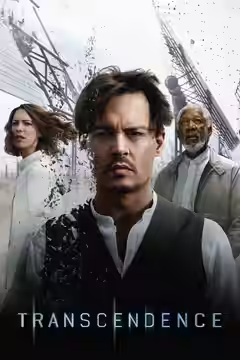
Paglen’s script explains everything and dramatises almost nothing. Characters announce what has happened offscreen, months of it, in captions and briefings, and David Rosenbloom’s cutting hurries from one briefing to the next so that no scene has time to become a scene. Morgan Freeman’s Joseph Tagger exists to look grave and pass notes. Cillian Murphy’s Agent Donald Buchanan has a gun and a frown and nothing to decide. Kate Mara’s Bree, who leads the people who shot Will, is given a motive in a speech and then sent to run around in the desert. The second half takes a turn we will not describe, except to say that it swaps the question for a siege, and the siege is shot like an expensive advert.
Somewhere in the second hour we noticed we had stopped listening and were watching the light instead, and then felt sorry about it, because the film plainly means every word. Pfister’s camera has made other directors’ ideas look like the most important thing in the world; here the idea is his own, or Paglen’s, and it has been handed to a cast who speak it rather than live it. Against the films it is reaching for, the ones about a mind in a machine and the people left outside it, this is the tidiest and the one with the least going on inside.
Most critics landed around where we have, and the few who rated it higher were giving it credit for asking the question at all. We would rather give it credit for Hall, who finds something true in it every time the camera lets her. Watch it at home, where you can pause and look things up when it stops making sense, which is more or less what the characters are doing anyway.