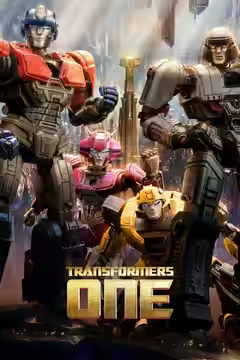
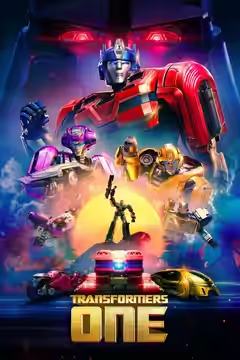
Josh Cooley’s animated prequel gives Optimus Prime and Megatron a shared youth as miners and a friendship worth caring about, and it is funnier and clearer than anything the live-action films managed. The plot goes where you know it will, and the last act is mostly noise.
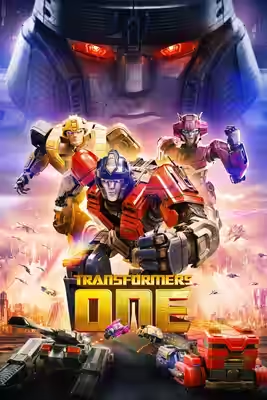
Transformers One goes back further than most prequels dare: to Cybertron before the war, when Optimus Prime was a miner called Orion Pax, Megatron was his best friend, D-16, and neither could turn into anything at all. Josh Cooley, who directed Toy Story 4, has made an animated film about two friends who want the same thing and choose different ways of getting it. It is the best story the series has told, which is not saying much, and it is told with some care. It is also predictable from early on, and the last act is deafening. If you have ever cared about these robots, or have a child who does, it is worth your evening.
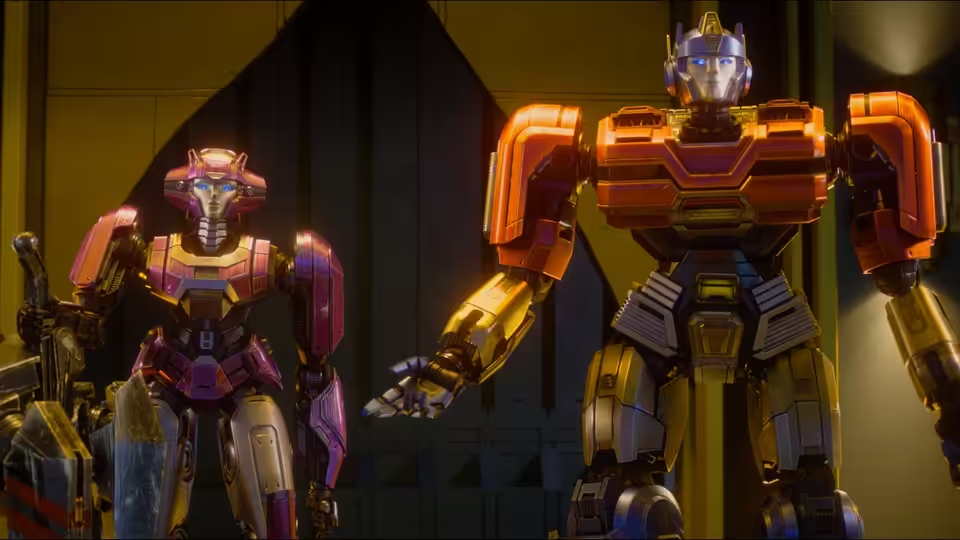
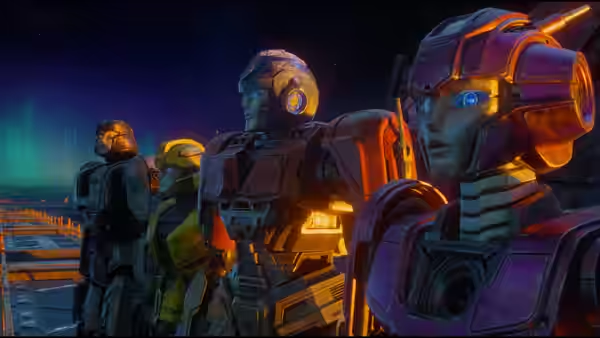
The set-up is a class system with a mechanical excuse. Orion (Chris Hemsworth) and D-16 (Brian Tyree Henry) were built without the cog that lets a Cybertronian transform, so they dig Energon underground while the robots who can change shape live in the light above. Jason William Scheier’s production design stacks the planet in layers: gold and chrome towers for Iacon, blue-lit tunnels for the mines, a rusted plain under a grey sky for the surface. Christopher Batty’s virtual camera is at its best in the first act, in a race through the city that Orion has no business entering. Lynn Hobson cuts it fast, and we always knew where the two of them were. In the films Michael Bay directed, and produces here, we rarely knew anything of the sort.
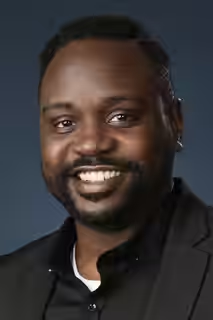
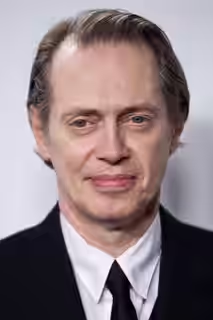
The voices are well chosen. Hemsworth’s Orion is pleased with himself and quick to grin, which suits a robot who breaks rules because he is bored. Henry is the reason to watch. His D-16 is careful, loyal and a little slow to laugh at his friend’s jokes, and Henry lets you hear the pride under the caution. Scarlett Johansson’s Elita-1, their supervisor, is brisk and ambitious and given less to do than she deserves. Keegan-Michael Key’s B-127, an outcast who has been alone so long he holds conversations with scrap, wore us out for ten minutes and then, to our surprise, made us laugh. Jon Hamm gives Sentinel Prime a salesman’s warmth, Steve Buscemi turns up as Starscream and shrieks, and Laurence Fishburne’s Alpha Trion is as solemn as the name suggests.
The film’s real subject is how a friendship goes wrong, and it handles the turn better than we expected. In one second-half scene, which we will not describe, D-16 stops arguing with Orion and simply looks at him, and Henry brings his voice down to almost nothing while the animators let the face go still. We were moved, in a PG film about toys, and slightly annoyed with ourselves for it. It is the quietest moment in the film and the one we remember.
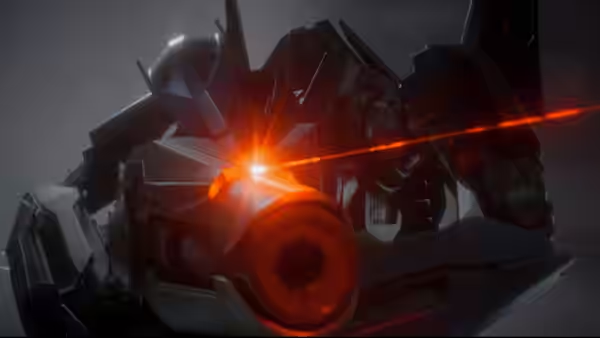
The problems are real. Andrew Barrer, Gabriel Ferrari and Eric Pearson’s screenplay signals every turn a scene ahead, and you will spend stretches of it waiting for the film to catch up. The look never quite settles either. Scheier’s environments are glossy and dense with detail, while the characters are blocky and toy-like, and in wide shots the two do not sit in the same world. Brian Tyler’s score, heavy on brass and synthesiser, is loud when the scene is loud and louder when it is not. And the last twenty minutes, which turn on a large battle, lose the clarity the race had. Hobson can no longer keep the bodies apart, and the film becomes what the series has always been: metal hitting metal, at volume.
At 104 minutes it is short, and the friendship gets most of the time; whole factions arrive and are dealt with in a scene. It stands comfortably above the live-action films, which were longer, louder and far less interested in the people inside the machines. The film does what the title promises, without contempt for its audience.
Take a child who likes robots, or the adult who used to be one. Sit towards the back. The last act is loud enough to feel in your teeth, and the film is better before it gets there.