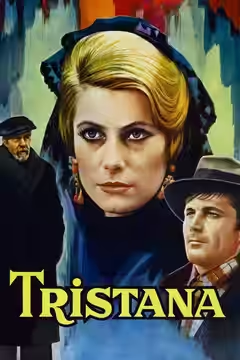
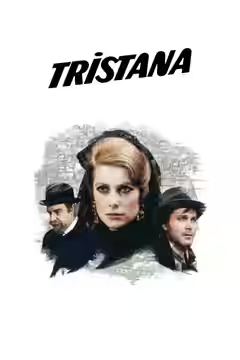
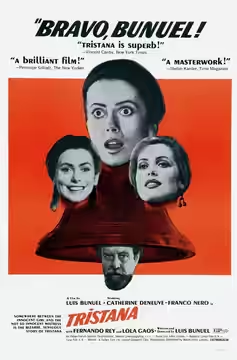
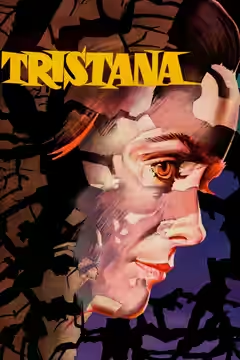
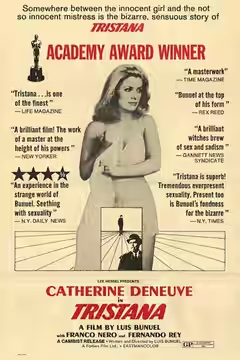
Luis Buñuel’s Tristana is an unsettling drama worth seeing for Catherine Deneuve and Fernando Rey, despite some blunt dialogue. They make the unequal relationship between a young ward and her guardian difficult to dismiss or forget.
Luis Buñuel’s Tristana is a good, disquieting drama with two performances that survive its occasional insistence on explaining itself. In Toledo, the young Tristana lives under the authority of her older guardian, Don Lope. The arrangement gives his wishes a practical advantage over hers, and the film finds both cruelty and bleak comedy in how readily that advantage passes for something respectable. Fernando Rey and Catherine Deneuve are usually more persuasive than the dialogue.
Luis Buñuel and Julio Alejandro adapt the novel by Benito Pérez Galdós without making the guardian’s authority seem safely remote. This is familiar territory for a domestic drama: someone who needs care must accept the conditions imposed by the person providing it. The film is sharpest when those conditions speak for themselves. It becomes less interesting when the dialogue tells us how to understand an inequality already plain on screen.
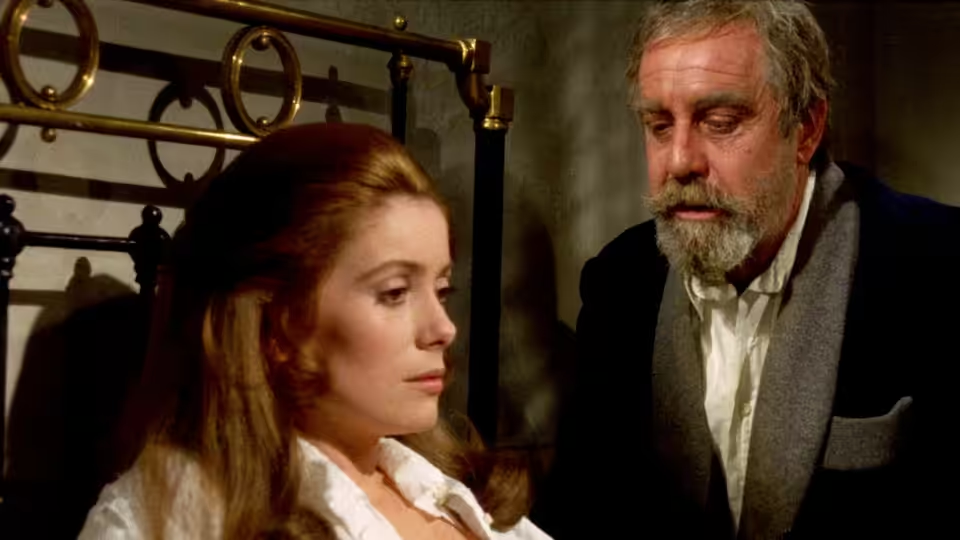
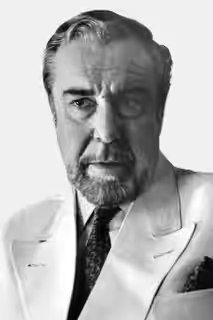
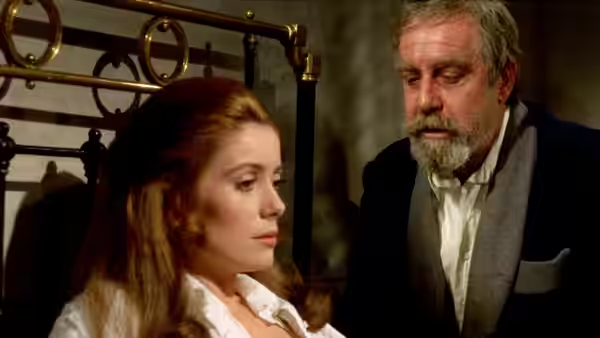
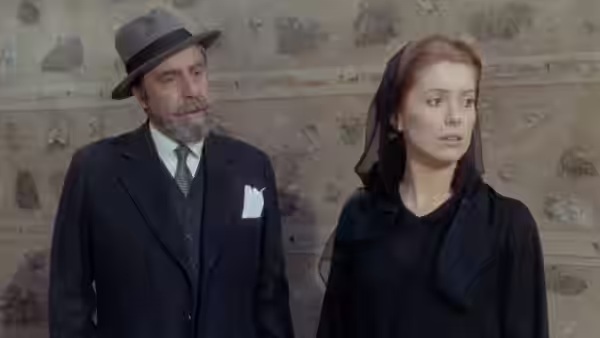
Fernando Rey makes Don Lope difficult to dismiss, which is essential to the film’s discomfort. He gives the guardian enough humanity that we cannot simply file him away as a monster and stop attending to him. We were disturbed by the ease with which Don Lope treats Tristana’s dependence as an entitlement to obedience. The performance makes that assumption seem ordinary, and therefore more unpleasant than a display of obvious villainy would have been.
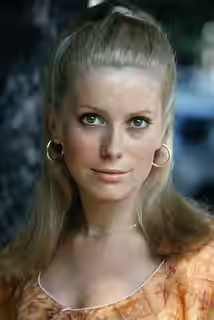
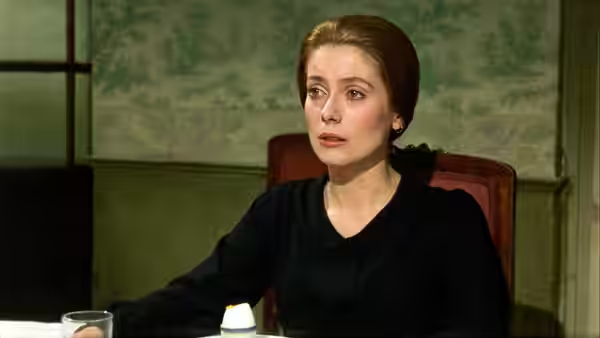
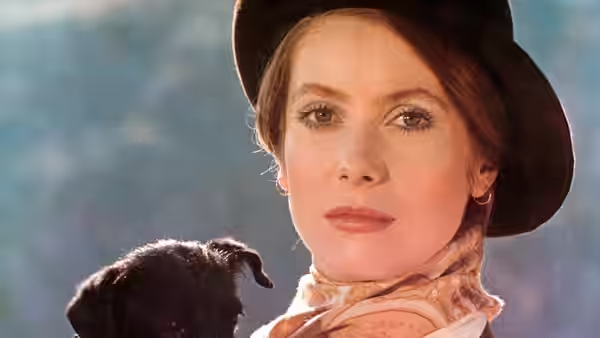
Catherine Deneuve gives Tristana a reserve that keeps the film from becoming merely a study of her guardian. She does not make the young woman’s inner life readily available, and that makes the unequal relationship harder to watch. There are stretches when the performance holds us too far away, however, leaving us to study her predicament without feeling much closer to her. She remains compelling even when warmth is in short supply.
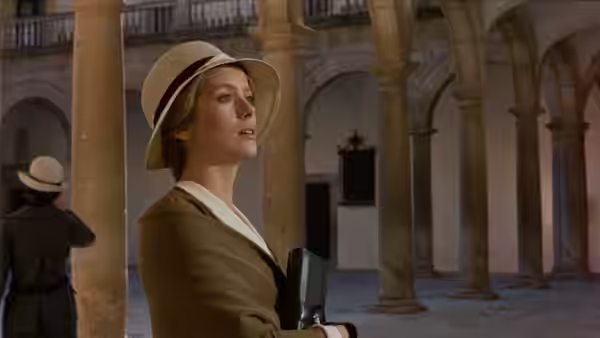
José Fernández Aguayo’s photography uses muted colour to keep the setting from becoming a pleasant distraction. That restraint suits a story in which respectable appearances provide so little reassurance. Enrique Alarcón’s production design supports the subdued look, keeping the surroundings from competing with the actors for attention. The visual quietness works well around the central performances, though it also means that when a passage goes flat there is little else to occupy the eye.
Pedro del Rey’s editing gives the uneasy relationship time to register, but it also leaves some blunt dialogue exposed. At 98 minutes, the film is not overlong; the problem is that certain points arrive after the actors have already made them clear. Luis Buñuel sometimes seems unwilling to let us miss the ugliness of Don Lope’s authority. Those explanations slow the drama more than its measured pace does.
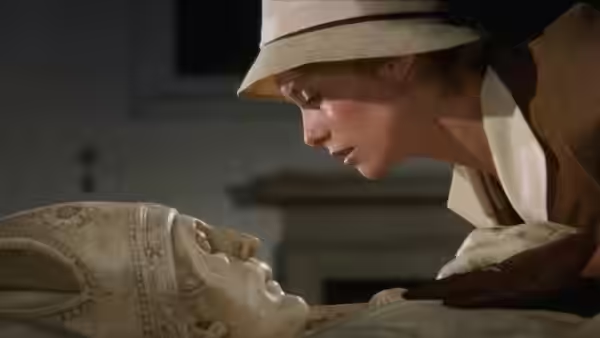
The dreamlike strangeness is more rewarding, allowing uncertainty into a film that can otherwise be rather sure of its conclusions. Its bleak humour also prevents the subject of repression from becoming a solemn duty for the audience. There is pleasure here, although little comfort, and the emotional distance remains a caveat. Choose Tristana when the appeal of a domestic drama lies in watching people whose manners offer no guarantee that they will behave well.