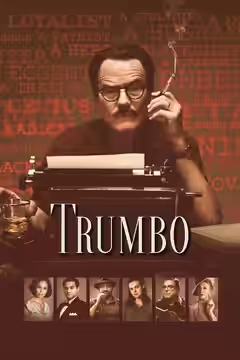
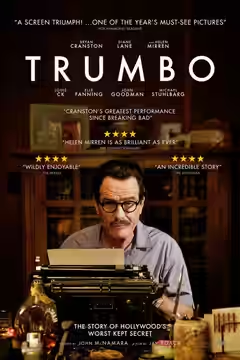
Jay Roach turns the Hollywood blacklist into a brisk, amiable comedy of survival, and Bryan Cranston has a fine time in the bathtub. It is lively and handsomely dressed, and it treats the worst thing Hollywood ever did to its own as a problem of paperwork.
Dalton Trumbo was one of the best-paid screenwriters in Hollywood in 1947, a member of the Communist Party, and one of the ten who went to prison rather than tell Congress about it. Jay Roach’s film takes him from the first subpoena through the years of writing under other men’s names, and it does so briskly, warmly and with a great many hats. It is never dull. It is also never difficult, and for a film about the blacklist that is a strange thing to be able to say. We enjoyed most of its 124 minutes and believed about half of them.
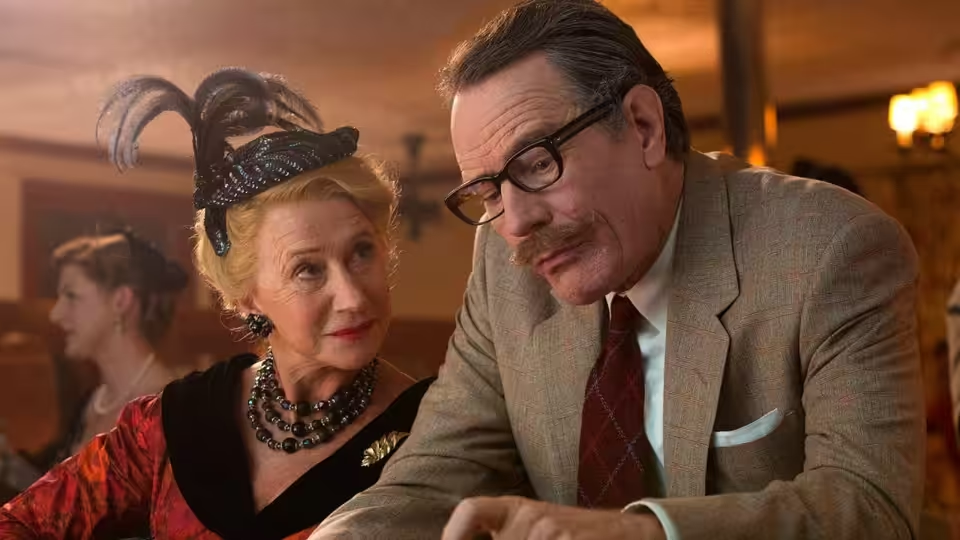
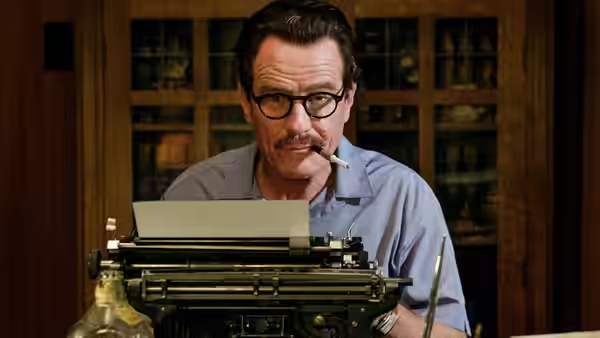
Bryan Cranston plays Trumbo as a man already giving a performance: speeches in full paragraphs, a cigarette holder waved like a conductor’s baton, a typewriter balanced on a plank across the bath. It is a large turn and it knows it, and since Trumbo by every account was a large man, Cranston gets away with it. What John McNamara’s script does not give him is anything underneath. We hear that he is a genius and we see him type; we never see him think. His politics are a few lines about fairness delivered to his daughter, and his compromises, a radical with a ranch and a studio salary, are raised once by a friend and then dropped.
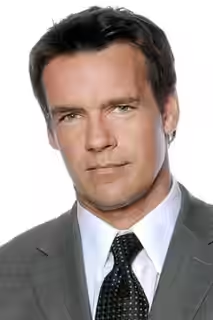
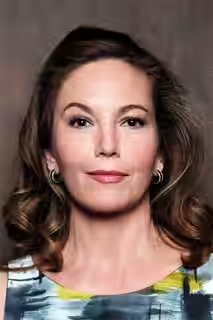
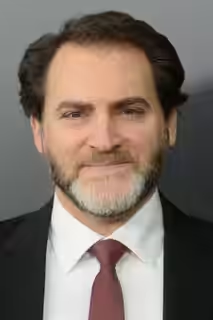
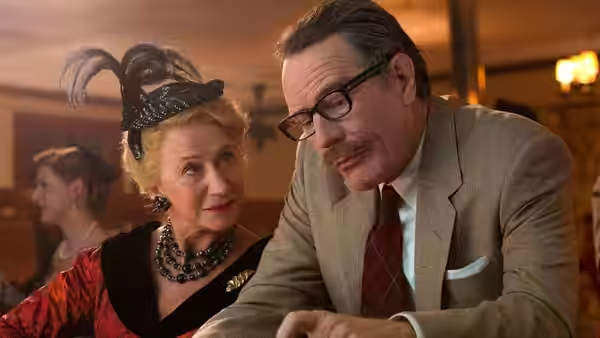
The friend is Arlen Hird, played by Louis C.K. as a tired, coughing man who believes the things Trumbo only says, and his scenes are the closest the film comes to an argument. Helen Mirren’s Hedda Hopper is the other reason to stay. Daniel Orlandi puts her in hats that get larger as her power does, and she plays the columnist not as a cartoon but as a professional who has found something that sells better than gossip. David James Elliott’s John Wayne is a sketch with good shoulders. Michael Stuhlbarg plays Edward G. Robinson as a decent, frightened man, and his one long scene with Cranston is the only time the film puts the cost of the blacklist on a face rather than into a speech. Diane Lane is given almost nothing to do as Cleo and does it with grace.
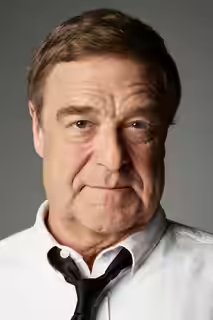
The best stretch is the middle, when Trumbo turns out scripts under false names for Frank King (John Goodman), a producer of monster pictures who does not care who wrote a thing as long as it is on his desk by Thursday. Goodman shouts, bargains and at one point picks up a baseball bat, and we laughed out loud, twice, both times at him. Alan Baumgarten cuts these years as montage, pills and envelopes and a telephone that never stops, and Theodore Shapiro’s score turns brassy and jaunty beneath it, so that the whole business plays as a caper. It is enjoyable. It is also the moment the film decides what the blacklist was: a nuisance that a clever man could work around.
That is the trouble, and it runs through everything. Jim Denault lights the ranch, the hearing room and the prison yard in the same warm amber, and Mark Ricker’s sets, the ranch house, Frank King’s office with its lurid posters, are handsome and safe. Nothing in the frame looks dangerous. The people who lost careers and did not get them back are referred to; the camera stays with the one who ended up fine. The committee men are bullies and the communists are kind people who like unions, and the film never wonders whether any of them believed anything harder than that.
We came out entertained and faintly cross, because a subject this serious had been made this comfortable, and because the film seemed to think the comfort was the point. Roach directs it as a comedy of manners, which is why it moves and why it never bites. Good Night, and Good Luck (2005) covered the same fear in the same years and let the silence do the work; here nobody is quiet for long enough.
Watch it as a Sunday afternoon film, for Cranston, Mirren and Goodman, and for the bathtub. Then look up what happened to the people in this story who were not Dalton Trumbo. The film will not tell you.