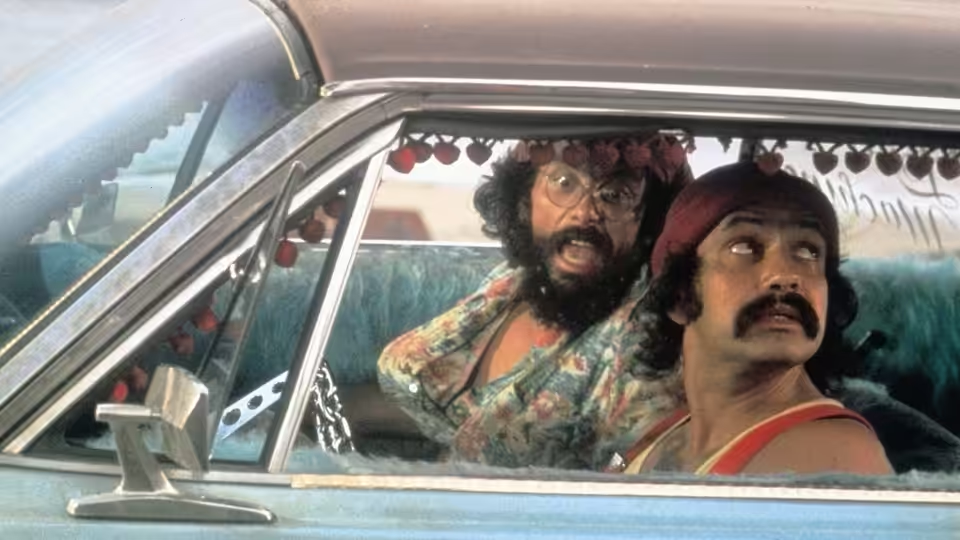
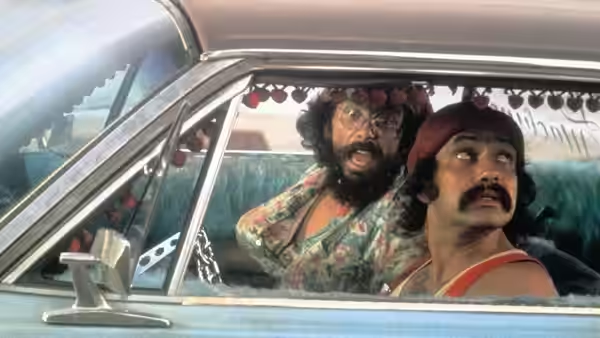
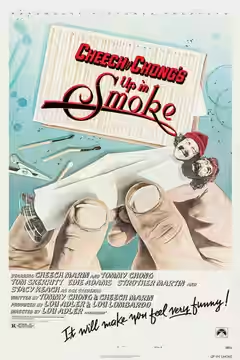
Cheech Marin and Tommy Chong wrote themselves a film and Lou Adler mostly let them do what they liked in front of a camera. In a two-shot they are funny; whenever the film has to move them somewhere, it stalls. Good company, thin picture.
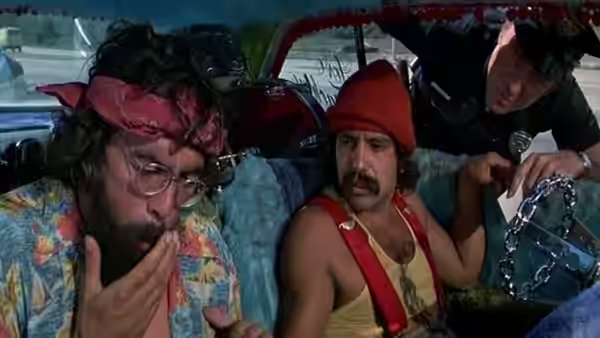
Cheech Marin and Tommy Chong wrote Up in Smoke for themselves, and it shows in the best and the worst sense. The film runs 86 minutes and roughly half of that is the two of them in a parked car, a cell or a doorway, talking slowly. The other half is what the film calls a plot: a rich boy thrown out by his parents, a hitchhike, an arrest, a court date, and later a long drive we will not describe in detail. The talking is the point. The plot is there to move them between conversations.
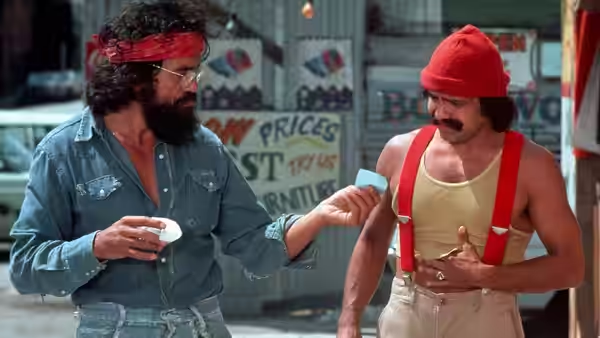
The opening is the film at its most organised. Man (Chong) is given his marching orders by Mr. Stoner (Strother Martin) and Tempest Stoner (Edie Adams), who want him in a job or in military school, and Martin plays the ultimatum dead straight to a son who is plainly listening to something else. Then Pedro (Marin) pulls up, takes the long-haired figure at the roadside for a woman, and the double act begins. Man produces a joint the size of a rolling pin. Pedro asks what is in it and is told mostly Maui Wowie, with some Labrador, because the dog ate the stash. We laughed at the Labrador, properly and without shame.
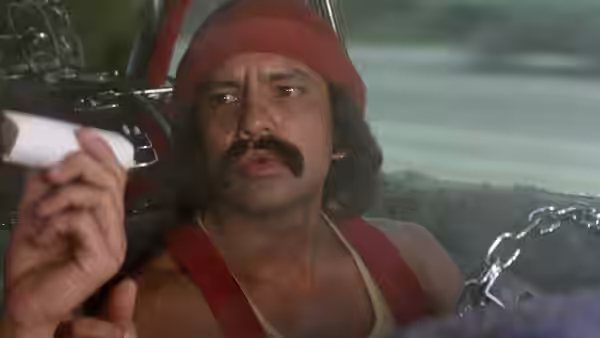
It was a while before we laughed again. Twenty minutes later, watching the pair stare at a wall while nothing happened, we were bored, and then slightly cross about it, because the scene had no joke in it and nobody on either side of the camera seemed to have noticed. Marin and Chong’s timing comes from years of doing this in front of audiences, and it is real; the pause before Chong answers a question is funnier than most of the answers. But a pause needs something on either side of it, and the script keeps forgetting to supply the second half.
The court scene shows what they can do when a sketch is properly built. Judge Gladys Dykes (Marian Beeler) presides while drinking steadily from a pitcher that is not holding water, the bailiff (Donald Hotton) and the prosecuting attorney (John Ian Jacobs) try to keep the case upright, and Pedro treats the whole thing as a mild inconvenience between him and lunch. It has a shape, a build and an exit. The film has perhaps three scenes like it and needed eight.
Gene Polito shoots it in flat Los Angeles daylight, forecourts and freeways and stucco, the light doing nothing in particular, and it looks like a television programme of the period, which suits the material and does not help it. Scott Conrad’s cutting lets shots run long, which is right for Chong’s delayed reactions and wrong for anything involving a moving vehicle. Lou Adler directs by pointing the camera at his two leads and waiting. When they are in a two-shot the waiting pays. When the film has to get them from one place to another it has no idea how, and the joins show.
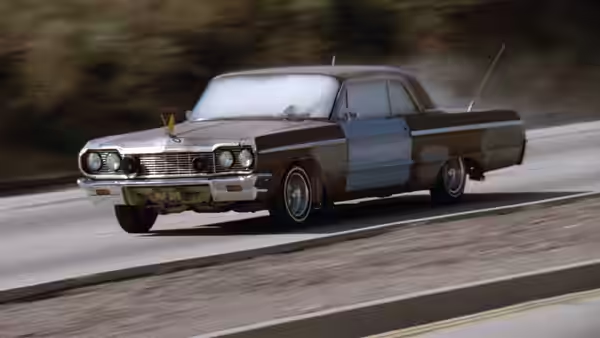
The second half is built around a van, and what the van is made of is the one visual joke in the film that lands as well as the verbal ones; we will leave it there. Once the pair are on the road the film loses even its loose grip, and the people who turn up to chase them are broader and louder than anything Marin and Chong do. Marin is the more skilled performer, quick and physical, a wheedler with a grin. Chong plays a man whose thoughts arrive by post. Together they have something. Apart, neither is given a scene.
It reached British cinemas on 18 October 1979, and it is the film the stoner comedy was built on; the better ones that followed learned from it that the person is funnier than the drug. Here the drug is the joke about a third of the time, and by the end that third feels like more. The 18 certificate is for the smoking and the language rather than anything that would trouble you. Watch it late, with company, in the frame of mind it was plainly made for; sober on a weekday afternoon, it is a long 86 minutes.