Geoff Murphy’s account of the New Zealand Land Wars is rough, bloody and unusually fair to everyone in it, with a remarkable Anzac Wallace at its centre. It cannot always hold its tone, but it is a war film that knows what the war was about.
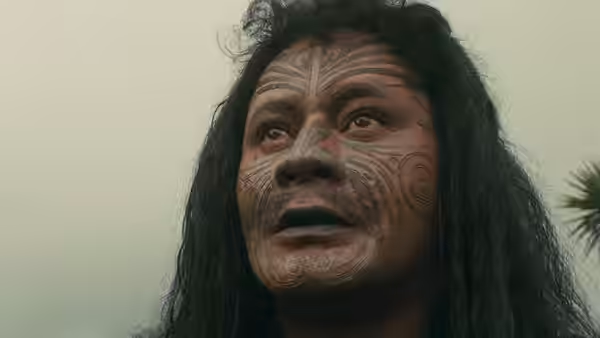
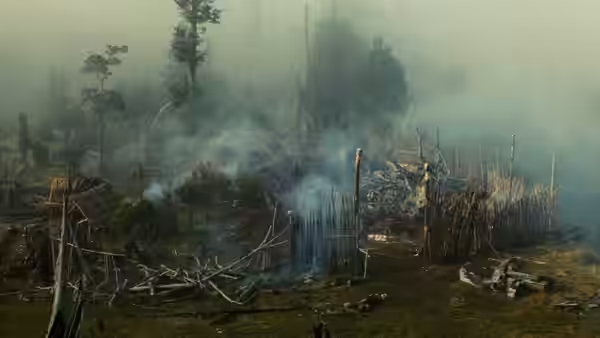
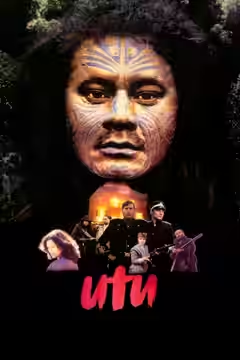
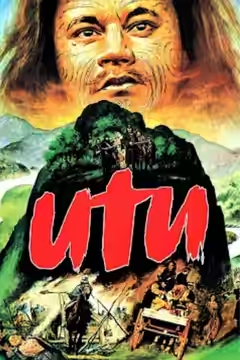
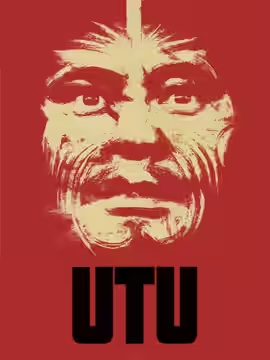
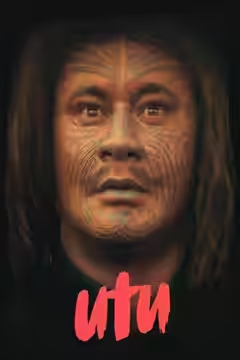
Geoff Murphy has taken the shape of a western, the wronged man, the posse, the country nobody owns for long, and set it in the New Zealand bush of the 1870s. Te Wheke, a Māori scout with the colonial army, comes back to a village the army has burnt. He tattoos his face, swears utu and goes to war. What follows for 118 minutes is a revenge film that keeps refusing to pick a side, and that is its achievement and, now and then, its problem. It is worth your evening.
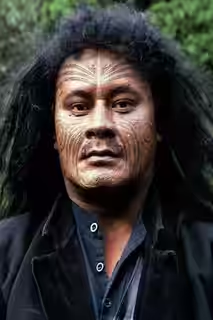
Anzac Wallace carries it. He plays Te Wheke with almost no fuss: a slow walk, a level stare, a voice that stays quiet when everyone around him is shouting. Early on he interrupts a settlers’ church service, takes the pulpit and preaches, in the vicar’s own cadence, about what the Bible says on payment for wrongs. Martyn Sanderson’s vicar is so polite about it, and Wallace so gentle, that we sat waiting for the film to let us off. It did not. We were horrified, and it was the calm that did it; the violence, when it comes, is brief and almost matter of fact.
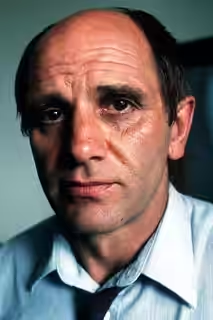
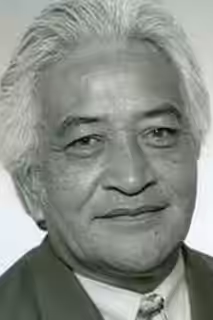
Around him the film gives everyone a reason. Bruno Lawrence’s Williamson, a settler who loses his farm to Te Wheke’s raid, builds himself a shotgun with four barrels and becomes a bearded, muttering ghost in the hills, and Lawrence plays him without asking for our sympathy or refusing it. Kelly Johnson’s Lieutenant Scott is a young officer who half understands what his army has done and is hunting Te Wheke anyway. Best of all is Wi Kuki Kaa as Wiremu, a Māori corporal in the government’s uniform who answers to nobody about why he wears it. His scenes opposite Wallace, two men who know exactly what the other has chosen, are where the film’s argument lives, and it is made in faces rather than speeches.
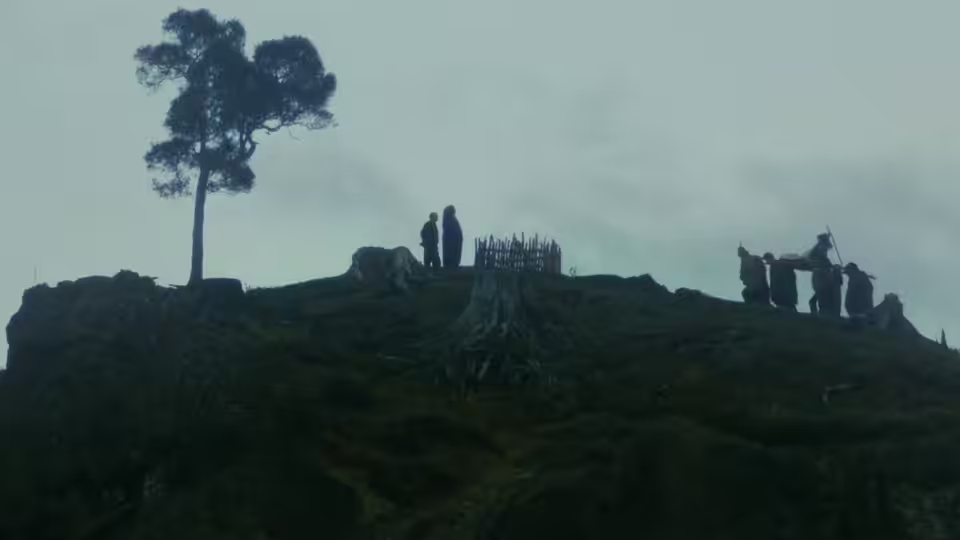
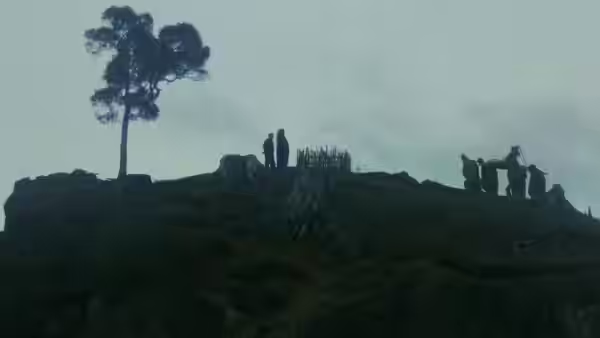
The bush is shot in flat grey light, rain and mist, the soldiers’ blue tunics small against the green, and the film has the sense to leave the landscape alone rather than admire it. Ron Highfield’s production design gives the army a redoubt of raw timber and packed earth that looks thrown up last week, and the Williamson homestead a piano and lace curtains that look carried across an ocean, which they were. Michael Kane dresses Te Wheke in a mix of army coat and cloak, so that he is always half in the uniform he has deserted. John Charles’s score is sparing and mostly stays out of the pursuit, which is right.
The trouble is tone. Murphy came to this from Goodbye Pork Pie, a car-chase comedy, and he cannot resist a joke. Tim Eliott’s colonel is a wheezing farce, John Bach’s Belcher is a soldier written for laughs, and the film will cut from a slaughter to a pratfall without warning. Sometimes the whiplash is the point; often it just knocks the wind out of a scene. Michael J. Horton and Ian John cut the film to begin near its end and loop back, and the long middle stretch of pursuit loses its shape, with scenes that stop rather than finish. Scott’s attachment to Kura (Tania Bristowe), one of Te Wheke’s band, is meant to carry weight and has barely a page of writing behind it.
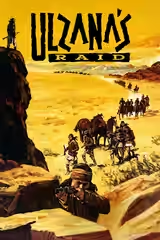
The natural comparison is Robert Aldrich’s Ulzana’s Raid (1972), another film about a small army chasing a man across land they have stolen. Aldrich kept his Apache a shape on the horizon. Murphy puts Te Wheke in the middle of the frame, gives him the best lines and lets us read every thought. That is a braver choice and the film is better for it, even when the rest cannot keep up.
See it for Wallace, for Kaa, for the church, and for a war most of us were never taught about. Forgive the colonel. The film is lumpy and it is alive, and there are not many of those.