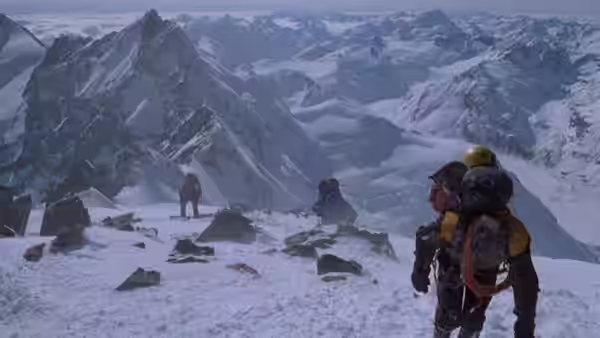
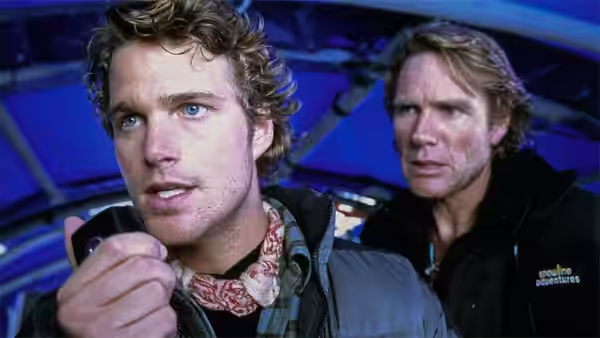
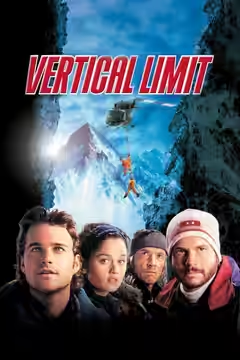
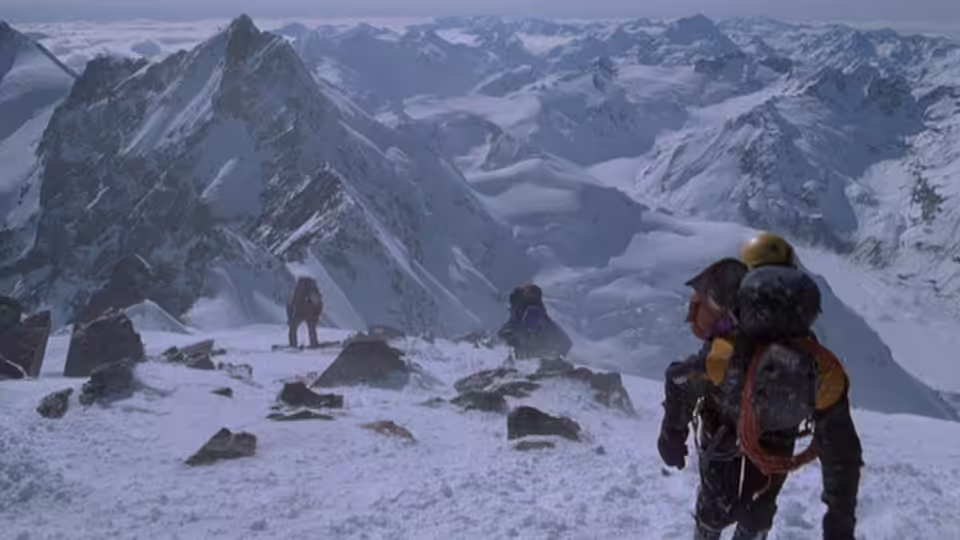
A climber with a loaded pack stands above a snowy mountain camp as others cross the ridge
Film review

Vertical Limit

2000 · Directed by Martin Campbell · 2h 04m

In a sentenceA fine advertisement for looking at mountains from somewhere with a chair

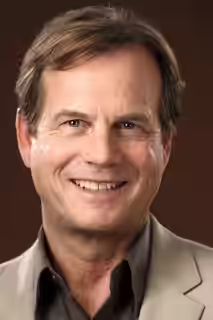
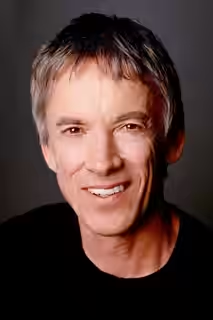
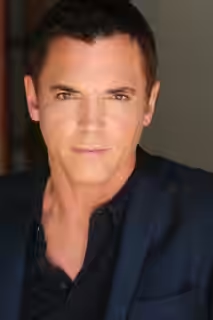
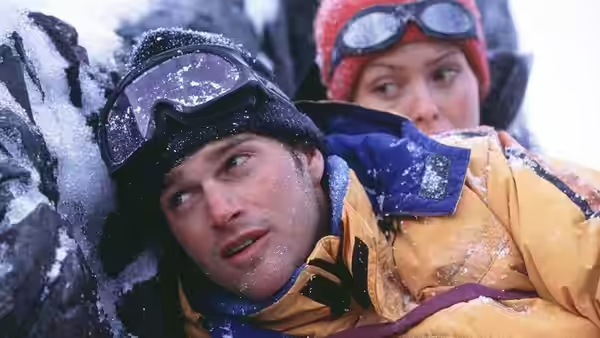
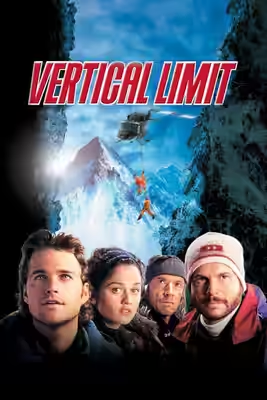
Amid mountain snow and ice, Peter Garrett (Chris O’Donnell) and Annie Garrett (Robin Tunney) face the dangers of climbing in exposed terrain. Elliot Vaughn (Bill Paxton) is another of the figures involved, alongside brooding mountain man Montgomery Wick (Scott Glenn). Monique Aubertine (Izabella Scorupco) and Tom McLaren (Nicholas Lea) are also part of the adventure, which brings wealthy climbers into a setting with a Pakistani military presence. Personal concerns complicate the physical hazards, while the height makes every fall a threat. The climb puts these people and their competing priorities under pressure.

Fi1m review

Martin Campbell stages several effective scares in the snow, but the thin characters and crowded screenplay make the stretches between them drag. The climbing is considerably more persuasive than the conversations.

Vertical Limit is a patchy climbing thriller whose action is good enough to make its weaknesses frustrating. Martin Campbell knows how to frighten us with height, and several stretches work through the simple prospect of someone losing their grip. The trouble comes when the film gives its climbers more to explain than to do. At 124 minutes, it has room for complications that add little urgency and conversations that add little character.

David Tattersall’s mountain photography gives the snow and ice an imposing scale, and the aerial views are worth the attention the film pays them. We felt our stomachs tighten at the drops, because the pictures make the distance below the climbers easy to understand. Martin Campbell makes good use of that response without needing the people in danger to be particularly interesting. For a while, the action has enough force to make us stop minding how little we know about them.

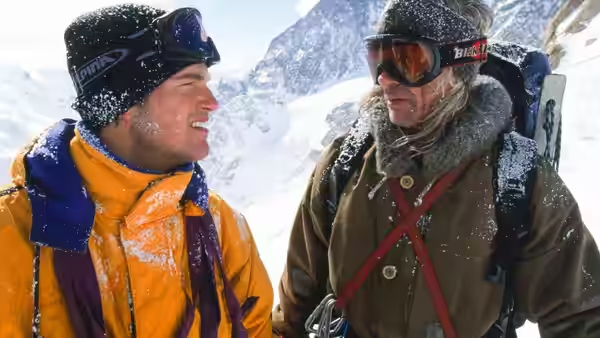
Chris O’Donnell is an earnest but rather blank centre as Peter Garrett, and the screenplay gives that earnestness more work than it can manage. Robin Tunney and Bill Paxton have the same underlying difficulty: their characters are easy to place and hard to become curious about. Scott Glenn does better as Montgomery Wick, the brooding mountain man, suggesting a life beyond the immediate demands of the plot. His performance offers some of the human interest that the rest of the cast have to struggle to provide.

Terry Hayes and Robert King load the screenplay with additional business when the climbing should be supplying enough trouble. The subplots make the film feel busy, but they also keep drawing attention to how mechanically the people have been written. Thom Noble’s editing is more convincing within the action than across the story, where the competing concerns make it harder to sustain momentum. Too many of these people remain familiar types throughout the dialogue scenes, however much danger the script supplies.

The effects create another problem, because their unevenness makes the danger harder to believe. Jon Bunker’s production design cannot always make the mountain sets feel like part of the landscape; some passages look artificial enough to loosen the tension. James Newton Howard’s score helps keep the excitement going, and is one of the more dependable contributions here. It can support the action, but it cannot do much about a scene whose surroundings have stopped looking convincing.

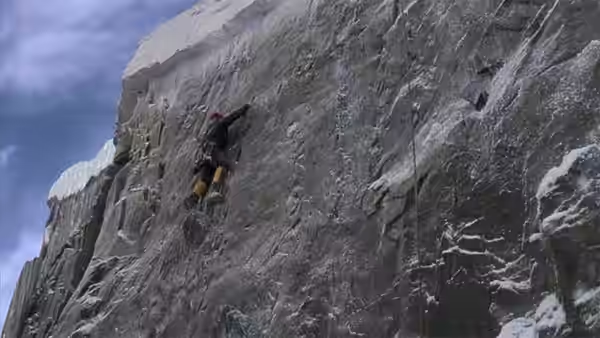
A mountain adventure is entitled to be improbable, and there is pleasure in watching a director commit to physical jeopardy with this much energy. Martin Campbell earns several scares even when the writing is doing little to help him. What wears us down is the amount of routine drama surrounding them, particularly when the characters offer so little reason to follow their separate concerns. Climbing-thriller enthusiasts may get enough from the heights, the photography and Scott Glenn to forgive the rest. Anyone coming chiefly for the people should lower their expectations.

Critical consensus AI synthesised

54
Positive
3
Mixed
3
Negative
5

The reviews lean towards disappointment, though praise repeatedly centres on Campbell’s handling of the mountain action. Even several detractors find effective moments of vertiginous danger, while the more enthusiastic critics regard the stunts and sustained tension as enough to carry a familiar adventure. The aerial photography and James Newton Howard’s score also draw praise, and Digital Spy singles out Scott Glenn’s performance for bringing depth to the brooding mountain man.

The main reservations concern thin characters, predictable plotting and unnecessary subplots, but critics differ sharply over how much these weaknesses matter. For some, the action compensates; for others, the script drains the danger of urgency and leaves too few convincing thrills. The effects are another point of disagreement: the Evening Standard enjoys the snow-and-ice spectacle, whereas Total Film finds the artificial-looking effects and sets damaging to the suspense. The spread runs from enthusiastic entertainment to weary frustration with the formula.

Evening Standard
10 April 2012
80*

The critic finds the film wildly entertaining despite its absurd, over-the-top approach. They single out its nonstop action, stunts and snow-and-ice effects as the source of its appeal.

Read the full review →
Variety
29 November 2000 · Todd McCarthy
75*

McCarthy finds the film an exciting, muscular adventure despite its one-dimensional characters and hokey plot elements. He especially praises Campbell’s tense, visually inventive action sequences, including a breathtaking camera shot during a climber’s fall.

Read the full review →
Screen Daily
5 December 2000 · Mike Goodridge
64*

The page identifies this as a review, but the review text is unavailable. Its verdict and any specific praise or complaint cannot be determined from the accessible text.

Read the full review →
The New York Times
8 December 2000
64*

The review’s verdict cannot be verified because the page returned an access-denial message. Its specific praise or criticism is likewise unavailable.

Read the full review →
The Guardian
21 January 2001 · Philip French
60*

French finds the film effective at sustaining tension, though its characters are less interesting than its dramatic background. He praises the spectacular settings and singles out the absurd Pakistani army ritual and the wealthy climbers’ destructive self-discovery.

Read the full review →
Radio Times
★★ · Dave Aldridge
40

The critic finds the adventure predictable but watchable, with an uncharismatic hero. Enjoyable action sequences help compensate for clichéd characterisations.

Read the full review →

Straight answers AI written, from our review

Is Vertical Limit worth watching?
Vertical Limit is worth considering for climbing-thriller enthusiasts, but we score it 58/100 for effective mountain scares surrounded by routine drama. The photography and Scott Glenn give us reasons to stay with it; thin characters, uneven effects and a crowded screenplay make it difficult to recommend more widely.
How long is Vertical Limit, and what is it rated?
Vertical Limit runs 2h 04m. It is an adventure and action film.
Where can I watch Vertical Limit in France?
Vertical Limit is streaming on Netflix and Amazon Prime Video in France, and it is also available to rent from Amazon Prime Video from €3.99. It leaves Amazon Prime Video on 30 September. Availability is checked daily; the links above go straight to each service.
How violent or frightening is Vertical Limit, and is it suitable for children?
Vertical Limit has a UK 12 certificate and delivers frightening climbing peril, with exposed heights and the threat of falls supplying its strongest scares. We found the drops stomach-tightening because the photography makes the distance below clear; younger children are not its audience, and even teenagers sensitive to heights may find it uncomfortable.
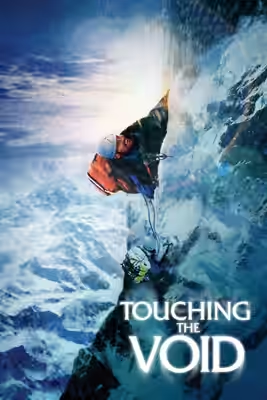
How does Vertical Limit compare to Touching the Void?
Vertical Limit offers effective action scares, but we recommend Touching the Void as the stronger mountain-peril film for its human interest and lasting impact. The latter builds suspense through climbers’ accounts and convincing reconstructions, despite a measured opening; Vertical Limit suits those chiefly after physical jeopardy who can forgive thin characters.
What should I watch after Vertical Limit?
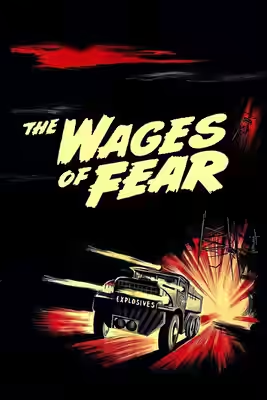
After Vertical Limit, try Touching the Void (2003, Fi1m 87): For mountain peril with people whose decisions remain difficult to stop thinking about. Then The Wages of Fear (1953, Fi1m 90): Dangerous work, desperate men and suspense built from the smallest physical movements.

Cast

If you liked this, try…

  1. Touching the Void (2003, Fi1m 87)For mountain peril with people whose decisions remain difficult to stop thinking about.

  2. The Wages of Fear (1953, Fi1m 90)Dangerous work, desperate men and suspense built from the smallest physical movements.

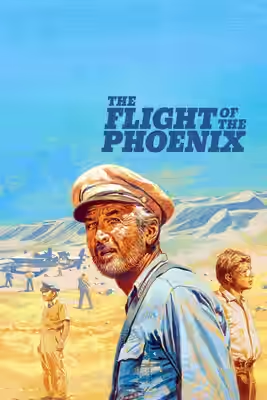
  3. The Flight of the Phoenix (1965) · not reviewed yetSurvival drama that gives its stranded group enough personality to make the quarrels count.

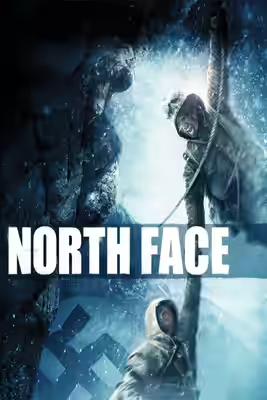
  4. North Face (2008) · not reviewed yetAnother climbing ordeal, with harsher consequences and less patience for comforting heroics.

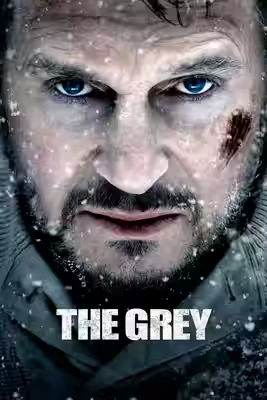
  5. The Grey (2011) · not reviewed yetFor cold, exhaustion and survival action with more troubling thoughts beneath it.

Free account

Know what to watch tonight

Two lists that know where things are streaming, collections you can share, your own score beside ours, and Discover that remembers what you have seen.

  • Want to see, sorted by what is streaming now
  • Seen, with your score out of ten
  • No adverts, ever