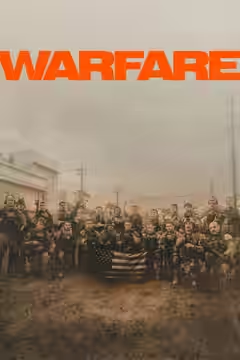
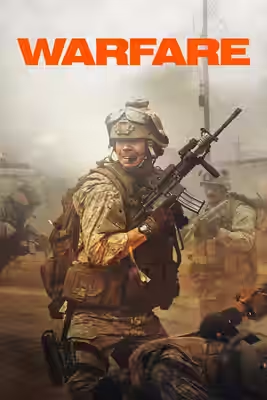
Warfare poster

Warfare

2025 · Directed by Ray Mendoza, Alex Garland
1h 35mWarAction15
76
Fi1m score
77
Critics · 23
Audience · not yet

Where to watch in the UK

Checked 10 September at 22:29. Prices and availability change; the service’s page is the last word.

Plays from YouTube when you press play; nothing loads from them until then.

Synopsis

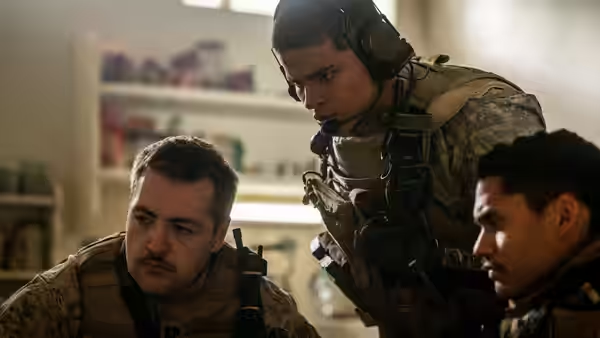
Ramadi, Iraq, 2006. A platoon of Navy SEALs takes over a two-storey house in the dead of night, moves the family who live there into a back room, and sets up a watch on the street below. Ray (D’Pharaoh Woon-A-Tai) works the radio. Erik (Will Poulter) is the officer in charge. Elliott (Cosmo Jarvis) has the sniper rifle. For a long while nothing happens; then something does. Written and directed by Alex Garland and Ray Mendoza, a former SEAL who was there, and told in real time from the memories of the men involved, with Kit Connor, Joseph Quinn and Michael Gandolfini.

Fi1m review

In a sentenceNinety-five minutes in one house in Ramadi, no music, no speeches, and a ringing in the ears that followed us home

Garland and Mendoza rebuild a 2006 Ramadi firefight in real time from the memories of the men who fought it, and it is the most convincing combat we have sat through in years. What it will not tell you is why anyone was there.

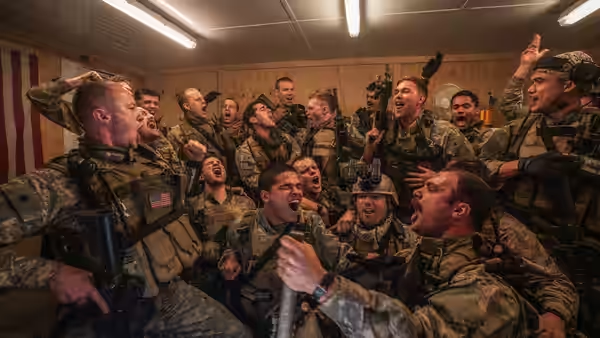
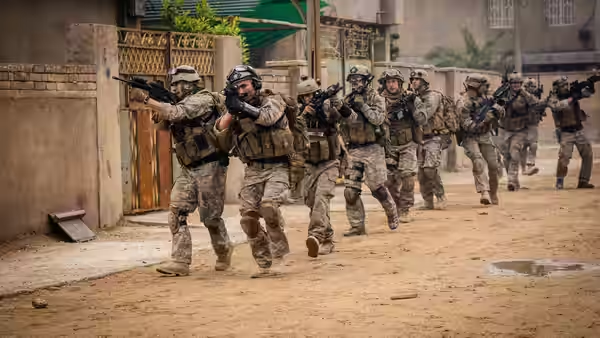
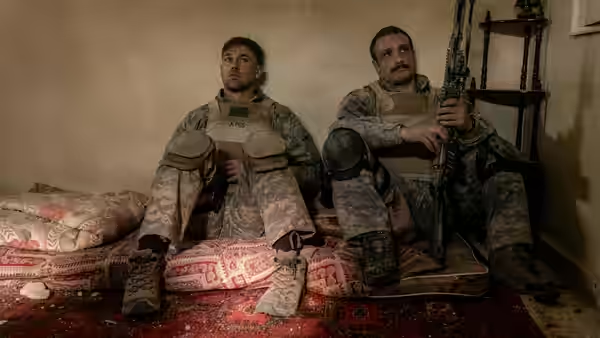
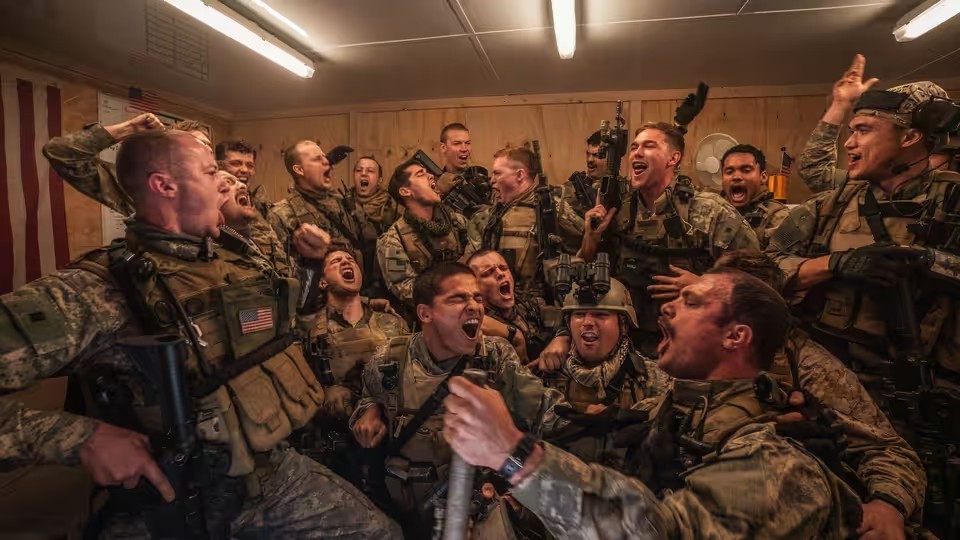
Ray Mendoza was a Navy SEAL in Ramadi in 2006, and Warfare is his account of one day there, written and directed with Alex Garland and built, a title card tells us, from the memories of the men who were present. There is no score, no voiceover and no caption explaining the war. A platoon takes over a two-storey house at night, the family who live there are put in a back room, and a sniper settles at an upstairs window to watch the street. For a long stretch that is the whole film: men on a concrete floor, a radio, a jet passing low, and a long wait.

Then something does happen, and we will not say what. Because the film runs in real time and never cuts away, every minute the men spend waiting is a minute we spend with them.

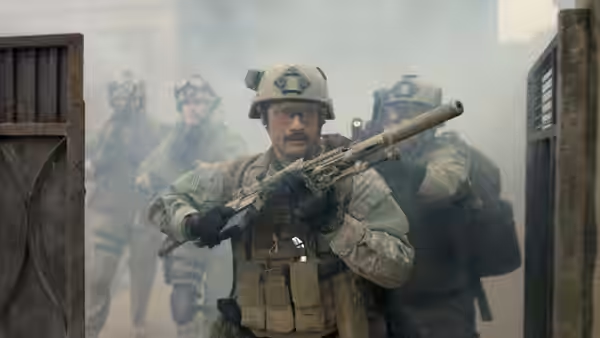
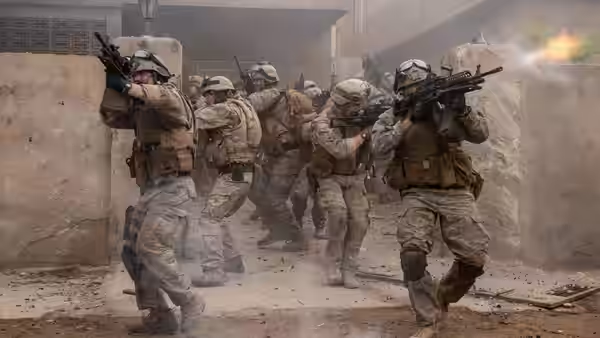
David J. Thompson holds the camera at shoulder height in corridors and stairwells, so we rarely see more than the men can. Mark Digby’s house is a family home with the furniture pushed to the walls and a fine grey dust over everything, and once that dust is in the air we could tell the men apart only by their voices on the radio, since David Crossman and Neil Murphy have put every one of them in the same sand-coloured kit under the same helmet. Fin Oates cuts to a single rule, which is that time is not allowed to skip, so the lulls run as long as the firefights.

The sound is the film’s main instrument. A jet passes and the house shakes; gunfire outside is a flat crack, gunfire inside is a blow to the chest. When the worst thing happens the mix drops to a thin whine, as if we had been standing beside it, and then the screaming starts and does not stop. We were horrified. We sat for what must have been twenty minutes with our shoulders up round our ears. It is not the blood that does it, though there is plenty. It is that the screaming is treated like the dust, as a fact of the house that nobody on screen can do anything about either.

D’Pharaoh Woon-A-Tai plays Ray, the man on the radio, and spends most of the film reading grid references into a handset while his face does something else entirely; the film is built on that performance. Will Poulter’s Erik is the officer, and Poulter shows a man keeping his voice level while his eyes give up on him. Cosmo Jarvis, Joseph Quinn, Kit Connor and Finn Bennett fill out the platoon, and Michael Gandolfini arrives late as a lieutenant. Nobody has a photograph of a girlfriend or a story about home. We know these men by their jobs and their fear.

What it will not say is why. The Iraqi family are glimpsed through a doorway and barely spoken to, and the men firing at the house are never more than shapes. Garland and Mendoza have decided that the platoon did not know either, and that the film should know no more than they did. Most critics have taken this as the point and praised it; two have called the result empty. We are between them. For 95 minutes the choice works, because the fear on screen is convincing. Afterwards, in the car park, we knew exactly what the day had felt like and nothing about what it had been for, and we think the makers would call that the right condition to leave in.

Against Garland’s Civil War (2024), this is the more disciplined film. See it in a cinema if you can, with the sound turned up as far as it will go; at home the walls do not shake and the film is a good deal smaller for it. The 15 certificate is stern and deserved. Do not bring anyone squeamish, and do not expect much conversation on the way out.

Critical consensus AI synthesised

77
Positive
21
Mixed
0
Negative
2

Most critics agree on what Warfare is: a real-time reconstruction of one 2006 Ramadi mission, told from the soldiers’ memories, with no score, no backstories and no explanation of why anyone is there. The praise clusters on the sound design, the hand-held camerawork and the ensemble, and on how thoroughly the film strips out the usual war-film comforts. The reservations cluster just as tightly: the same lack of context that impresses most critics leaves others asking what the film is for once the shooting stops. Little White Lies finds it colder and nastier the longer one thinks about it, and Sight and Sound finds it emotionally ineffective. The two outright dissents come from The Independent, which calls the violence unmoored without political framing or Iraqi perspectives, and Deadline, which finds the technique showy and the film empty. Otherwise the spread is narrow; almost everyone lands between good and very good.

The Telegraph
17 April 2025 · ★★★★★
100

The critic calls the film an astonishing and honest depiction of modern combat, the most harrowing and truthful on screen, reconstructed in real time from the soldiers' memories. They single out its evocation of the fire, fury, and boredom of battle, along with strong performances that convey the chaos and lack of easy resolution in war.

Read the full review →
The Guardian
20 April 2025 · Peter Bradshaw
90*

The critic praises the film's intense, visceral real-time recreation of a 2006 Iraq battle as one of the most forceful depictions of combat in recent cinema, comparable to Saving Private Ryan and Come and See. They highlight its stripped-back approach that rejects conventional war movie tropes like moral messaging or character backstories, focusing instead on the raw experience of soldiers in action and the futility of war.

Read the full review →
Empire
28 March 2025 · Alex Godfrey
85*

The critic describes the film as respectfully gruelling and cinema’s most effective pure anti-war film, commending its lean storytelling, lack of score or sentimentality, and immersive depiction that makes war look anything but cool. They highlight the real-time structure and focus on the texture of combat from the soldiers’ memories.

Read the full review →
The Hollywood Reporter
28 March 2025 · David Rooney
85*

The critic praises the film's unflinching realism and visceral real-time depiction of combat as a nerve-shredding hell that leaves viewers shaken. They single out the rigorous authenticity drawn from co-director Ray Mendoza's firsthand experience, along with the immersive sound design and ensemble performances.

Read the full review →
The AV Club
28 March 2025 · B+
83

The review calls the film a tense, sobering, and ugly snapshot of combat that wages tight filmmaking against war's disregard for life. It singles out the real-time claustrophobic and frenetic camerawork that maintains the soldiers' perspectives throughout the ordeal.

Read the full review →
Evening Standard
28 March 2025 · Martin Robinson
80*

The critic praises the film as a technical triumph and visceral real-time immersion into a Navy SEALs operation, highlighting the astonishing sound design, hand-held camerawork, and strong ensemble performances. They note it focuses purely on human experience in hellish circumstances without engaging politics.

Read the full review →

Cast

Stills

If you liked this, try…

Come and See poster

Come and See

1985 · A boy in occupied Belarus, 1943; the war film everything else is measured against.

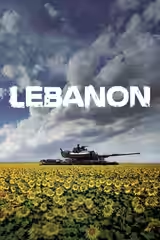
Lebanon poster

Lebanon

2009 · The 1982 invasion seen entirely from inside a tank; ninety minutes of gunsight.

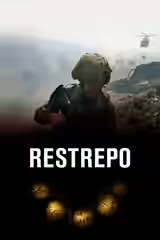
Restrepo poster

Restrepo

2010 · A year with one platoon in Afghanistan, filmed by two men who kept going back.

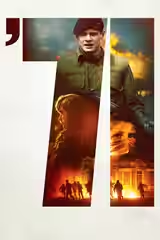
'71 poster

'71

2014 · One soldier lost overnight in Belfast; Jack O’Connell running through a city he does not know.

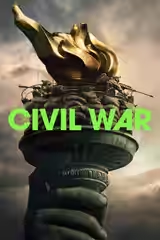
Civil War poster70

Civil War

2024 · Garland’s previous; more to argue with, less discipline, and Kirsten Dunst at her stillest.