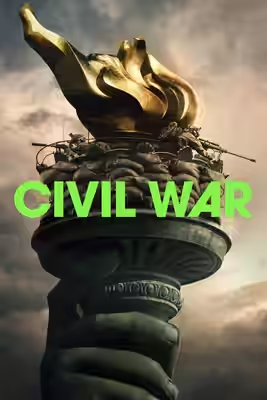
Alex Garland’s war film is loud, tense and superbly made, and it has decided not to tell us what the war is about. Kirsten Dunst is the reason to see it; the silence around her is a choice we accepted without quite liking it.
Alex Garland has imagined a second American civil war and declined to say what it is about. Four journalists set out to drive from New York to Washington to interview the President before the fighting reaches him. Civil War is tense, loud and superbly made, and whether the silence around its war is a strength or a dodge is the argument we had on the way home. We came down, narrowly, on the side of the film.
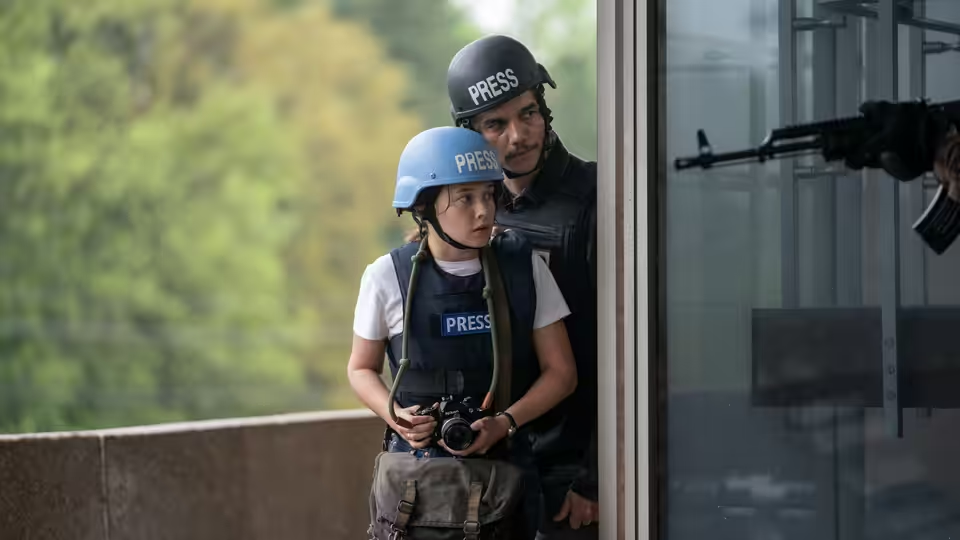
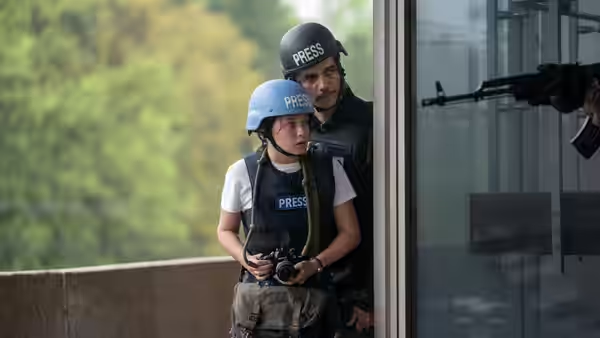
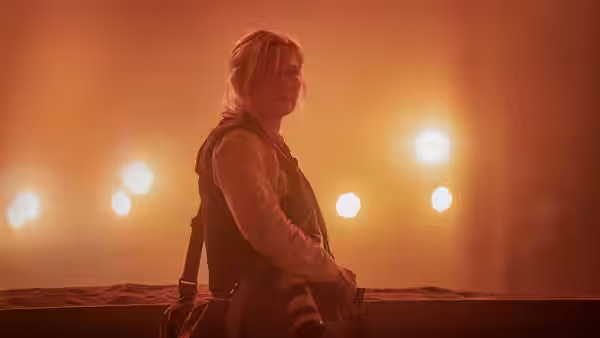
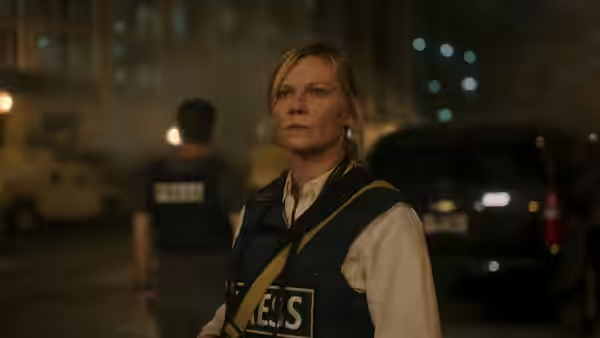
Kirsten Dunst plays Lee as a woman who has photographed other people’s wars for so long that she can watch a man burn and think about her exposure. She does almost nothing with her face, and it is the best thing here. Wagner Moura’s Joel gets a visible kick out of gunfire and is honest about it. Stephen McKinley Henderson gives Sammy, the old hand who cannot run any more and comes anyway, a tired decency the film leans on whenever it needs a conscience. Cailee Spaeny’s Jessie is the apprentice, and Spaeny plays her hardening cleanly even when the script draws it in straight lines.
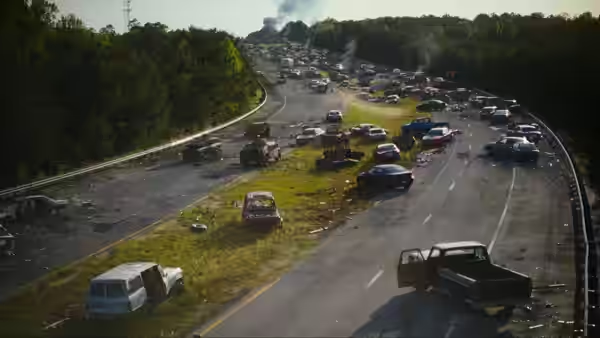
Rob Hardy shoots most of it in flat, bright daylight, so the burnt-out cars and the bodies at the roadside look less like a war film than like the news. The camera stays at the reporters’ shoulders; we see what they see and nothing else. When Lee or Jessie takes a picture the film stops on the still, drained of colour, and the sound drops away for a second. Caty Maxey’s production design is best in the in-between places: a petrol station where the pumps still run and the prices have climbed into the hundreds, a shopping centre with a sniper somewhere among the Christmas decorations. Meghan Kasperlik puts the journalists in press vests that were plainly made for other people’s wars.
Jake Roberts cuts the road as a chain of stops, each with its own rules, and lets the car scenes between them breathe. The gunfire is mixed so loud that we flinched, which is the intention; the cheerful pop songs laid over the carnage are also the intention, and work about half the time. Geoff Barrow and Ben Salisbury’s score is mostly a low drone under the driving and stays out of the way until the last stretch, when it gets loud too.
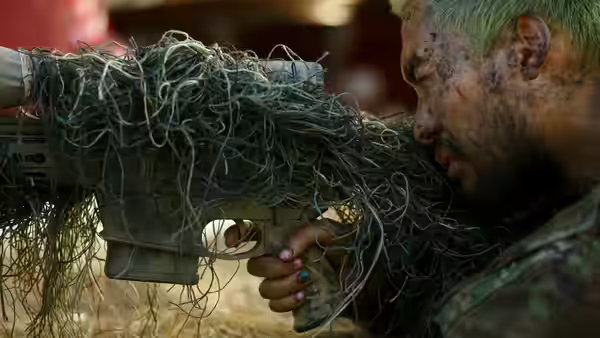
The set pieces are spaced out along the road, each louder than the last, and Garland stages them so that we are never sure where the shots are coming from. The combat, when it comes, is the most exciting he has staged; we were thrilled, and then a little ashamed of being thrilled, which we suspect is the point.
The trouble is that the point is not enough. Garland has taken the causes out of his war so that nobody can accuse him of taking a side, and the result is a war with interchangeable sides and a President who is a voice on a television. Nick Offerman is on screen for a few minutes and given nothing to play but a man rehearsing a speech. The journalists talk about neutrality as a professional duty, and the film has borrowed that duty for itself. After 109 minutes we know how a country looks when it comes apart, and we do not know why this one did.
Ex Machina (2014) and Annihilation (2018) each had an idea and followed it to the end. This one has an idea, that the people who bring us pictures of war are half in love with it, and follows it honestly while a larger one sits in the back seat unasked. We would see it in a cinema, if the volume can be borne, because the noise is doing half the work. Go with someone who has firm politics and watch them look for theirs on the screen. They will not find them, and Garland would call that a success.