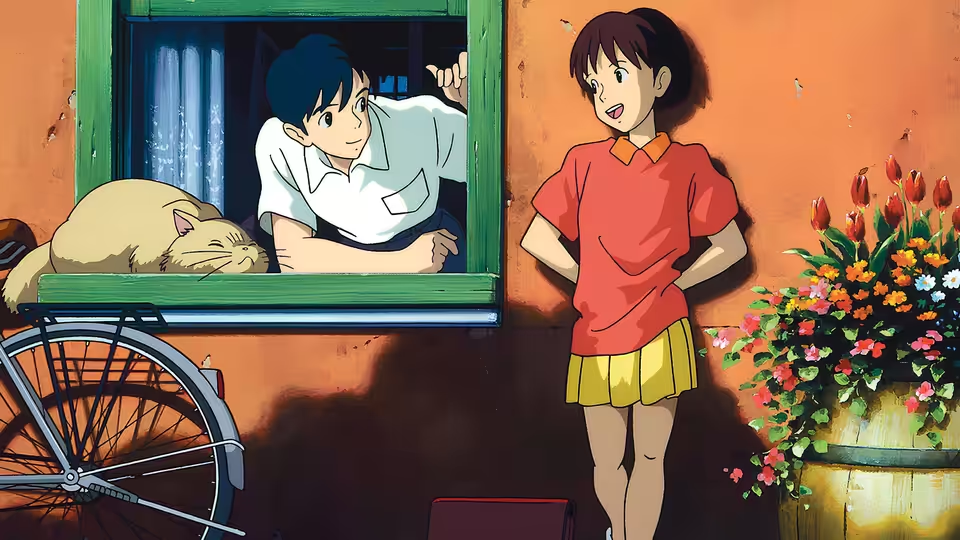
Yoshifumi Kondō’s only film as director, from a Hayao Miyazaki script, is a small, patient story about a Tokyo schoolgirl who sets out to discover whether she can write. It is honest about how hard that is, and it moved us more than we expected.
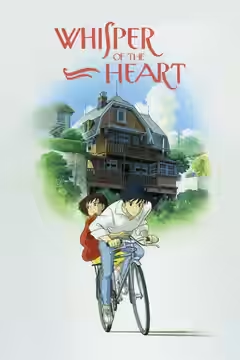
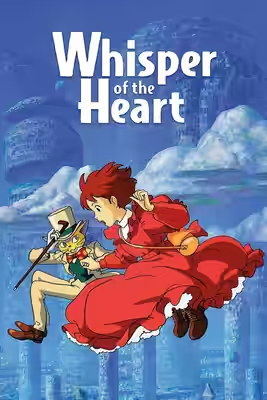
Yoshifumi Kondō directed one feature film, and this is it. Hayao Miyazaki wrote the script, and it is easy to imagine what he would have done with the material: a girl, a cat, an antiques shop, a figurine in a top hat. Kondō does something quieter. Whisper of the Heart is about a fourteen-year-old who decides, over one summer and the autumn after it, to find out whether she is any good at something, and the film does not know the answer any more than she does. It is small, slow, kind and honest, and we recommend it warmly, with a caveat about a boy and another about a last line.
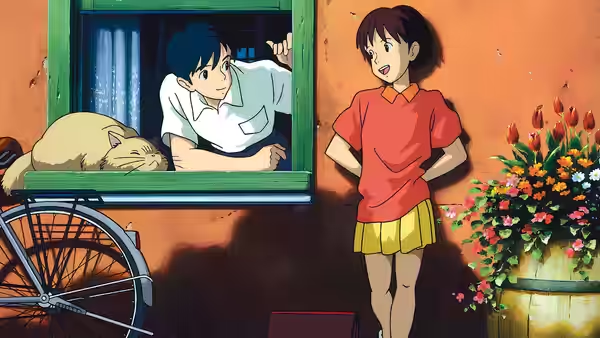
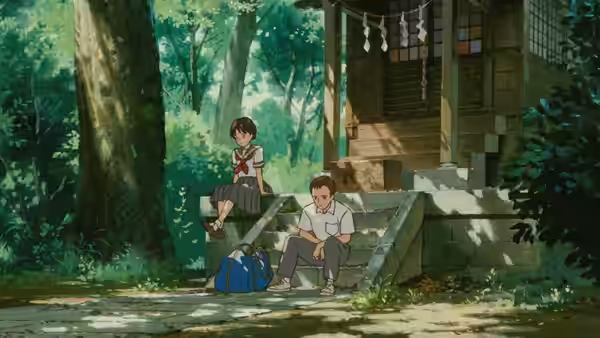
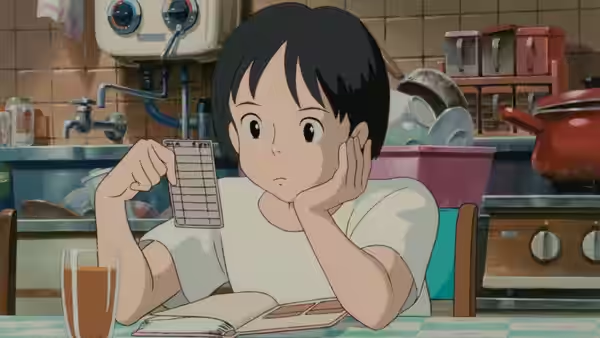
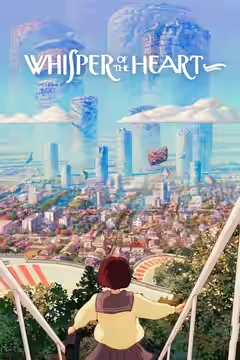
Shizuku Tsukishima (Yōko Honna) reads. She reads on the train, on the stairs and under the covers, and she has noticed that every library book she borrows has the same name on its card ahead of hers. Atsushi Okui photographs her town as a hillside of stacked blocks of flats, long flights of steps and power lines, with the sun coming in low and yellow through the haze, and the film returns to the view from her balcony so often that by the end we knew it as well as she does. A fat cat gets off her train. She follows it up the hill to a shop kept by Shiro Nishi (Keiju Kobayashi), an old man mending a clock, and the film’s world is complete.
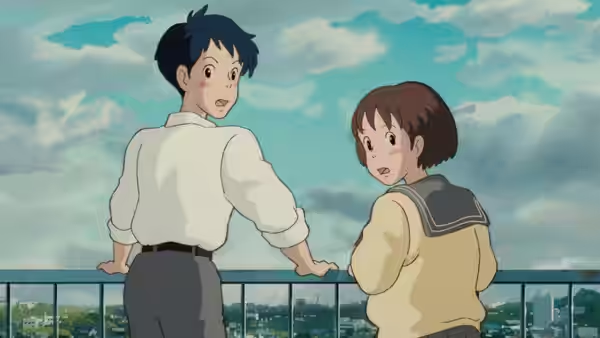
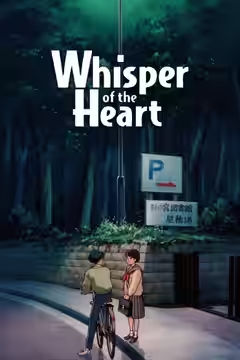
Then there is the boy. Seiji Amasawa (Issey Takahashi) wants to make violins, and there is a workshop under the shop where he does. The scene we have carried out of the film is the one where he asks Shizuku to sing while he plays, and she does, badly at first, and then Nishi and two friends come down the stairs with a lute, a recorder and a tambourine and join in without a word. Yuji Nomi lets the violin lead and the old men come in ragged and pleased, and Takeshi Seyama holds on Shizuku’s face as she realises she is being accompanied. It moved us more than a scene about a school song had any right to. We think it was the tambourine.
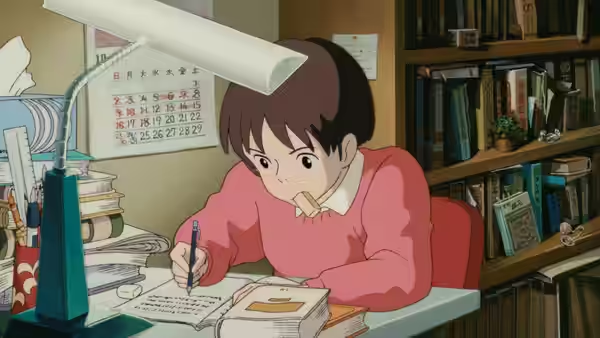
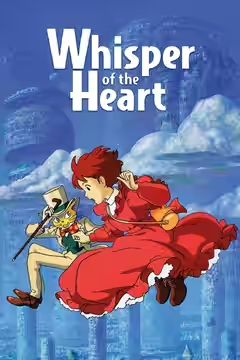
The second half is about writing, and it is the reason the film is better than its premise. Shizuku shuts herself in her room to write a story about the Baron, the cat figurine from the shop, and the story appears on screen as a few minutes of painted floating islands and wind. Kondō keeps those minutes short. He is more interested in what writing costs: Shizuku’s grades fall, her sister Shiho (Yorie Yamashita) shouts at her, her mother Asako (Shigeru Muroi), back at university herself, is too busy to notice, and her father Seiya (Takashi Tachibana) says something sensible at the kitchen table that most parents would not manage. We have seen many films about young artists and few that show the part where you are not yet good.
Seiji is the weak point. He knows what he wants, he is already good at it, and Miyazaki’s script gives him no doubts worth the name; next to Shizuku he barely exists as a character. Takahashi voices him warmly, but there is not much to voice. Shizuku’s friend Yuko Harada (Maiko Kayama), who has her own trouble with a boy at school, is more truthful in five minutes than Seiji manages in 111. And the final scene, which we will not describe, contains a line that has divided viewers ever since. We found it too far and too fast for a film that had, until then, taken its time about everything.
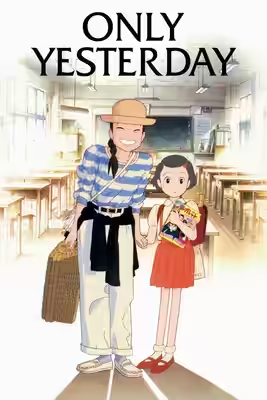
Some critics find the whole thing slight, and the complaint is usually that nothing much happens. Nothing much does. There are no flying machines and no spirits, and the one fantasy the film permits is a girl’s rough draft. Against the studio’s own standards it sits in the smaller room, alongside Only Yesterday rather than Spirited Away, and that room has always been the one we like best.
Watch it at home in the early evening, with a teenager if you have one to hand. The U certificate is accurate. There is nothing here to frighten anyone except a blank page.