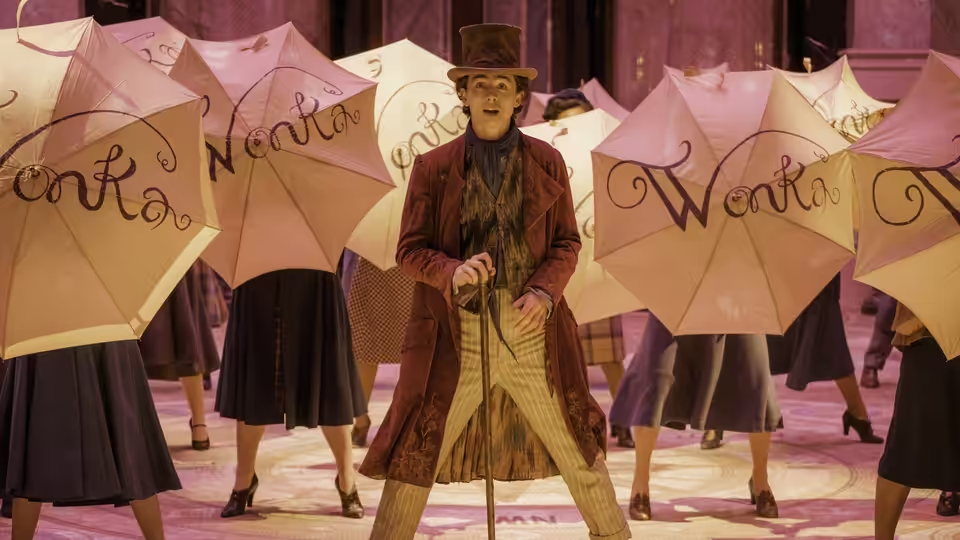
Paul King brings the Paddington manner to Roald Dahl, and the result is handsome, kind and funny whenever Hugh Grant is on screen. It is also sweet without pause for 117 minutes, and Dahl’s bite is nowhere to be found.
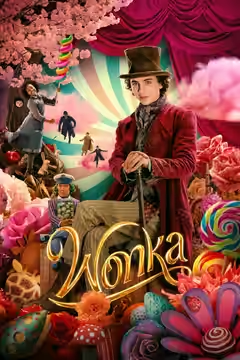
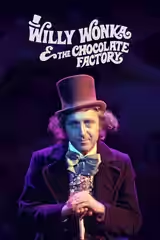
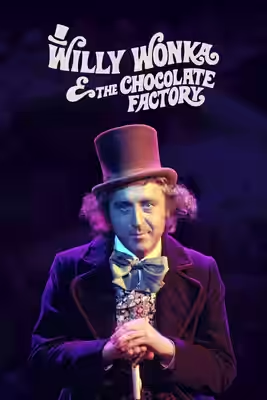
Paul King has made a film about how Willy Wonka came by his factory, which is not a question Roald Dahl’s 1964 book asked and not one the 1971 film with Gene Wilder thought worth answering. King and Simon Farnaby, who wrote Paddington 2 together, answer it anyway, with songs, the answer being that Wonka was a nice young man who wanted everyone to have a bit of chocolate. Wonka is handsome, well acted and easy to sit through, and it is sweet from its first minute to its last in a way that had us longing, by the hour mark, for one sour note. It is a good family film. It is not a Dahl one.
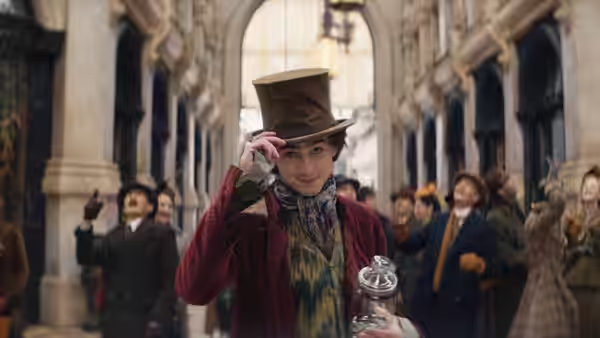
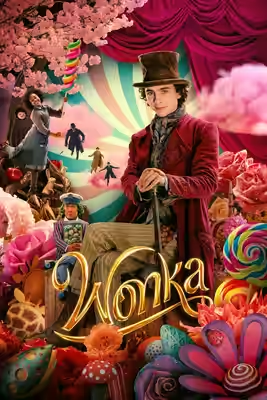
The city is the best thing in it. Nathan Crowley borrows arcades from Paris and a cathedral from somewhere colder, adds a canal, and puts a glass-roofed hall of chocolate shops at the centre where the rich go to be sold to. It is a place you would happily walk around for an afternoon, which is more than most invented cities manage.
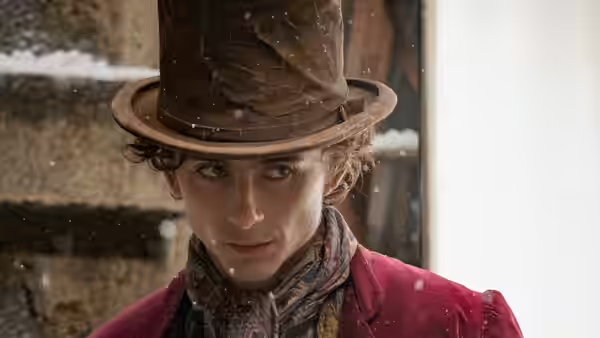
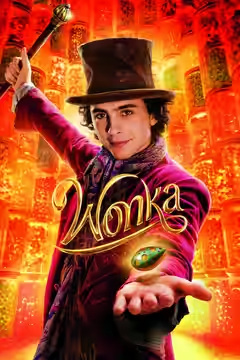
Timothée Chalamet plays Wonka as an open book. He beams, he means every word, he sings in a light, pleasant voice that never strains, and he dances as if he had been taught rather than born to it. It is a likeable performance and a deliberate one; King wants us to meet the man before the factory doors closed on him. The cost is that there is nothing behind the eyes. Wilder’s Wonka might have been about to do you a kindness or a cruelty and you could not tell which. Chalamet’s would never do the second, and the film loses a little tension every time he smiles.
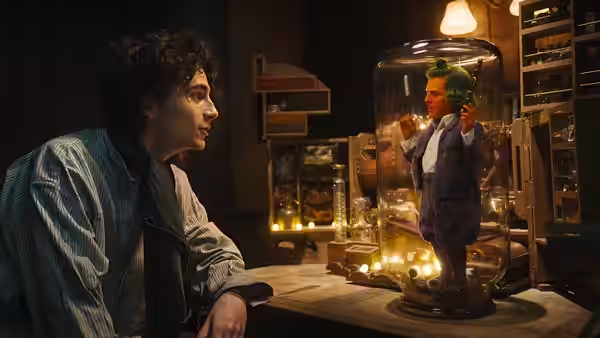
Hugh Grant, orange, green-haired and small enough to keep in a jar, plays an Oompa Loompa who has been stealing Wonka’s chocolate at night to settle a debt from Loompaland, and he plays him with the weary disdain of a man sent to a party he did not wish to attend. Every line lands. We laughed properly at him, more than at anything else in the film. Olivia Colman, in a mob cap and a foul temper, runs the boarding house with Tom Davis’s Bleacher as a pantomime villainess. Paterson Joseph leads the cartel with relish, Jim Carter and Natasha Rothwell are good company in the laundry, and Rowan Atkinson’s chocolate-loving priest gets fewer laughs than he should.
The trouble is sugar. Every problem is solved by kindness, a song or both, and after ninety minutes of it we felt as one does after a third éclair: not unhappy, but done. The songs are bright and tuneful and we could not hum one by the car park. Joby Talbot’s score under them does more of the work, especially in the quiet scenes about Wonka’s mother, which moved us more than we expected because the film goes quiet for once. Keegan-Michael Key’s Chief of Police is bribed with chocolate and grows steadily fatter under a series of prosthetic suits, and the film treats this as a running joke; it is a cheap one and it runs too long. Mark Everson cuts briskly, but there is too much to cut: a cartel, a police chief, a boarding house, a debt and a missing mother. At 117 minutes the film is a reel longer than its story.
Paddington 2 worked because the bear was kind in a London that mostly was not, and the film let London push back. Here nearly everyone is kind, the villains are silly rather than frightening, and the poor are cheerful. Dahl’s books ran on spite and punishment and the suspicion that adults were dangerous. There is none of that here. A nervous six-year-old could watch this Willy Wonka without once hiding behind the sofa, which we could not say of the 1971 film, and we mean it as a mixed compliment.
Most critics have liked it more than we did, and we see why: it is generous, it looks lovely, and Grant is worth the ticket on his own. Take children. Take a grandparent. Do not take anyone who remembers what happened to Augustus Gloop and misses it.