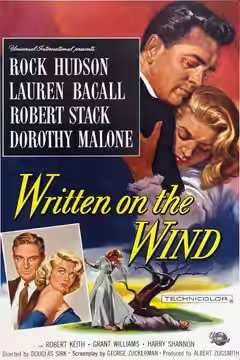
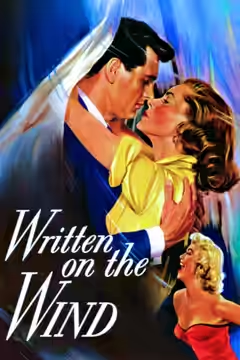
Douglas Sirk’s melodrama is forceful, compassionate and occasionally over-insistent. Robert Stack and Dorothy Malone make its most volatile characters worth caring about, even when the central romance struggles to compete with them.
Douglas Sirk’s Written on the Wind is a forceful melodrama, worth seeing despite a central romance that is less compelling than the people making trouble around it. George Zuckerman’s screenplay, adapted from Robert Wilder’s novel, takes its entanglement of marriage and friendship seriously. There is no need to pretend that jealousy is a small matter, or that an unreasonable person cannot also deserve sympathy. The film gives its most difficult people enough attention for us to care about them.
Robert Stack makes Kyle Hadley’s distress hard to dismiss. There is anger in the performance, but also a frightening lack of confidence; being wealthy has plainly not helped this man feel secure. We felt unexpectedly sorry for him, because Robert Stack makes the aggression look so close to panic. He gives the impression of someone who could be wounded by a remark that another person would barely notice.
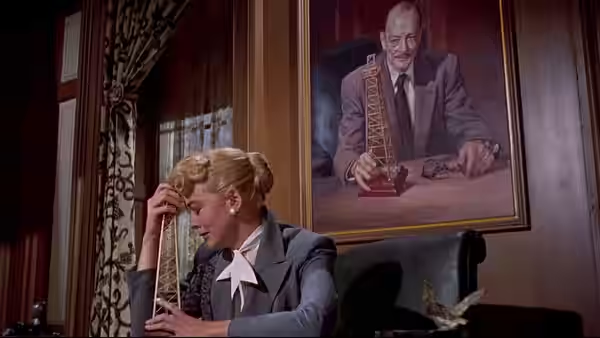
Dorothy Malone gives Marylee Hadley an equally uncomfortable need to be wanted. Her anger and sexual appetite are played without much concern for making her agreeable, and that is a considerable part of the film’s appeal. The performance risks being excessive and sometimes is. Yet she remains interesting even when she is unreasonable, which makes the steadier company elsewhere seem rather thin.
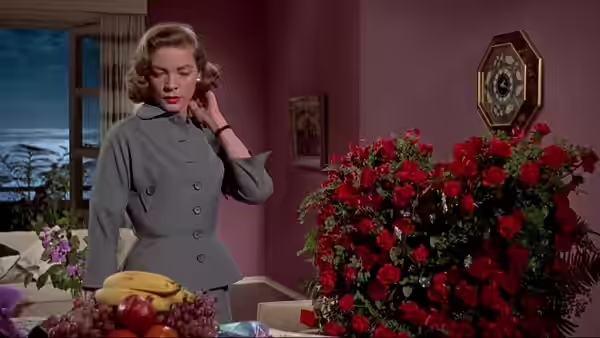
Russell Metty’s cinematography helps make that scale of acting convincing. The strong colour is not reassuring, and the dense shadows keep it from looking merely decorative. We found the brightness unsettling because it makes the characters’ unhappiness harder to ignore, rather than offering something pretty to look at around them. The lighting gives their anger and desire a convincing setting, although the visual emphasis can leave us wishing for a quieter moment.
Russell F. Schoengarth’s editing supplies welcome discipline. The story stays tightly organised even when the performances threaten to overwhelm it, and at 99 minutes the film avoids making intensity feel like a test of endurance. Frank Skinner’s score works within the same emphatic approach, though we would sometimes welcome less insistence from the music. A film pitched this high needs some control over its length, and the cutting provides it.
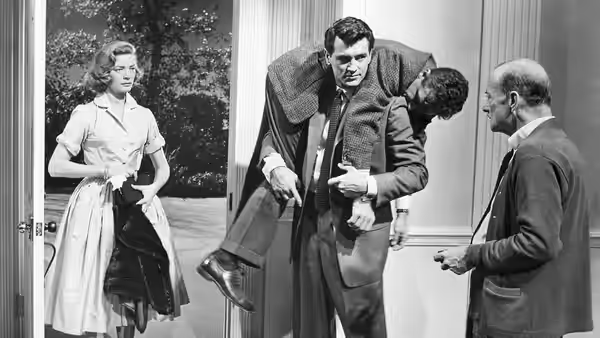
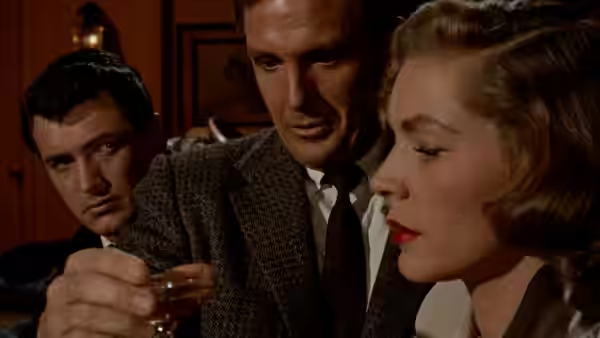
The main reservation is with Lauren Bacall and Rock Hudson, whose relative restraint does not always hold our attention. Neither performance seems careless, but both suffer from being placed beside people whose feelings are so much harder to contain. George Zuckerman makes the competing attachments easy to follow without making each of them equally persuasive. We understand who wants whom without always sharing the urgency. For a romance, that matters.
Melodrama needs us to take outsized feelings seriously, and Douglas Sirk largely earns that willingness here. The excess can be funny, but the film’s sympathy for its volatile characters keeps the amusement from turning unkind. We recommend it for that sympathy as much as for the colour and the two fiercer performances. Choose another film if everyone needs to behave reasonably tonight.