Jean Vigo’s school comedy takes the children’s side with a warmth that survives its rough construction. The adults are sometimes too easy to laugh at, but the pleasure of disobedience makes this short film worth seeking out.
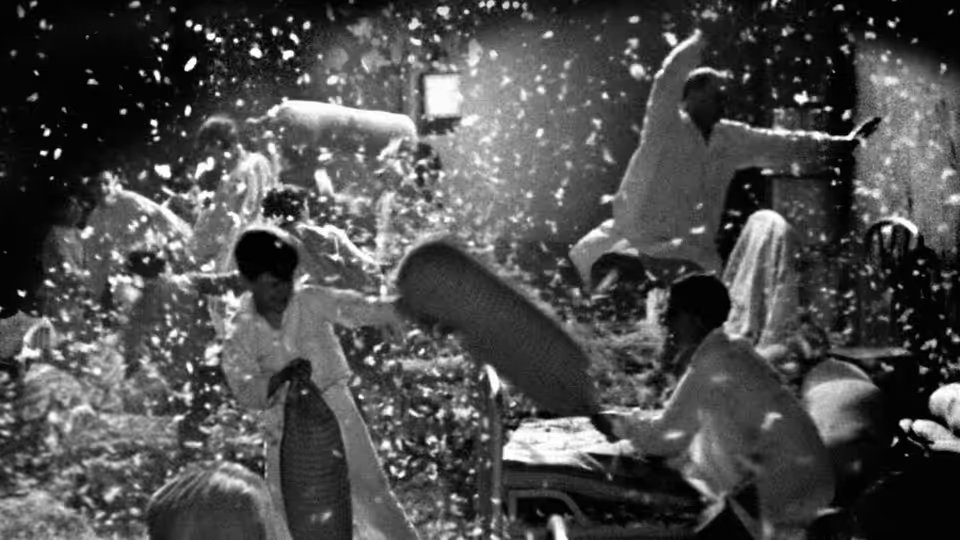
Zero for Conduct is a funny, scrappy defence of children who would rather play than be managed, and we recommend it with a warning about its loose construction. Jean Vigo writes and directs as though good behaviour were a poor measure of a child’s worth. He gives the boys’ unruliness the attention that a more dutiful school film might give their lessons. The pleasure comes from being allowed to share it without waiting for an adult to explain what it means.
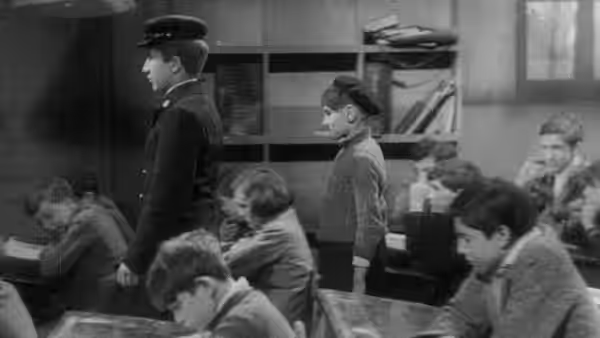
The boarding school supplies a hierarchy ready to take itself seriously, with several grades of supervision beneath the Principal. Robert le Flon plays Supervisor Pète-Sec and Du Verron is General Supervisor Bec-de-Gaz, job titles that suggest no shortage of attention to conduct. There is something funny about so much professional authority being brought to bear on children who want to amuse themselves. The distinctions of rank help make the school’s concern with obedience seem faintly absurd before we have decided whose side to take.
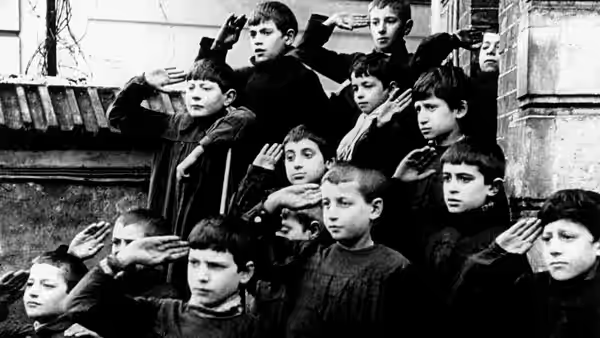
Louis Lefebvre, Gilbert Pruchon, Constantin Goldstein-Kehler and Gérard de Bédarieux give the boys a presence that does not depend on making them exemplary. We laughed, then found ourselves feeling protective of them. The contrast between their appetite for play and the adults’ elaborate arrangements for supervising them did it. Childhood here is allowed to be irritating, which makes the affection convincing: we need not imagine that we would enjoy being responsible for these boys to enjoy their company.
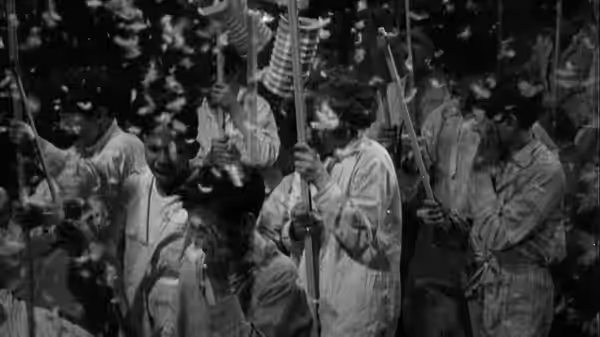
Boris Kaufman’s cinematography makes the children worth looking at for their own sake, even when the story has little need of them. The attention paid to their shared amusement is essential to the comedy; a stricter demand for progress would leave it poorer. Maurice Jaubert’s music contributes to the affection without making the misbehaviour feel cute. Both contributions help us accept the uneven telling, though neither can make every passage feel necessary or every connection clear.
The editing, also by Jean Vigo, is where our reservation becomes harder to ignore. At 48 minutes, the film hardly asks for much of an evening, yet its looseness can leave us wanting firmer connections between its parts. Individual pleasures sometimes seem to have been trusted to carry us further than they can. A little more shape would help, particularly when the pleasure of watching the boys has to sustain our interest in what happens next.
Jean Dasté is welcome as Supervisor Huguet because his performance allows an adult some ease in the children’s company. Delphin, as the Principal, makes a sharper comic target, and the difference gives the school some welcome variety. Even so, the adults can seem too conveniently ridiculous, leaving the boys with opponents we have little difficulty dismissing. The caricatures are amusing, but there are moments when we would prefer a person capable of surprising us.
School comedies often invite us to approve of children once they have learnt something useful. This one has enough affection for them before any such improvement, and that generosity makes its roughness easier to forgive. Its sympathy also survives our suspicion that we might be considerably less patient with the boys ourselves. Choose it when children being inconvenient sound like better company than adults explaining how to grow up.