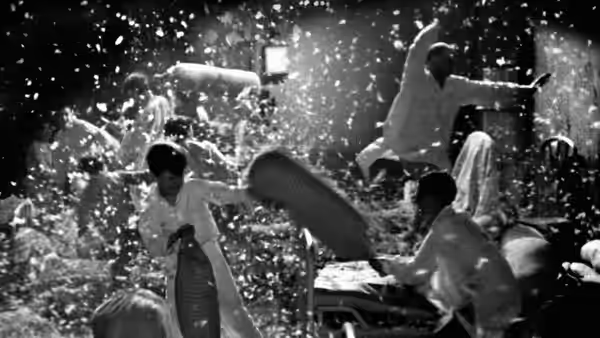
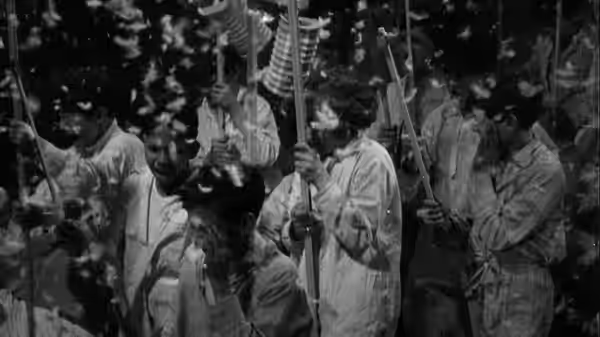
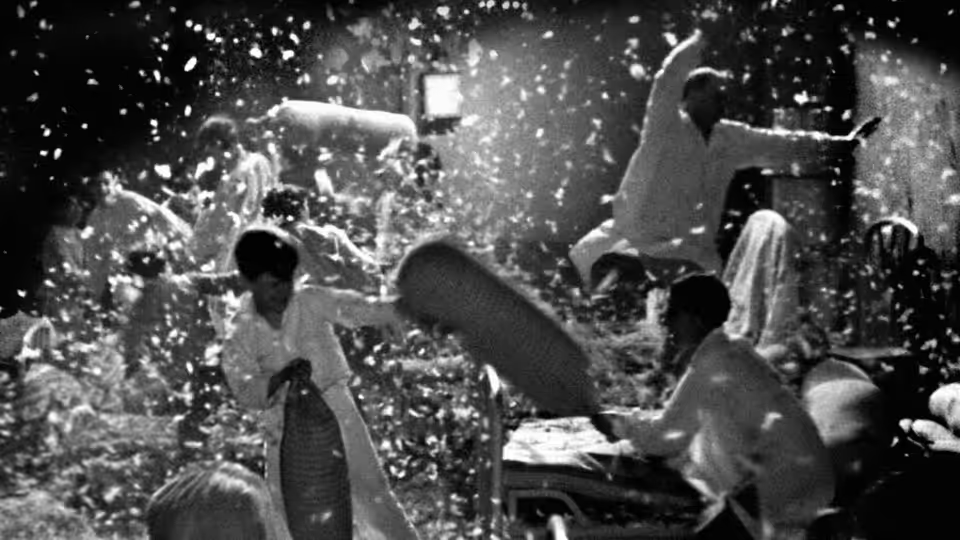
Boys in a dormitory throw pillows during a pillow fight
Film review

Zero for Conduct

1933 · Directed by Jean Vigo · 48m

In a sentenceThe school has a General Supervisor, which seems an excessive response to boys wanting to play

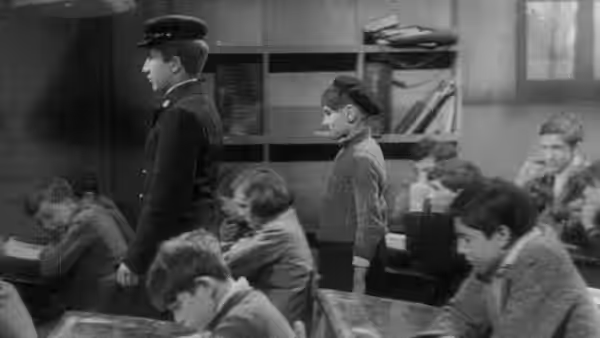
At a boarding school, Caussat (Louis Lefebvre), Colin (Gilbert Pruchon), Bruel (Constantin Goldstein-Kehler) and Tabard (Gérard de Bédarieux) are among the boys living under adult supervision. Around them are Supervisor Huguet (Jean Dasté), Supervisor Pète-Sec (Robert le Flon) and General Supervisor Bec-de-Gaz (Du Verron), with the Principal (Delphin) heading the school. Childhood play keeps coming up against the demand for good conduct. The boys want space to amuse themselves, but the school staff have their own ideas about how the day should be spent.

Fi1m review

Jean Vigo’s school comedy takes the children’s side with a warmth that survives its rough construction. The adults are sometimes too easy to laugh at, but the pleasure of disobedience makes this short film worth seeking out.

Zero for Conduct is a funny, scrappy defence of children who would rather play than be managed, and we recommend it with a warning about its loose construction. Jean Vigo writes and directs as though good behaviour were a poor measure of a child’s worth. He gives the boys’ unruliness the attention that a more dutiful school film might give their lessons. The pleasure comes from being allowed to share it without waiting for an adult to explain what it means.

The boarding school supplies a hierarchy ready to take itself seriously, with several grades of supervision beneath the Principal. Robert le Flon plays Supervisor Pète-Sec and Du Verron is General Supervisor Bec-de-Gaz, job titles that suggest no shortage of attention to conduct. There is something funny about so much professional authority being brought to bear on children who want to amuse themselves. The distinctions of rank help make the school’s concern with obedience seem faintly absurd before we have decided whose side to take.

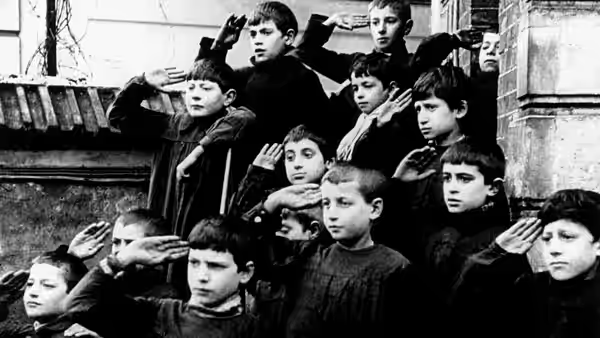
Louis Lefebvre, Gilbert Pruchon, Constantin Goldstein-Kehler and Gérard de Bédarieux give the boys a presence that does not depend on making them exemplary. We laughed, then found ourselves feeling protective of them. The contrast between their appetite for play and the adults’ elaborate arrangements for supervising them did it. Childhood here is allowed to be irritating, which makes the affection convincing: we need not imagine that we would enjoy being responsible for these boys to enjoy their company.

Boris Kaufman’s cinematography makes the children worth looking at for their own sake, even when the story has little need of them. The attention paid to their shared amusement is essential to the comedy; a stricter demand for progress would leave it poorer. Maurice Jaubert’s music contributes to the affection without making the misbehaviour feel cute. Both contributions help us accept the uneven telling, though neither can make every passage feel necessary or every connection clear.

The editing, also by Jean Vigo, is where our reservation becomes harder to ignore. At 48 minutes, the film hardly asks for much of an evening, yet its looseness can leave us wanting firmer connections between its parts. Individual pleasures sometimes seem to have been trusted to carry us further than they can. A little more shape would help, particularly when the pleasure of watching the boys has to sustain our interest in what happens next.

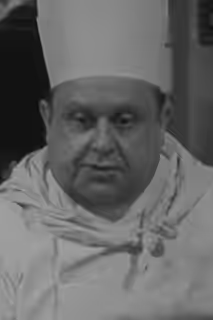
Jean Dasté is welcome as Supervisor Huguet because his performance allows an adult some ease in the children’s company. Delphin, as the Principal, makes a sharper comic target, and the difference gives the school some welcome variety. Even so, the adults can seem too conveniently ridiculous, leaving the boys with opponents we have little difficulty dismissing. The caricatures are amusing, but there are moments when we would prefer a person capable of surprising us.

School comedies often invite us to approve of children once they have learnt something useful. This one has enough affection for them before any such improvement, and that generosity makes its roughness easier to forgive. Its sympathy also survives our suspicion that we might be considerably less patient with the boys ourselves. Choose it when children being inconvenient sound like better company than adults explaining how to grow up.

Critical consensus AI synthesised

2 of 6
Positive
2
Mixed
0
Negative
0
Time Out
15 March 2012
90*

The critic regards Vigo’s film as a classic. The page singles out its boarding-school setting as anticipating rebellious cinema.

Read the full review →
Collider
17 October 2011 · Andre Dellamorte
75*

The critic regards Zero for Conduct as a spirited, thrilling work that brings Vigo’s distinctive sensibilities into focus. He particularly praises its alignment with the children and its embrace of the anarchy of childhood play.

Read the full review →

Straight answers AI written, from our review

Is Zero for Conduct worth watching?
Zero for Conduct is worth watching for its funny, affectionate defence of children who would rather play than obey, and we score it 80 out of 100. Its 48 minutes suit anyone drawn to unruly school comedy, though the loose construction and conveniently ridiculous adults sometimes leave us wanting more.
How long is Zero for Conduct, and what is it rated?
Zero for Conduct runs 48m. It is a comedy and drama film.
Where can I watch Zero for Conduct in France?
Zero for Conduct is streaming on Amazon Prime Video in France, and it is also available to rent from Amazon Prime Video from €2.99. Availability is checked daily; the links above go straight to each service.
How does Zero for Conduct compare to The 400 Blows?
Zero for Conduct is the more openly comic choice beside The 400 Blows, sharing its sympathy for children at odds with authority but making the adults easier targets. We recommend The 400 Blows as the stronger choice for a patient portrait of mischief and vulnerability without easy reassurance; Vigo’s scrappy film suits an appetite for the pleasure of disobedience.
What should I watch after Zero for Conduct?
After Zero for Conduct, try The 400 Blows (1959, Fi1m 91): Another child’s difficulties with authority, treated with patience and without easy reassurance. Then Kes (1969, Fi1m 88): A schoolboy deserves more attention than the adults around him can offer; and The Florida Project (2017, Fi1m 88): Children make room for play while adult troubles remain dangerously close.

Cast

If you liked this, try…

  1. The 400 Blows (1959, Fi1m 91)Another child’s difficulties with authority, treated with patience and without easy reassurance.

  2. Good Morning (1959) · not on Fi1m yetChildren resist adult rules, with domestic comedy replacing the boarding school’s battles.

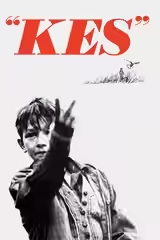
  3. Kes (1969, Fi1m 88)A schoolboy deserves more attention than the adults around him can offer.

  4. Where Is the Friend's House? (1987) · not on Fi1m yetA child’s urgent concern meets grown-ups who keep attending to something else.

  5. The Florida Project (2017, Fi1m 88)Children make room for play while adult troubles remain dangerously close.

Zero for Conduct (1933) review: Warm, unruly fun despite the flaws (France) | Fi1m