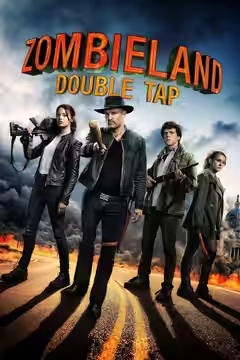
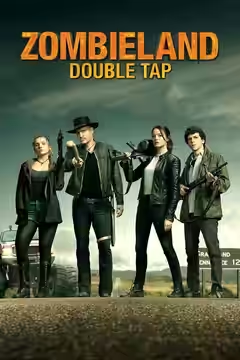
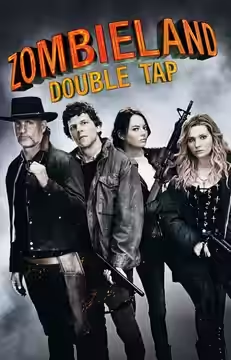
Zoey Deutch makes this zombie reunion intermittently funny, and the action is occasionally inventive. But the returning cast get too many old jokes and too little to do, leaving a sequel we cannot recommend.
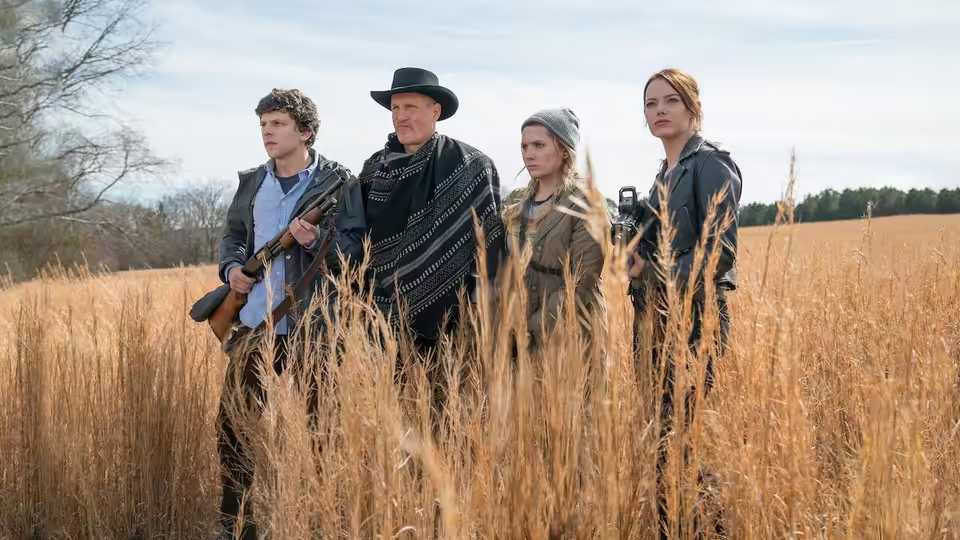
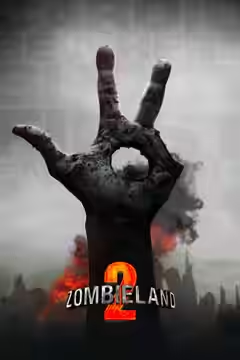
Zombieland: Double Tap has enough comic talent for a better sequel than this. Director Ruben Fleischer aims for the pleasure of seeing familiar people argue while something unpleasant waits to be dealt with, and there are passages where that is enough. Too often, though, the joke depends on remembering that we liked it before. The returning performers have an easy familiarity, but the writing gives them too little reason to be back. We get a few good laughs and a great deal of repetition.
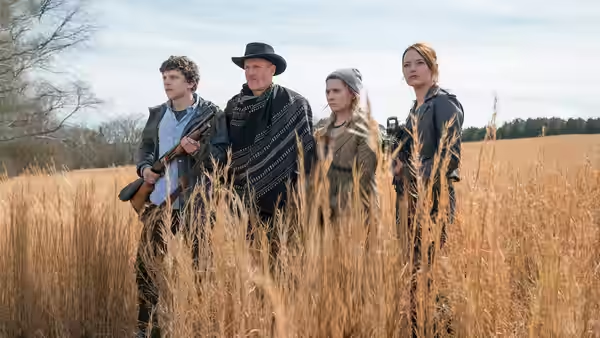
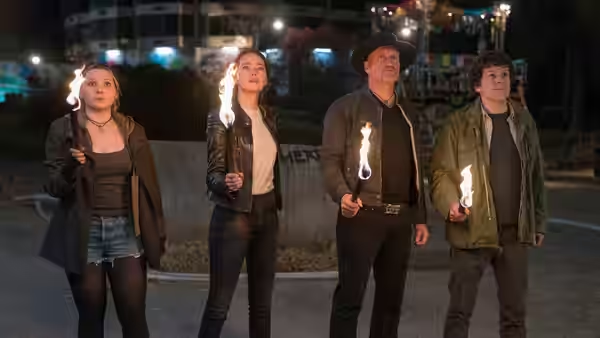
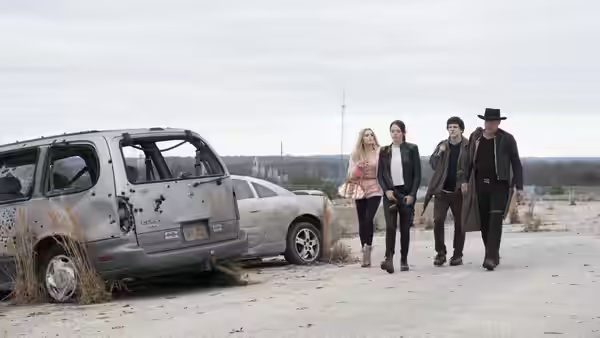
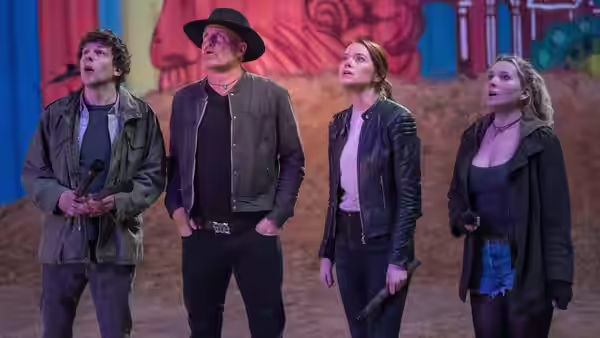
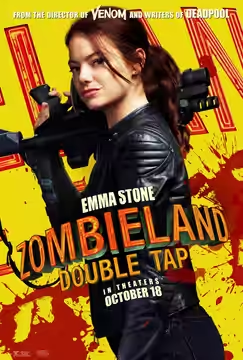
Jesse Eisenberg’s Columbus and Woody Harrelson’s Tallahassee retain the rhythm of people accustomed to irritating one another, and Woody Harrelson remains good company even when the material is thin. Emma Stone gives Wichita more expression than the dialogue deserves, but too often her presence is treated as sufficient entertainment. Abigail Breslin’s Little Rock is underused. For a film depending on affection for its returning quartet, the screenplay is oddly careless about giving all four something worth doing.
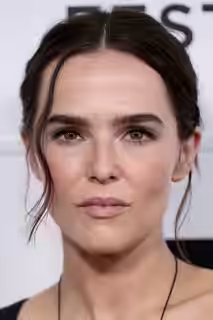
Zoey Deutch makes Madison the reason to keep watching. The character is written as an easy target, and some of the humour expects us to find her foolish before she has done anything funny. We laughed at Madison’s blithe confidence when the other characters treat her as an idiot. The timing, and the lack of embarrassment in the performance, give these exchanges a warmth the writing has not earned. She makes it possible to enjoy a joke while still wishing the film would stop looking down on her.
The screenplay by Paul Wernick, Rhett Reese and David Callaham keeps sending the cast back through jokes that have already worked once. Returning to an old comic routine can work if someone changes the rhythm or has something new to lose; here, too much arrives already familiar. The treatment of the women is a particular drag, with jokes that lean on contempt when the performers could manage something more interesting. The loose plotting would be easier to forgive if the conversations were consistently funny. Instead, the film keeps relying on its cast to rescue it.
The action is better organised than the story. The motel sequence gives Chung Chung-hoon’s cinematography and Martin Whist’s production design something useful to do together: make the location part of the comedy. The staging has an inventiveness missing from too many of the conversations, though Ruben Fleischer’s fondness for close-ups elsewhere leaves the actors with little space to play off one another. There are effective bursts of gory mayhem, but the violence sometimes demands a laugh the joke has not supplied.
Dirk Westervelt’s editing keeps the pace brisk without disguising how little connects one episode to the next. The 99-minute running time leaves plenty of room for a tighter story. David Sardy’s music helps maintain the energy, although energy is rarely what is missing. In a horror comedy, the killing can become routine quickly; the people need to remain interesting when the attacks stop.
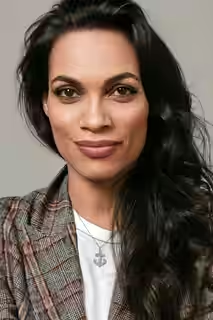
There is still some pleasure in this company’s ability to make a weak exchange sound spontaneous, and the new arrivals occasionally improve matters. Rosario Dawson brings welcome assurance as Nevada, another reminder that the film can accommodate more than its familiar routines. But the affection required to overlook the stale jokes has to come from the audience. Zoey Deutch deserves an audience, but we would not ask anyone to sit through every tired joke to give her one.