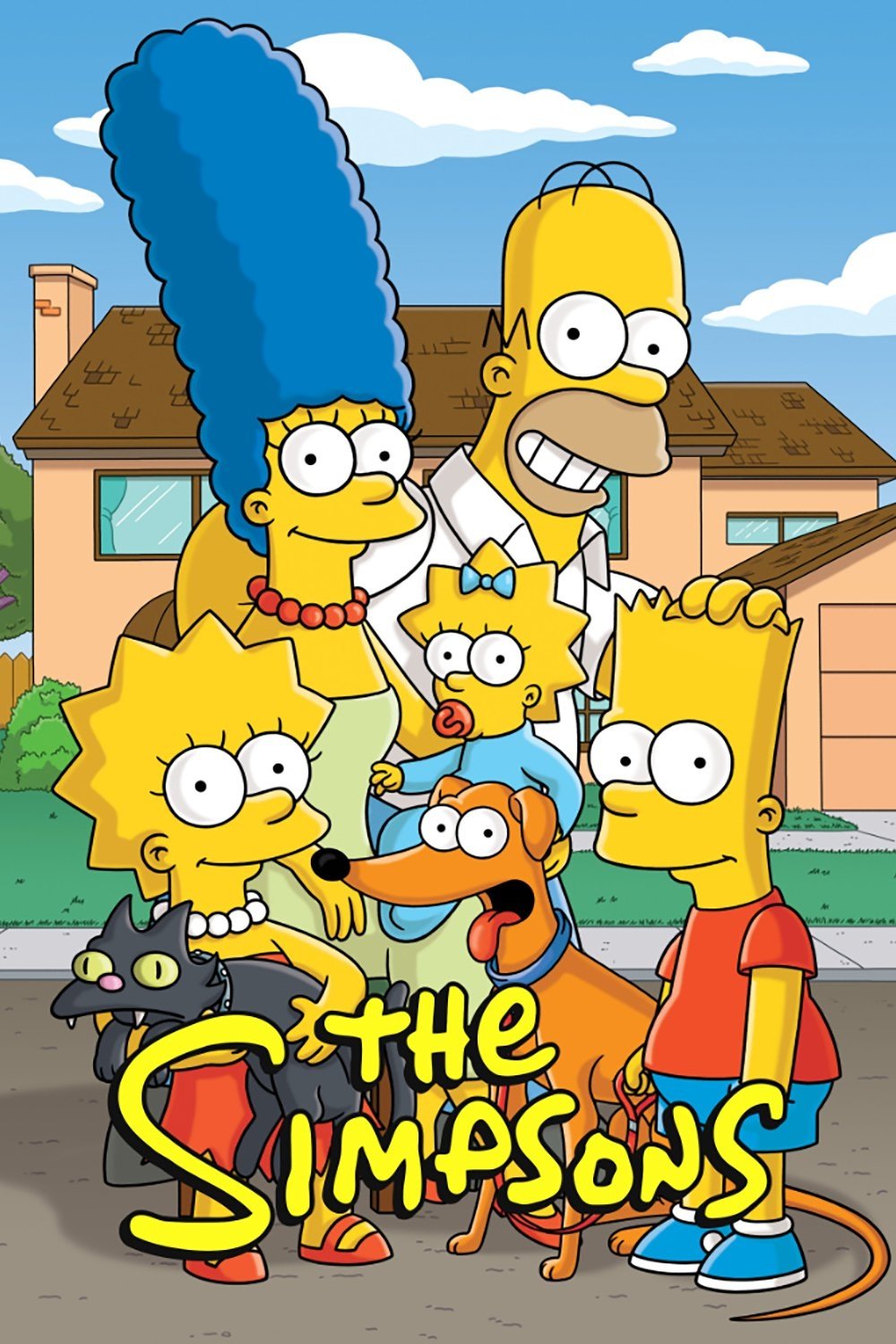
David Silverman gives cartoon characters feelings they cannot quite conceal, even when they are shouting. We rate him highly for the physical comedy of The Simpsons, where a held expression can be as funny as a line.
Fi1m perspective
In The Simpsons (1989), a held expression can supply the objection nobody says aloud, while a change of pose reveals dwindling confidence. This is the part of David Silverman's work we value most: the drawing continues the performance after the dialogue stops. We laughed at those silent reactions because they let us notice the characters' discomfort without another line explaining it. Silverman is good at making that discomfort legible. He can also let a character shout and flail without losing the feeling behind the movement.
His work on the original The Simpsons shorts for The Tracey Ullman Show began in 1987. He helped establish the rules for drawing the characters, then served as supervising animation director through the series' first eight seasons. The early work could look rough, and we would not pretend that every drawing was equally assured. From the second season onwards, Homer's rants and fits were among the difficult scenes entrusted to him. Exaggeration works here because the anger or panic remains easy to read.
It would be foolish to credit him with every successful pause. Brad Bird is another director who makes the animation count, while editors Michael Bridge and Don Barrozo help shape the timing. At its sharpest, the programme lets a reaction register without dragging out the joke. These decisions keep crowded exchanges clear and leave the characters funny even when nobody is speaking. Our affection for the programme still comes with a limit: there is no need to watch every episode.
The move into features included co-directing Monsters, Inc. (2001) alongside Lee Unkrich, then directing the 2007 film adaptation of The Simpsons. The latter carried the series' drawing style into a cinema feature, a sensible priority for someone who had helped establish it. Maggie Simpson in 'The Longest Daycare' (2012) brought further work with those characters and experimentation with 3D techniques. Our strongest recommendation rests on the television work, where small decisions about faces and timing repay attention. For an introduction, watch The Simpsons and keep an eye on the character who is not speaking.
Biography
David Silverman is an American animator, director and writer. He was born on 15 March 1957 in New York City and studied at the University of California, Los Angeles, where he received BA and MFA degrees.
Silverman has worked on The Simpsons since its inception, animating all of the original short cartoons that appeared on The Tracey Ullman Show. He has directed numerous episodes of the series, served as supervising director for several seasons, and directed The Simpsons Movie (2007). He has also contributed as a writer on the show.
His other credits include co-directing Monsters, Inc. (2001) and serving as story consultant on Ice Age (2002). He received an Academy Award nomination for the short Maggie Simpson in "The Longest Daycare" (2012).