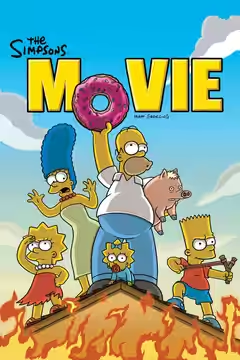
Springfield gets the big screen and does almost exactly what it does on the small one, which is mostly a compliment. The jokes come thick for an hour; the family plot that fills the last half-hour is thinner than the series once allowed.
Springfield comes to the cinema, and the film knows what you are thinking about that. It opens with Homer standing up in a picture house to call everyone present a sucker for paying to see something they get at home for nothing. David Silverman directs, eleven writers share the screenplay credit, and what they have made is 87 minutes that behave like a good episode stretched to four times its length. For most of its first hour it is as dense with jokes as the series was in its best years.
The story is an environmental fable with a pig in it. Homer (Dan Castellaneta) tips a silo of pig waste into the town’s lake, the water turns black, and Russ Cargill (Albert Brooks) of the EPA has the town sealed under a glass dome. The dome gives the animators one enormous object to draw, and the shots of townspeople pressed against the inside of it are the kind of thing the television budget never ran to. Brooks plays Cargill with the mild voice of a man who has never been told no, and he has the sharpest lines in the film.
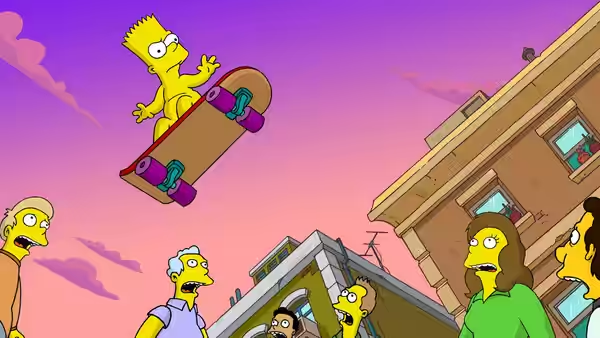
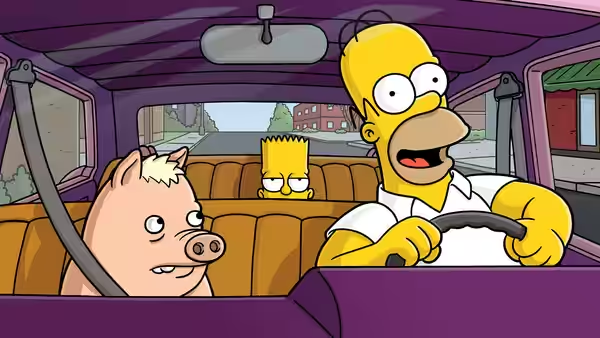
We laughed hardest at the pig. Homer walks it upside down across the ceiling, singing the Spider-Man theme with the words changed, and Hans Zimmer later hands that song to a full choir as if it were a hymn, which is the best joke in the film. We also laughed, and then felt slightly ashamed of ourselves, at the sequence in which Bart (Nancy Cartwright) skateboards naked through town on a dare and the animators find a hedge, a cyclist and a passing hat to cover him for one more shot each, until the shot that does not. It is two minutes of careful planning in the service of a child’s bottom.
Harry Shearer’s Ned Flanders is given more to do than usual, as the neighbour Bart drifts towards when Homer lets him down once too often, and that thread is the film’s steadiest; it would work with the jokes taken off. Julie Kavner’s Marge has one scene in the second half, which we will not describe, that is played entirely straight and stopped us; it is the moment the film is about something. Yeardley Smith’s Lisa gets a cause and a boy, Colin (Tress MacNeille), and the film treats both with more affection than wit.
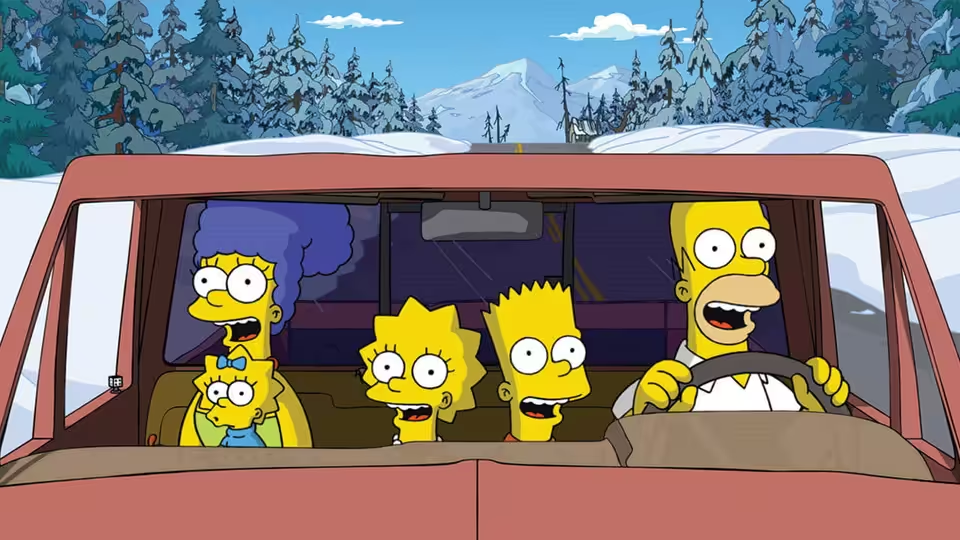
The second half is where the trouble is. For a long stretch the plot takes the family out of Springfield, and Springfield is the engine. Take Homer away from Moe, Mr. Burns and Chief Wiggum and he has to carry scenes alone, and Homer alone is a man who does something stupid and then feels bad about it. He is crueller here than the series usually lets him be, to Marge and to Bart in particular, and the film asks us to forgive him in a hurry, with a vision and a montage, because there are twenty minutes left. We noticed we were checking the time in a comedy that runs 87 minutes, which should not be possible. The environmental message is laid on thick, and the film’s jokes about that do not make it any thinner.
John Carnochan cuts it at the speed of an episode, and for an hour that is a pleasure; by the end it is a habit the film cannot break even when a scene wants a pause. The animation keeps the flat look of the series with the shading turned up and the frame opened out, and the lake, the dome and a church sequence use the extra room well.
Against the series’ own standard, this is a good episode and not a great one: busier, less surprising, softer at the centre. Watch it with children, who will like the pig, or with anyone who gave up on the series years ago and would be glad to find the timing still there. It carries a PG and has the manners to stop before you wish it would.