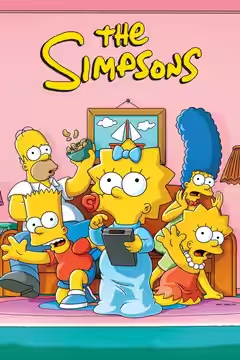
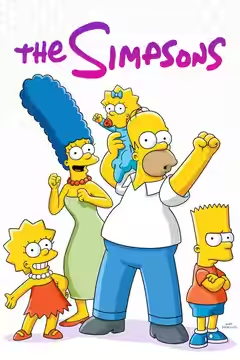
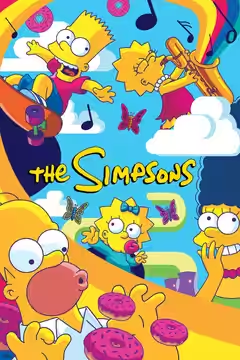
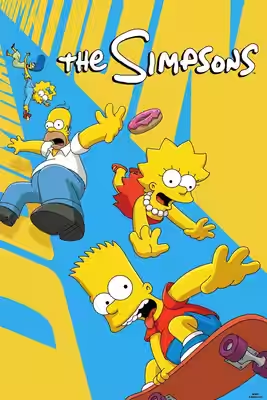
The sharpest stretches of The Simpsons combine merciless jokes with real tenderness for the people making fools of themselves. We recommend it warmly, but not as an obligation to watch every episode.
We recommend The Simpsons warmly, with one practical reservation: choose a stretch rather than making a vow to watch everything. Its family comedy works because the people who behave badly remain worth caring about, even when they have exhausted everyone else’s patience. The satire would be thinner if it merely invited us to feel cleverer than these people. At its best, the writing makes their mistakes understandable before making them ridiculous, and leaves enough room for embarrassment to hurt.
Dan Castellaneta gives Homer a confidence that is funny before a sentence is finished. He makes a foolish thought sound freshly discovered, and gives disappointment enough weight to keep the performance from becoming a succession of noises. Julie Kavner’s Marge is just as important: the fatigue in her voice suggests how much work it takes to stay patient. We were moved by that weariness, because Kavner makes affection sound like something Marge has to keep choosing.
Nancy Cartwright gives Bart’s defiance an infectious pleasure in his own cheek, without making every provocation sound calculated. Yeardley Smith makes Lisa’s earnestness equally recognisable; she lets us hear how much it matters to Lisa that somebody listens. The writing can become too pleased with Lisa’s usefulness as the sensible one, and Smith is more interesting when she has something awkward to play. That is a recurring weakness: a character can shrink into the job the joke needs done.
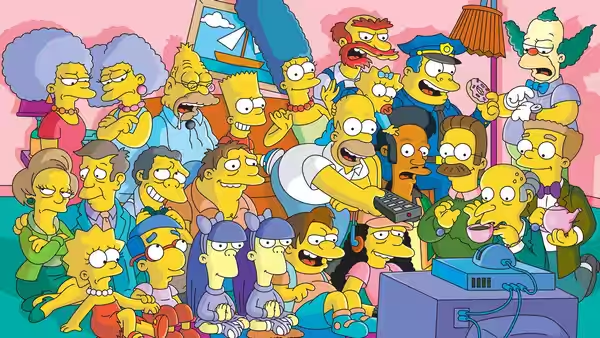
Hank Azaria and Harry Shearer make the supporting characters feel worth following in their own right. Azaria gives Moe Szyslak a pinched frustration that makes simple exchanges sound like personal setbacks. Shearer’s Mr. Burns and Ned Flanders are distinct in more than pitch: Burns sounds accustomed to obedience, while Flanders seems perpetually hopeful of agreement. The pleasure is in hearing the actors find different reasons for people to misunderstand each other, rather than merely recognising another voice.
Directors including David Silverman and Brad Bird make the animation do more than carry the dialogue. A held expression can supply the objection that nobody says aloud, and a change of pose can reveal how little confidence someone has. Editors Michael Bridge and Don Barrozo are among those shaping the timing; at its sharpest, the programme gives us time to notice a reaction without waiting for approval of the joke. These small decisions keep crowded exchanges legible and let the performances remain funny even when nobody is speaking.
Alf Clausen’s music is funny because it can take these people’s troubles as seriously as they take them themselves. Its sense of proportion is deliberately unreliable, giving a small upset the weight of a calamity. The weaker writing is less sure about proportion: a bigger incident is allowed to stand in for a better joke. Castellaneta can sustain a great deal of foolishness, but when Homer’s behaviour stops resembling anything human, the noise becomes tiring.
As a family sitcom, it is most satisfying when affection complicates the teasing, rather than arriving afterwards to tidy things up. There is no need to defend every stretch to value how often it gets that right. We would begin with seasons three to eight, where the balance of character and comic invention is particularly rewarding. Leave the completionism to someone who enjoys keeping records.