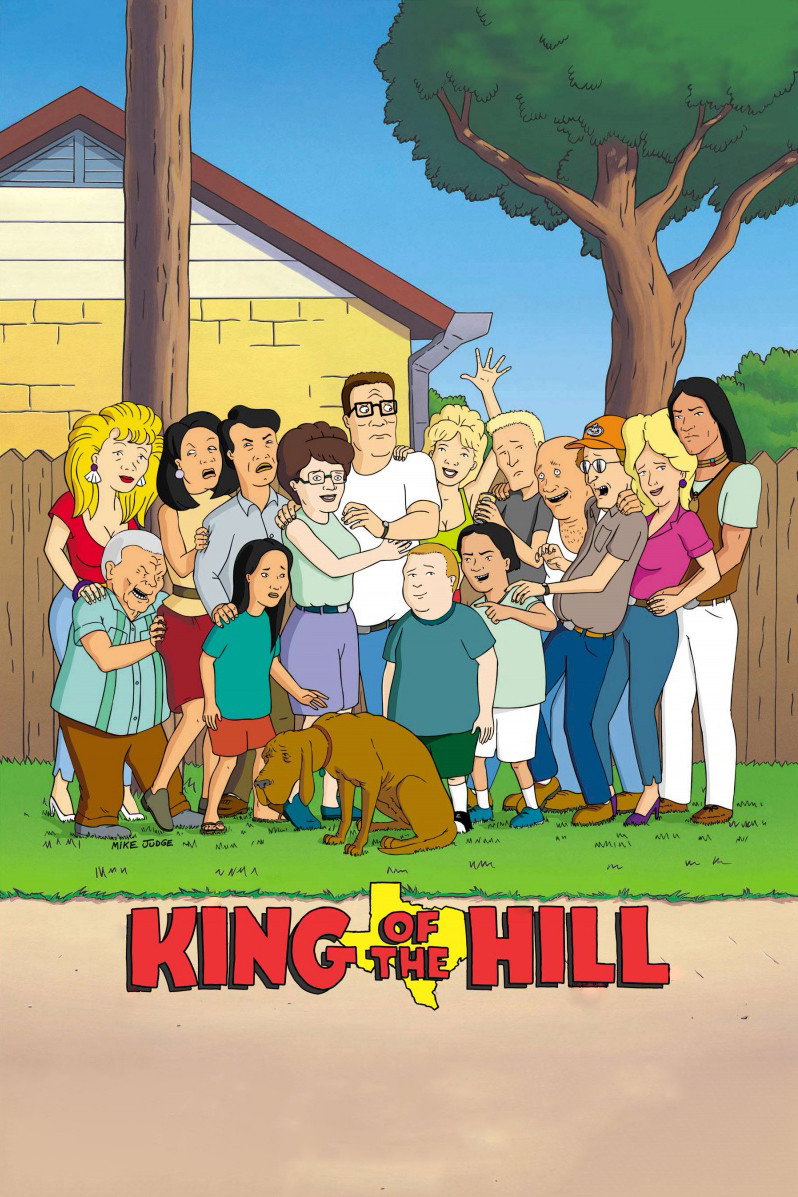
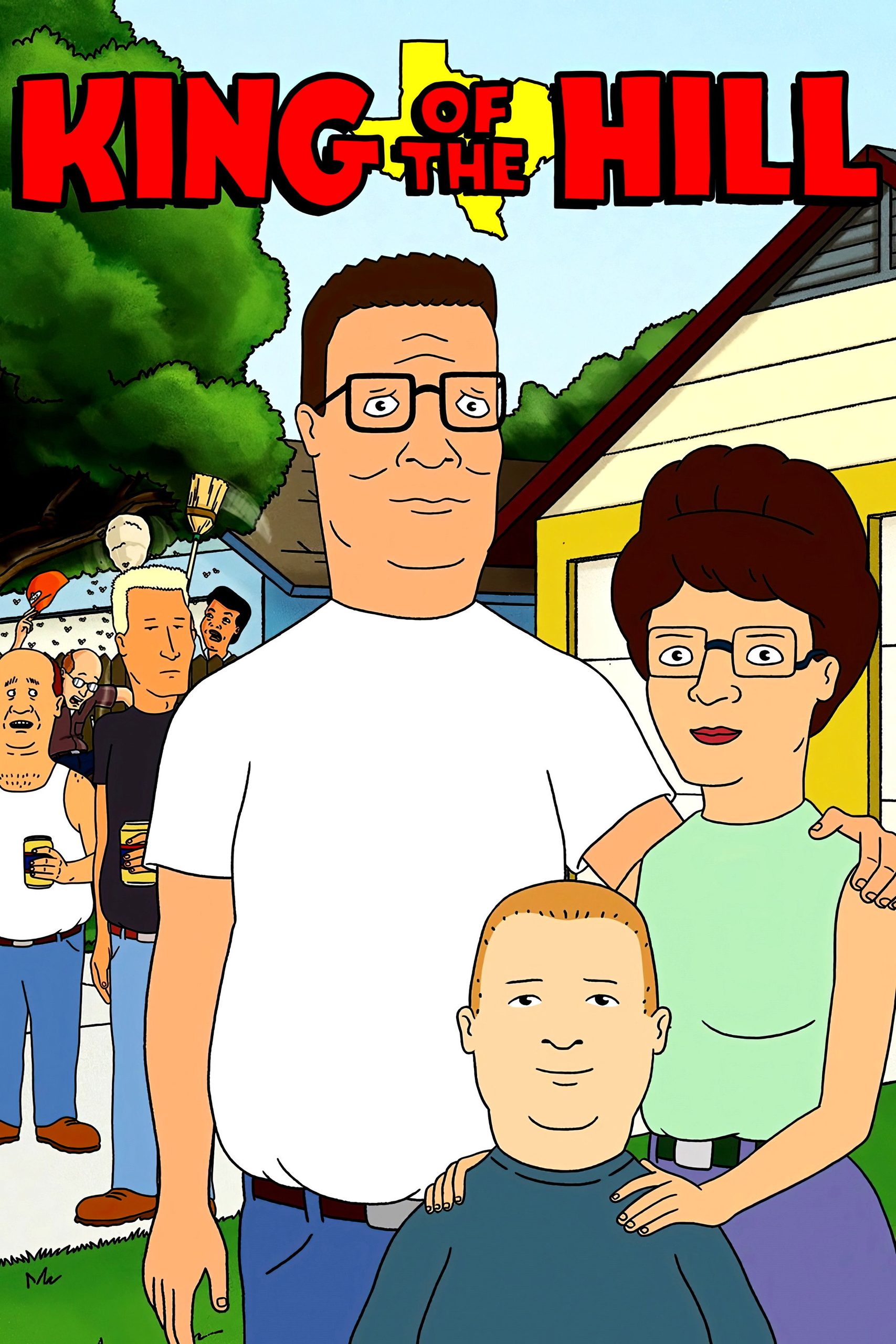
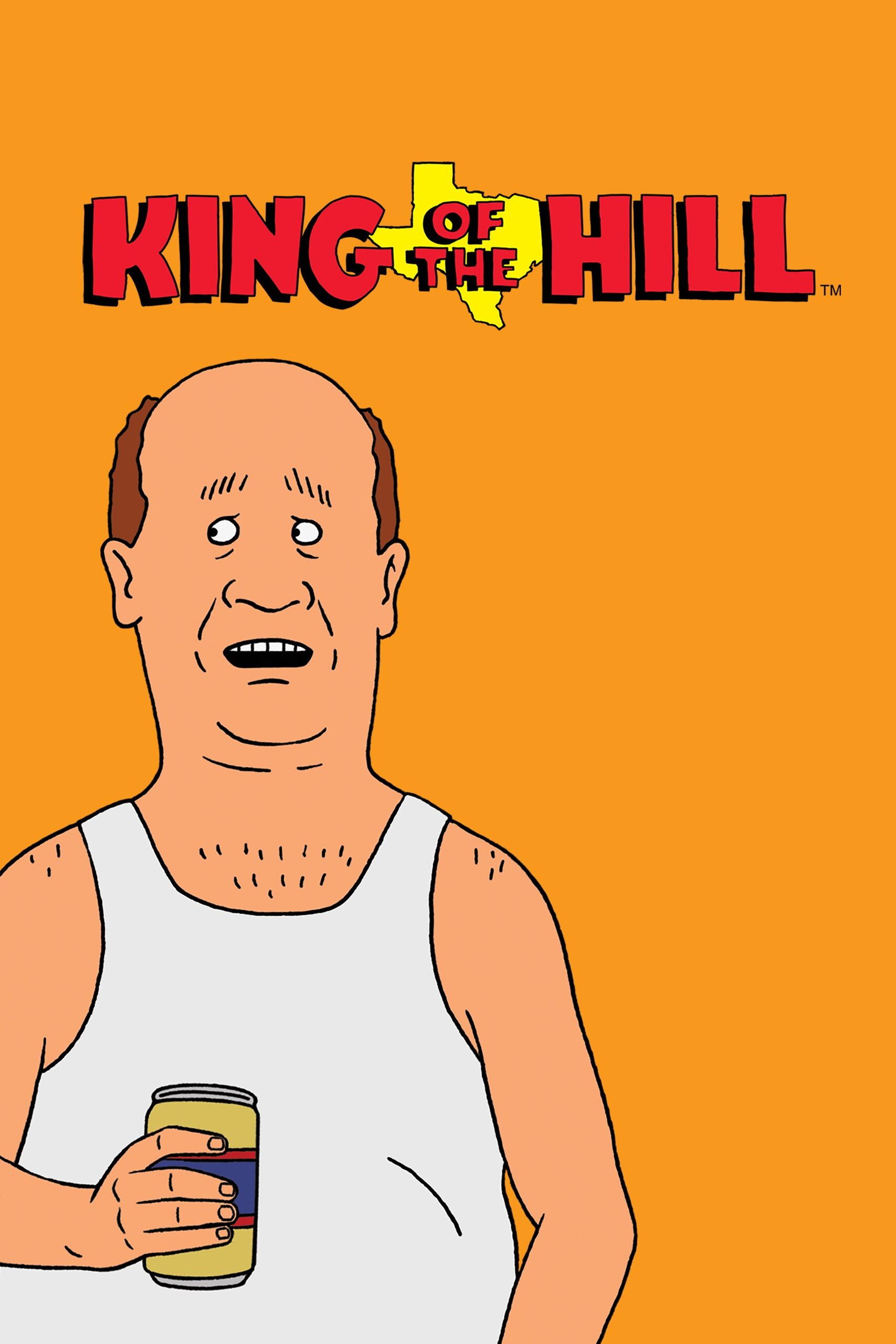
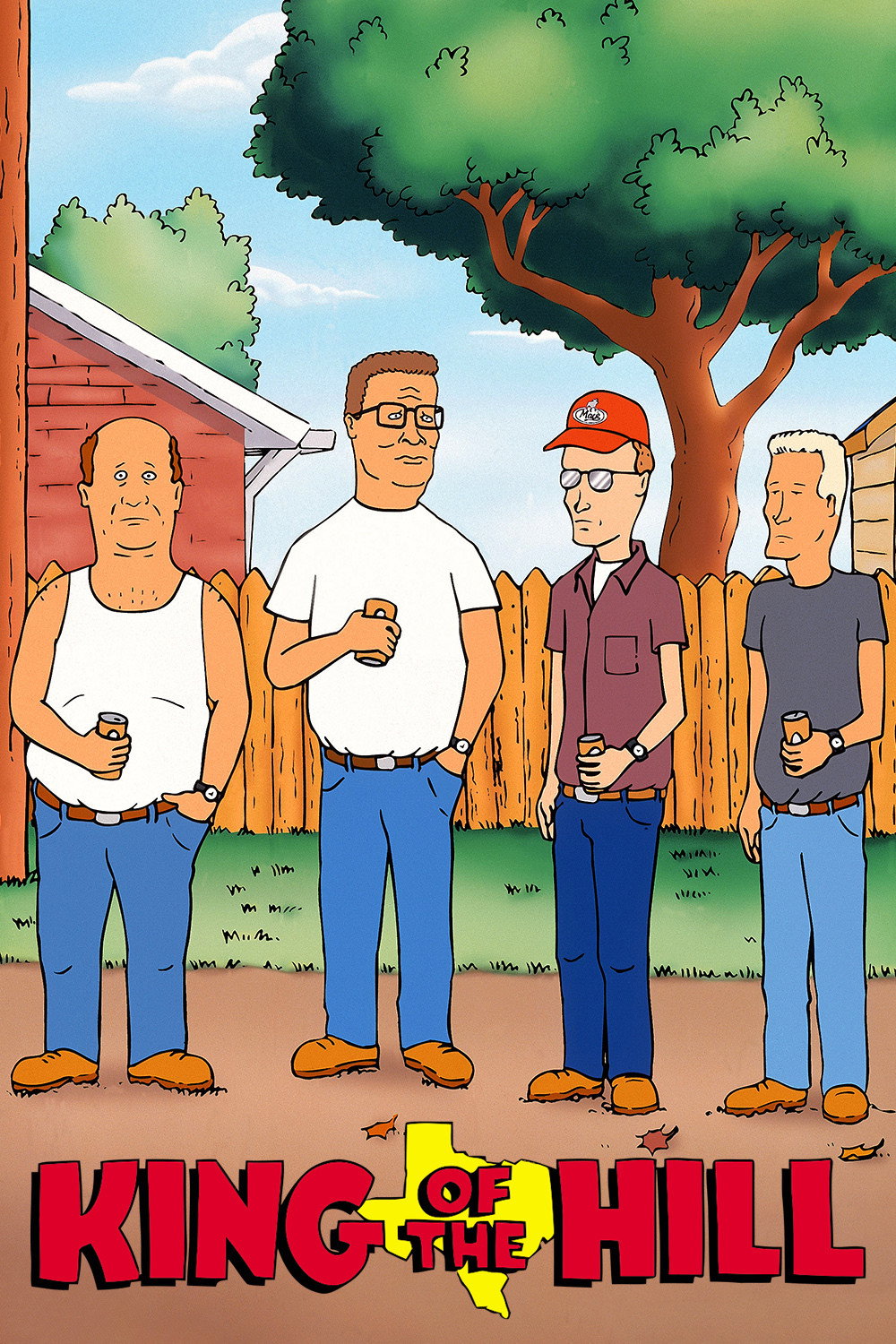
Greg Daniels and Mike Judge’s animated sitcom about a propane salesman in a small Texas town is the kindest and most patient of its kind, funny because nothing in it is exaggerated. It runs long, and a few of its stories wear thin, but we recommend it warmly.
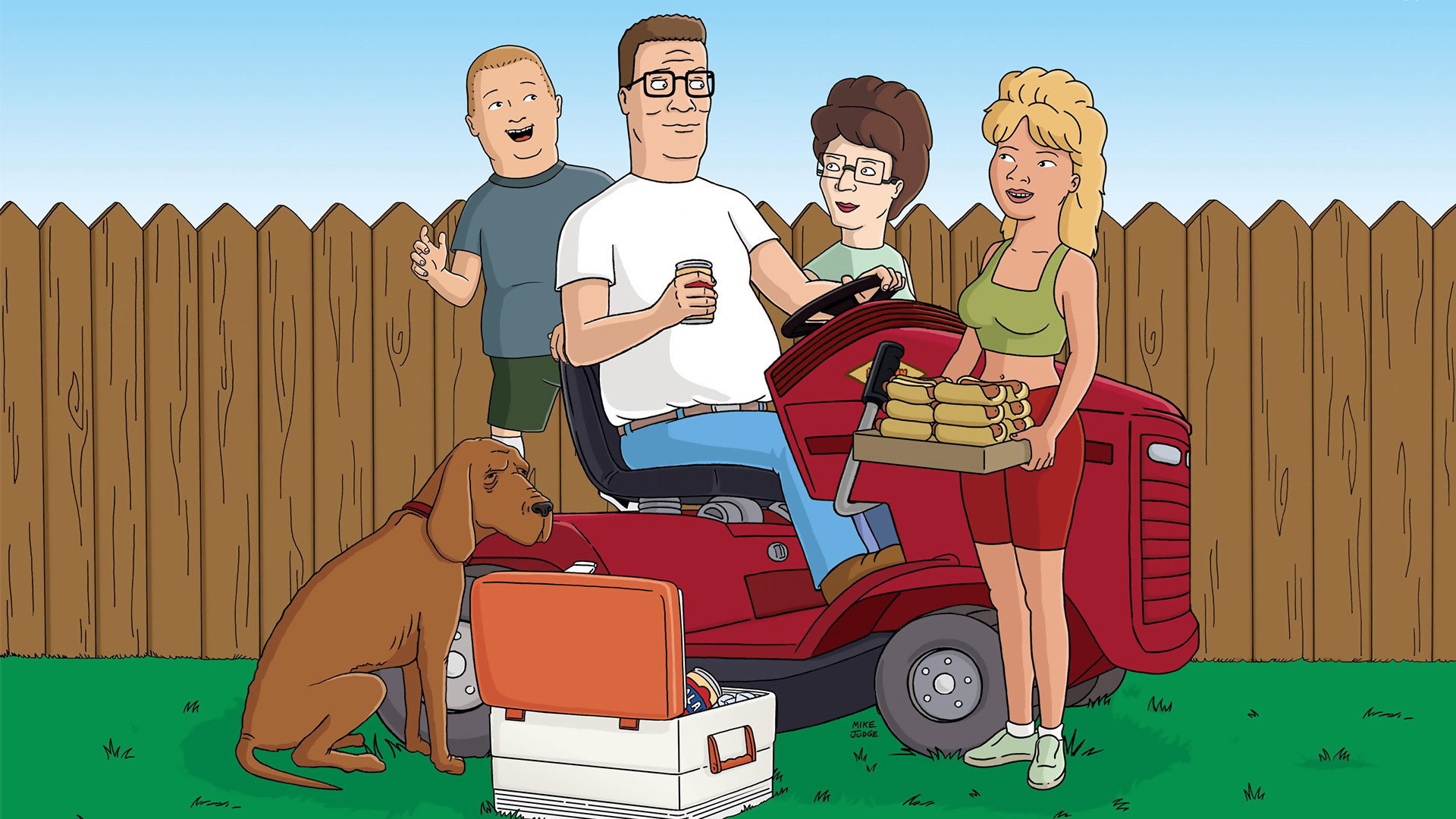
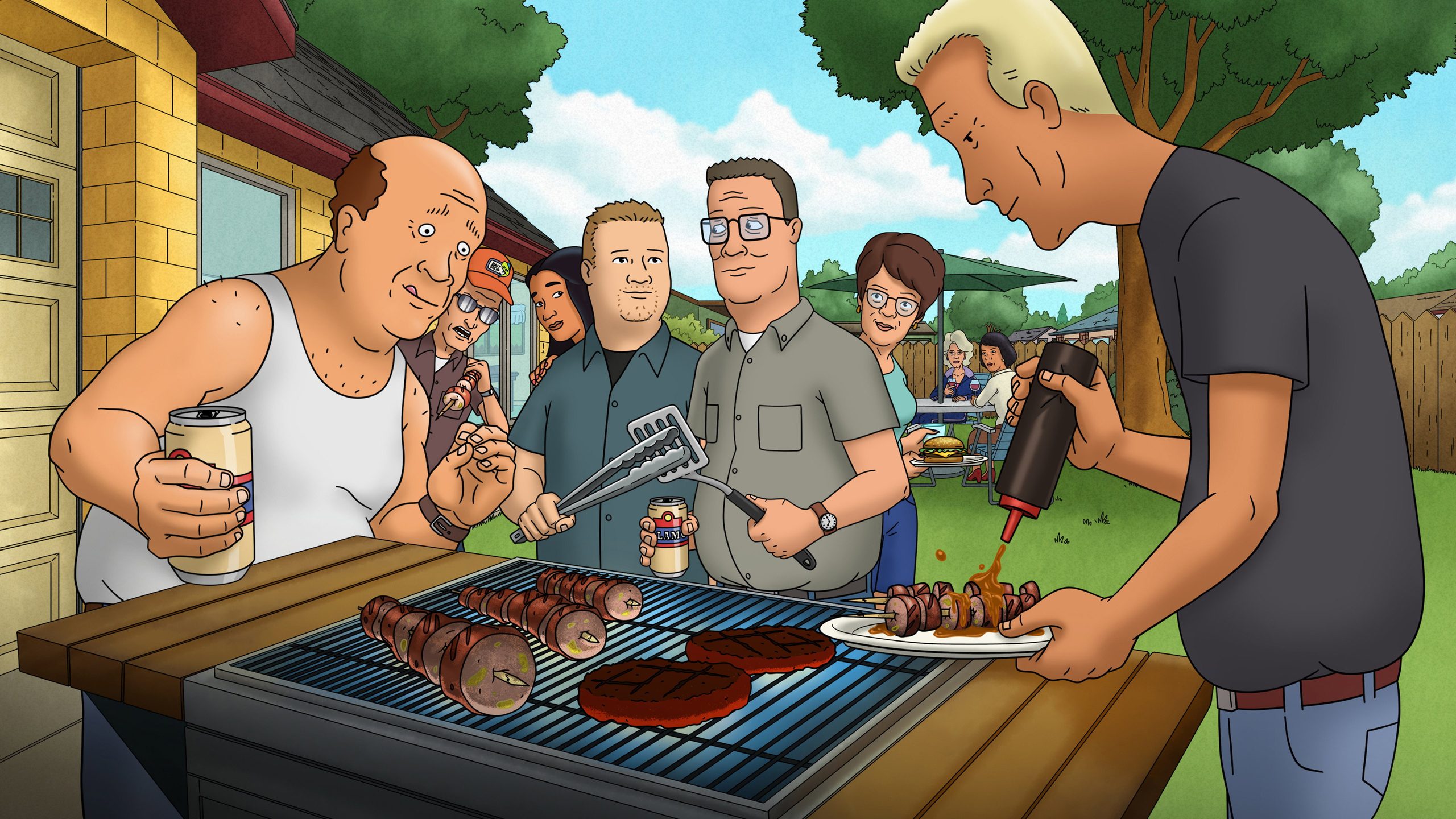
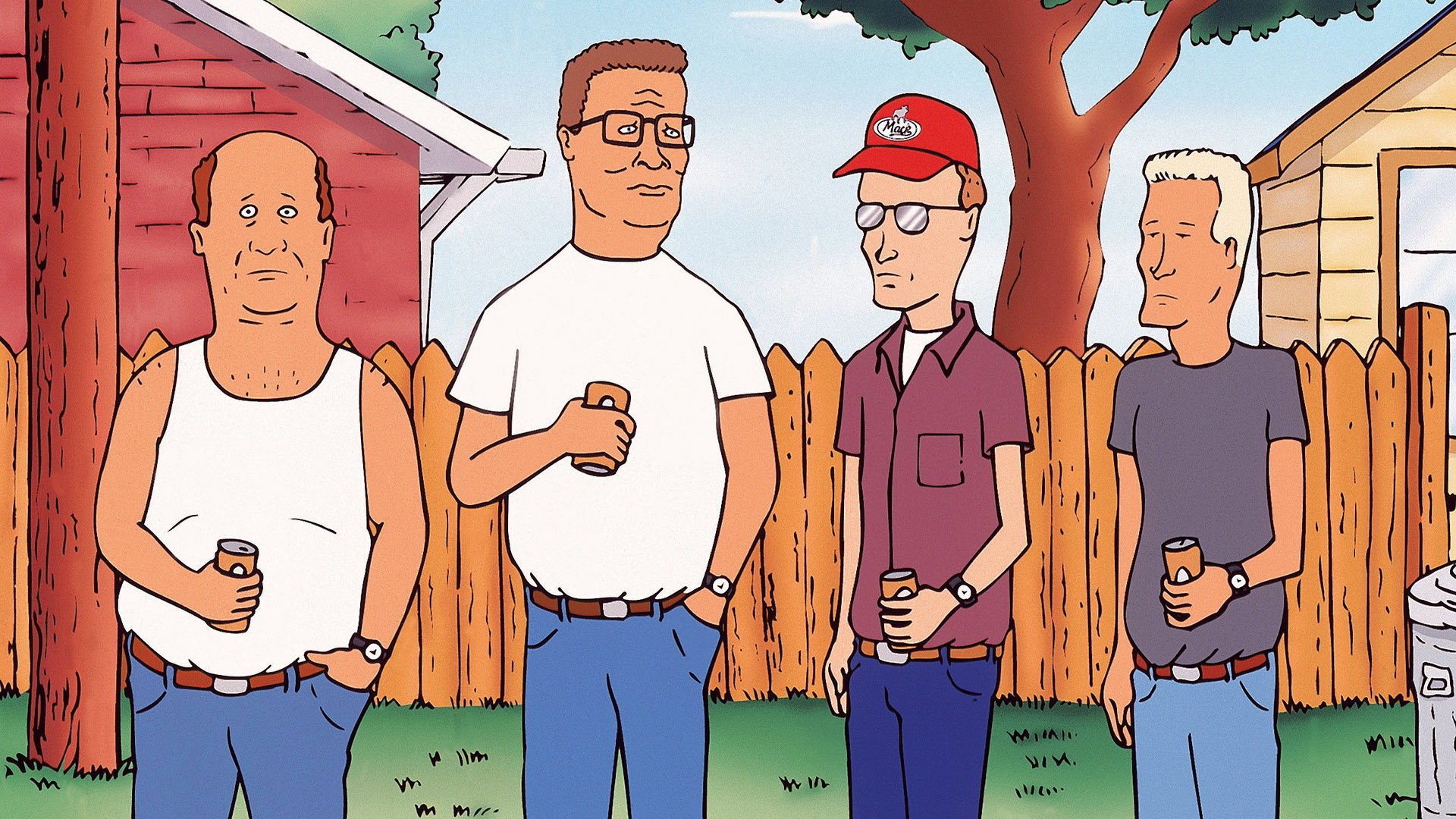
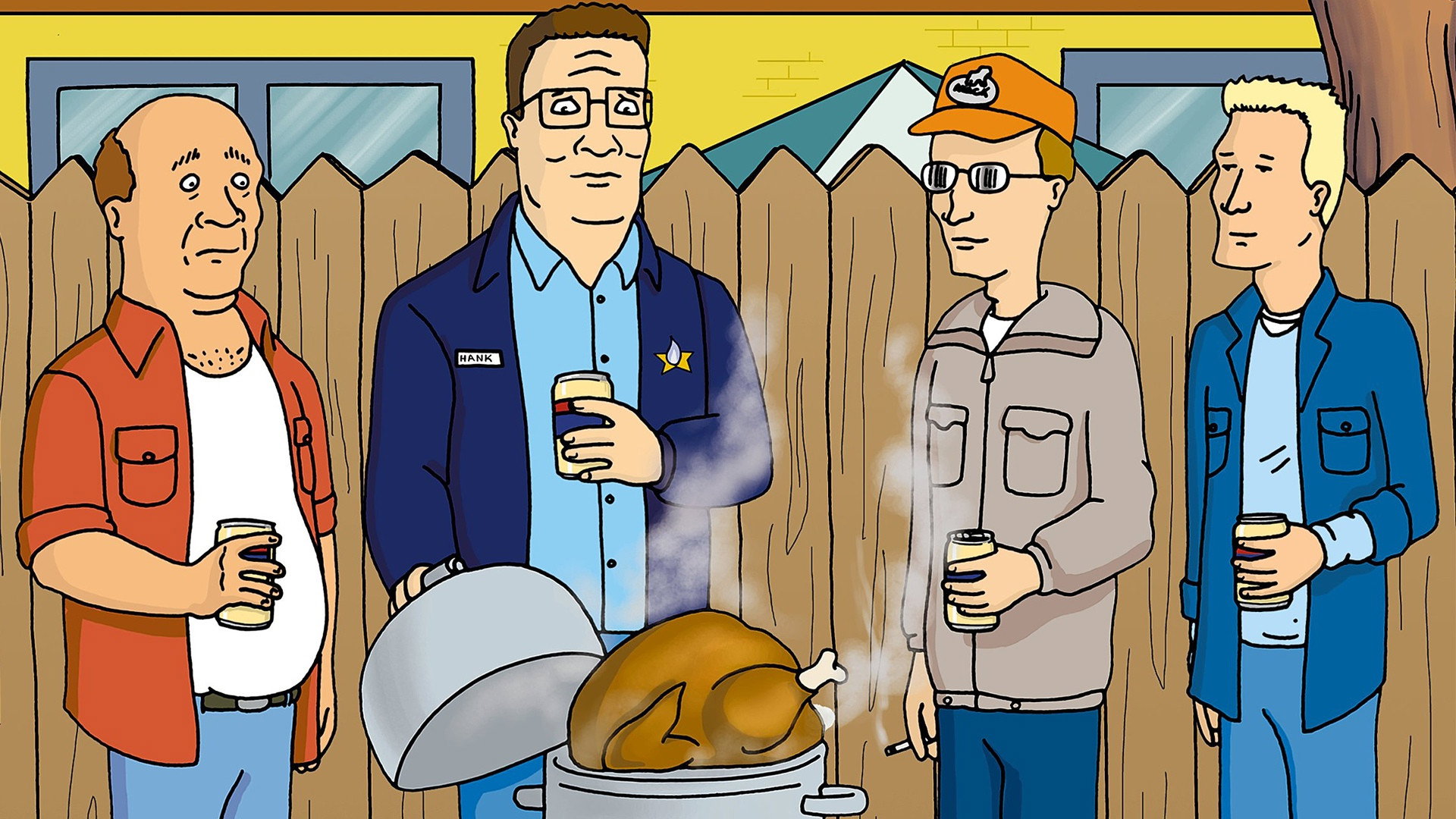
King of the Hill began on 12 January 1997, ran for thirteen seasons, and came back on 4 August 2025 for a fourteenth, with a fifteenth following in 2026. Across all of that its premise has not moved an inch. Hank Hill sells propane in Arlen, Texas, loves his wife, worries about his son, and stands in the alley behind his house most evenings with a can of beer and three friends, saying “yep” at intervals. Greg Daniels and Mike Judge built a comedy around a man who wants nothing more than for things to work properly. It is the kindest and most patient of the American animated sitcoms of its era, and we recommend it with one caveat, which is that at over 250 episodes it knows some of its own tricks too well.
What the show is attempting is unusual for animation. There are no talking pets, no cutaway gags, no trips to space. People are drawn at roughly human proportions and coloured in the flat browns and greens of a real suburb, and the joke, most weeks, is that they are exactly as ordinary as they look. Judge and Daniels trust a pause the way other cartoons trust an explosion. A long shot of four men staring at a lawnmower is allowed to be the punchline.
The directing credits run to dozens of names, among them Wes Archer, Klay Hall and Dominic Polcino, and the house style holds across all of them: fixed angles, few close-ups, a pace that lets Hank finish his thought before the cut. The writing room is similarly deep. Jim Dauterive, whose surname the show borrowed for its saddest character, Paul Lieberstein, Jon Vitti and later Wyatt Cenac and Emily Spivey all wrote for it, and the scripts share a discipline: a small domestic problem, a wrong first response from Hank, and a resolution that costs him a little pride. Nobody learns much. That is the point.
Judge voices Hank and Boomhauer himself, and Hank’s clipped, exasperated “Bobby” is the sound the whole programme is built on. Kathy Najimy gives Peggy a self-regard so complete it becomes a kind of innocence. Pamela Adlon’s Bobby is cheerful, soft and entirely unbothered by his father’s disappointment, which is the show’s best running joke and its warmest. Johnny Hardwick plays Dale Gribble as paranoia with a cigarette, and Brittany Murphy makes Luanne sweeter than the writing strictly requires.
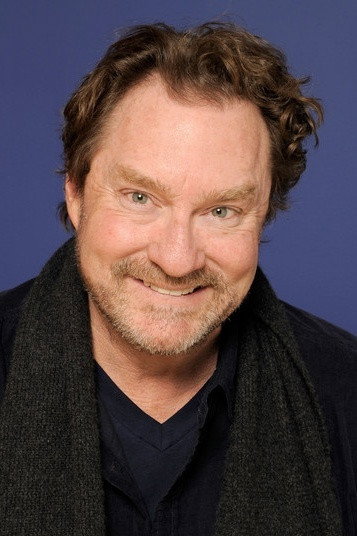
Then there is Bill. Stephen Root plays him as a man whose loneliness is the gag, week after week, and one evening we realised we had stopped laughing. He was sitting in his empty house waiting for someone to ring, the frame held on him a beat longer than a sitcom usually allows, and we felt wretched for a drawing of a barber. The show does that. It keeps a joke going until you notice the person underneath it, and it never announces the moment when the switch happens.
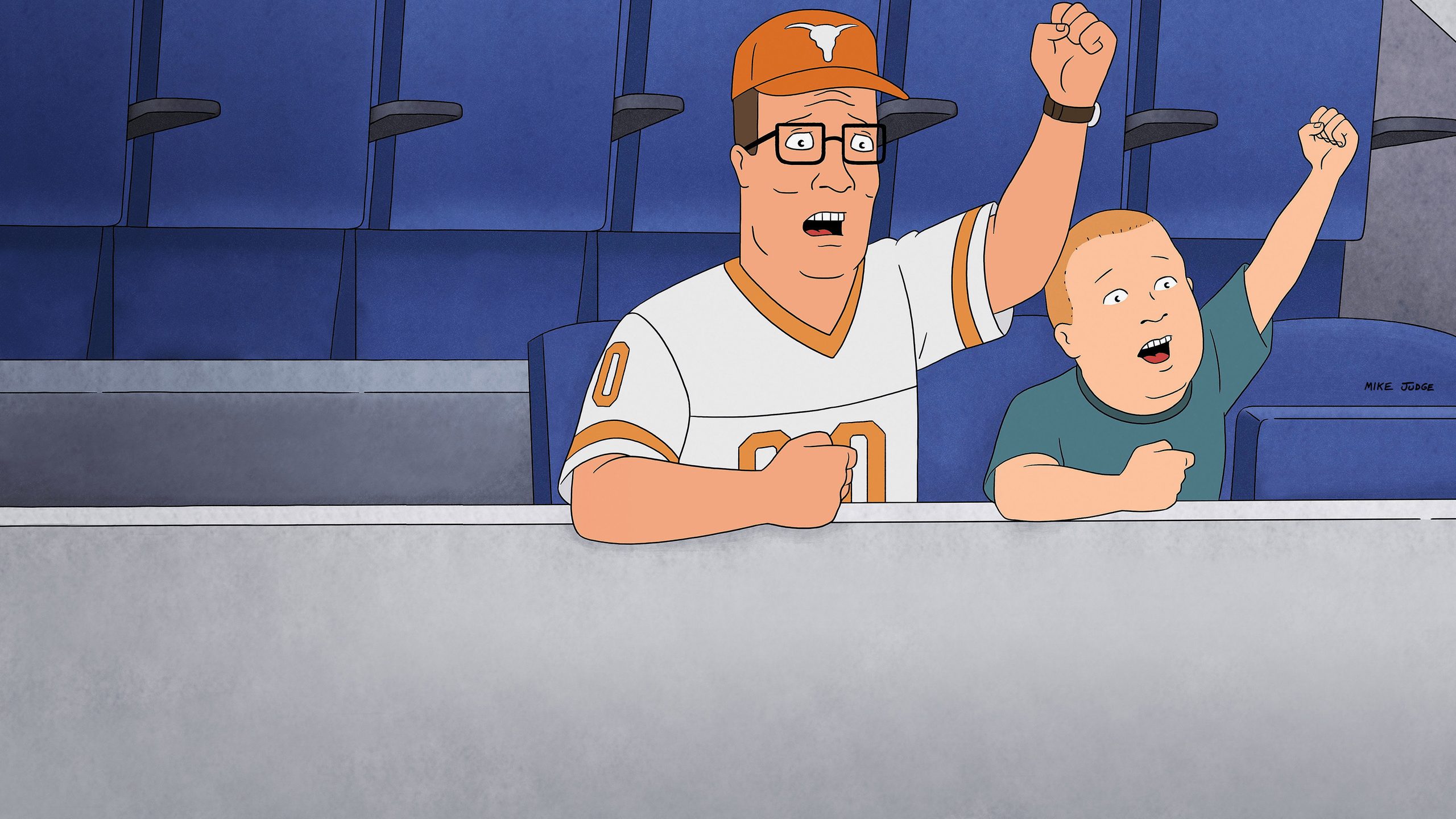
The flaws are the flaws of length. Peggy’s vanity, funny in season two, is pushed by season eight to the point where she is a set of traits rather than a woman. Stories repeat: Hank is embarrassed by Bobby, Hank is embarrassed by his own body, Hank is embarrassed by a new neighbour, and after 200 episodes you can call the ending from the title card. The show is weakest whenever it leaves Arlen; a trip anywhere with a coastline is usually a wasted week. The revival is gentler and quieter than the original, and Toby Huss is now credited alongside Hardwick as Dale, which takes a little getting used to.
Set against The Simpsons, which it followed on to American screens, and South Park, which it followed by a matter of months, it is the one that has dated least, because it never chased a headline. It also has less range than either. It cannot do a musical number or a ten-minute set piece and does not try.
Watch it two episodes at a time, not ten. It rewards the same patience Hank brings to a barbecue, and it punishes bingeing, because the rhythm that makes it work is the rhythm of an ordinary week, and nobody has ten of those in a row.