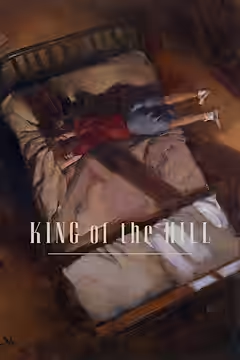
Soderbergh’s third film leaves a boy alone in a Depression hotel and trusts Jesse Bradford to carry it, which he does without strain. The last half hour tidies up more than it should; everything before it is the best of his early work.
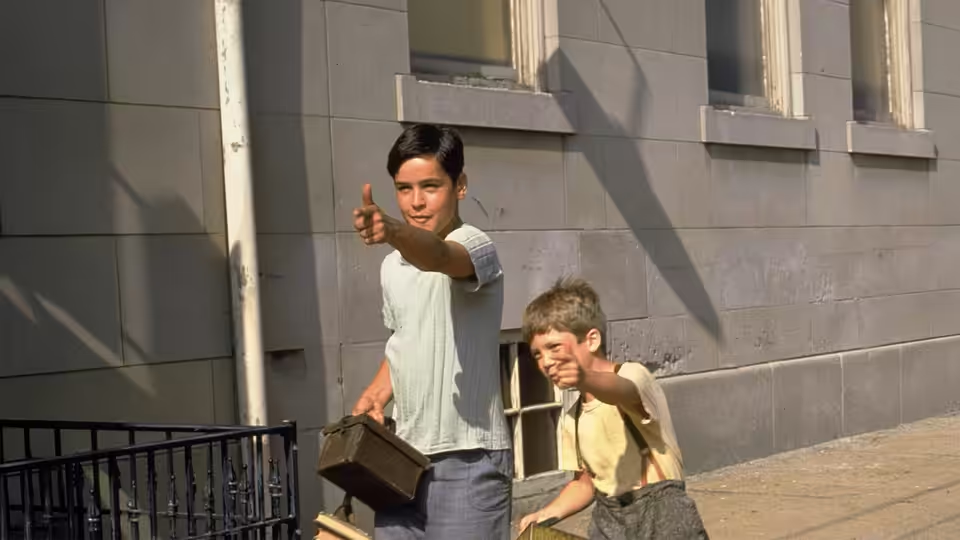
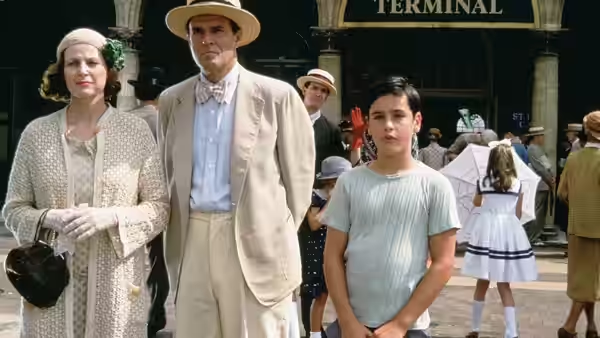
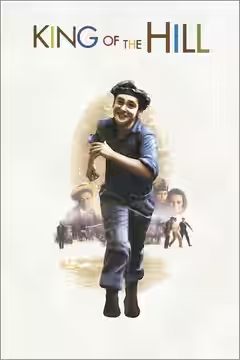
Aaron Kurlander (Jesse Bradford) lives with his parents and his younger brother in a residential hotel in St Louis, in the middle of the Depression, and the family goes one person at a time. Sullivan (Cameron Boyd) is sent to relatives because there is one mouth too many. Mrs Kurlander (Lisa Eichhorn) is taken to a sanatorium. Mr Kurlander (Jeroen Krabbé), who sells watches nobody can afford, finally gets a proper job, and the job is out of town. Aaron is left behind with a key, a promise that someone will be back soon, and no money. Steven Soderbergh’s third film, from A. E. Hotchner’s memoir, is the best thing he had made to that point, and we recommend it warmly, with one caveat about its last half hour.
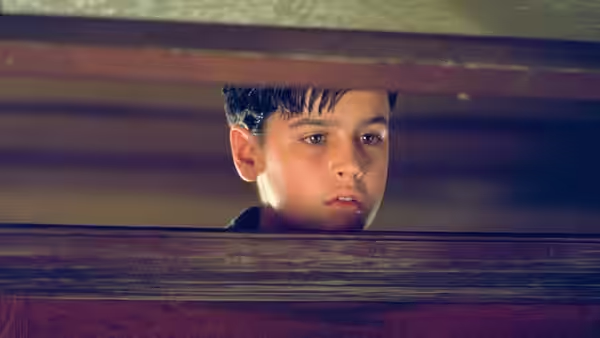
Aaron’s answer to all of this is to lie. He tells his classmates his family has money, and the lies grow as the money shrinks. Bradford plays him watchful and quick, a boy who has worked out that adults believe a confident child, and he never once asks us to feel sorry for him. That is why the scene that got us works as well as it does. Alone in the hotel room, past the point of hunger, Aaron cuts pictures of food out of a magazine, arranges them on a plate, and eats them with a knife and fork, in the right order. Soderbergh holds on it without music. We were not ready for it, and we sat with it for some time afterwards.
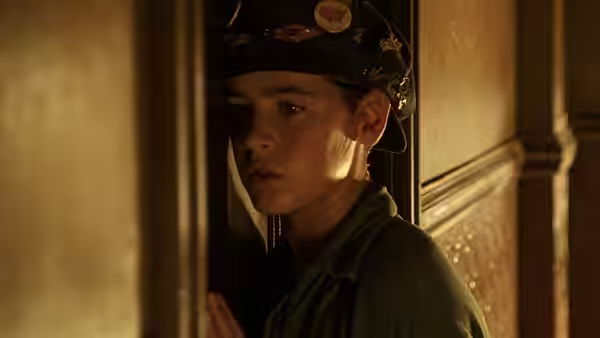
Elliot Davis shoots the hotel in a thick amber light, curtains glowing, dust in the air, and for the first half hour you could mistake it for nostalgia. It is not. As the rooms empty the light stays warm and the faces in it get thinner, and the contrast does the work a speech would have done in another film. Gary Frutkoff’s hotel is precise about money: a corridor of doors with a padlock appearing on one, then another. Susan Lyall keeps Aaron in the same shirt long enough that you start to notice the collar. Cliff Martinez’s score is small and quick and stays out of the worst scenes altogether. Soderbergh edits his own film and cuts most scenes a beat before you expect, which stops the sentiment settling.
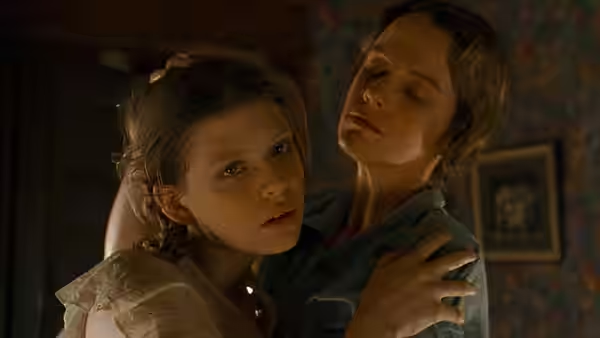
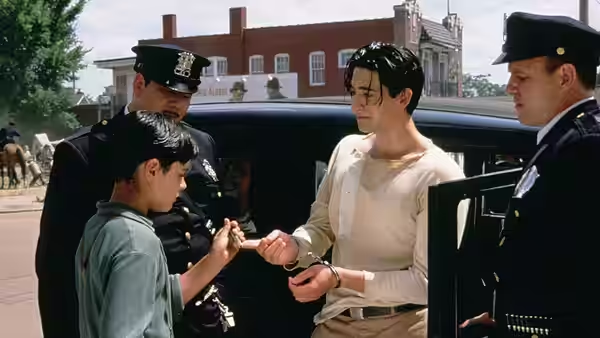
The other guests show Aaron every way there is to be broke. Mr Mungo, down the corridor, has a good suit, good manners and a bottle. Elizabeth McGovern’s Lydia is kind to Aaron in a way that comes with terms. Adrien Brody’s Lester, a few years older, has already learned how the city works and passes some of it on. Karen Allen’s Miss Mathey is the one adult who looks at Aaron and sees a child rather than a problem. Joe Chrest’s Ben, the bellhop, and John McConnell’s Patrolman Burns are the hotel’s two kinds of authority, and neither is on Aaron’s side. Amber Benson’s Ella McShane, across the hall, has a mother (Kristin Griffith) who knows exactly how close her own family is to the same edge.
Some of these people are one note, and the film knows it; they are there to show Aaron a possible future and then go. What we hold against it is the last stretch, where misfortune arrives in a queue, and then a resolution tidier than anything before it has earned. Krabbé’s father is written soft, too, and the film forgives him more readily than we did. One dissenting review took the changes of tone as a sign the film could not make up its mind. We think they are the point. A child in that room does not get to choose between a funny day and a frightening one.
After sex, lies, and videotape and Kafka, this was the first time Soderbergh pointed the camera at people rather than at an idea, and it turned out he was good at it. He has made bigger and colder films since. He has rarely made a warmer one.
It runs 103 minutes and does not feel like it. Watch it with something to eat within reach. You will want it.