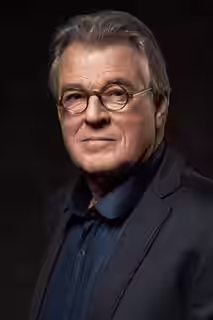
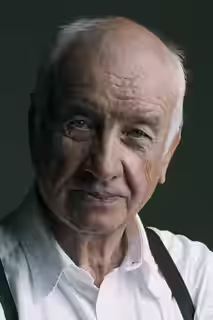
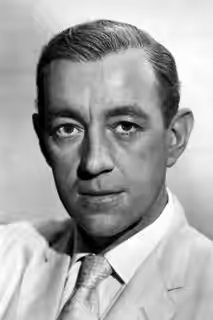
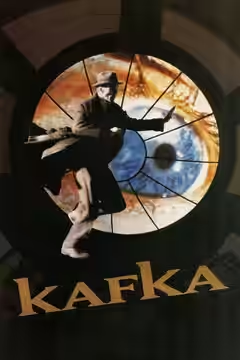
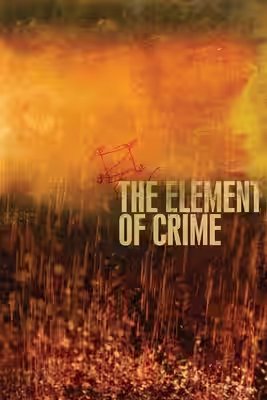
Steven Soderbergh’s second film borrows Kafka’s clerk, his Castle and his shadows for a mystery the writer would not have recognised. It is finely lit and well cast, and the story underneath is pulp; come for the look, not the dread.
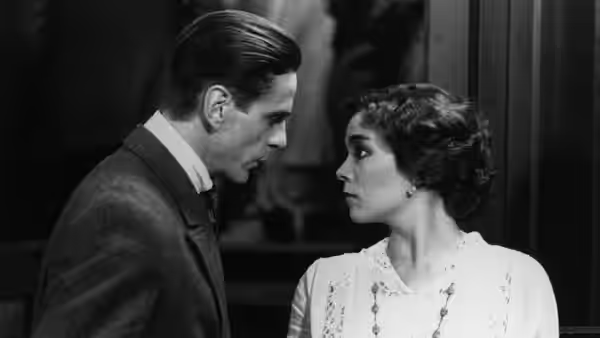
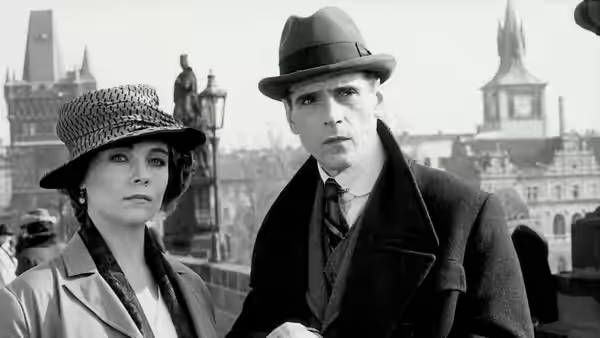
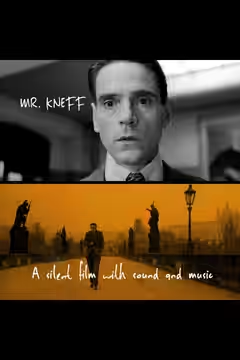
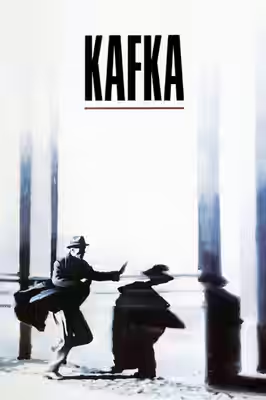
Steven Soderbergh followed sex, lies, and videotape with this: a black-and-white mystery set in Prague, written by Lem Dobbs, in which Franz Kafka is not the author of The Trial but a character in something like it. Jeremy Irons plays him as a clerk at an insurance office who writes at night and would prefer nobody knew. A colleague is found dead, the police call it suicide, and the dead man’s lover Gabriela (Theresa Russell) insists otherwise. It is a bold thing to attempt for a second film. It is also, once you take the lighting away, a paperback thriller, and the lighting is most of what we would send you to see.
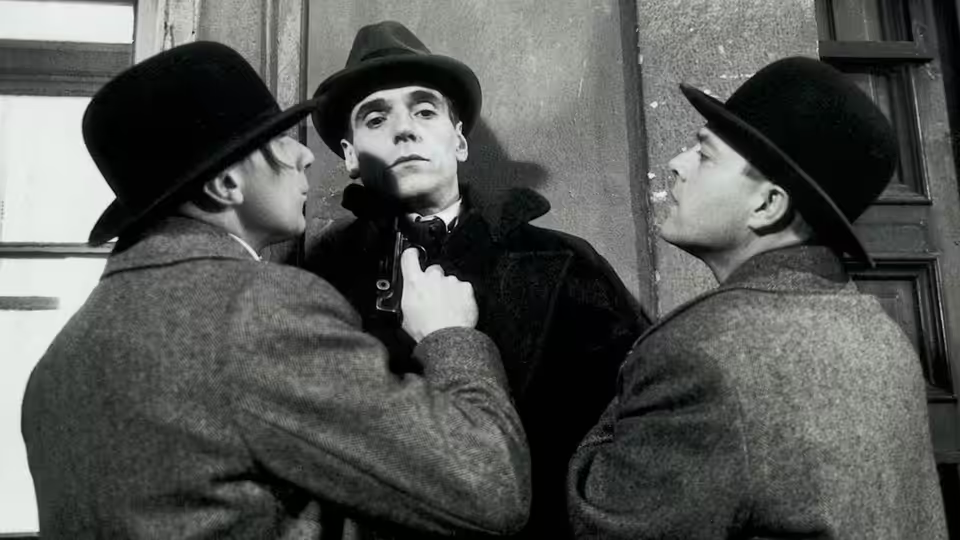
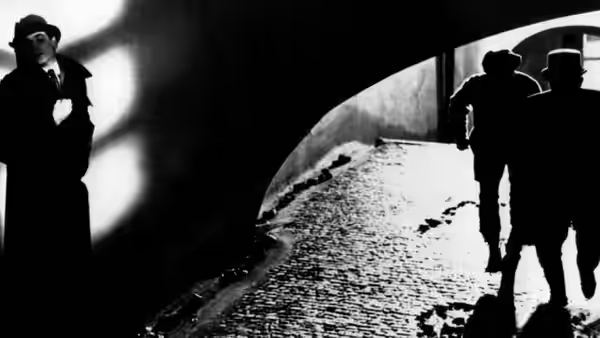
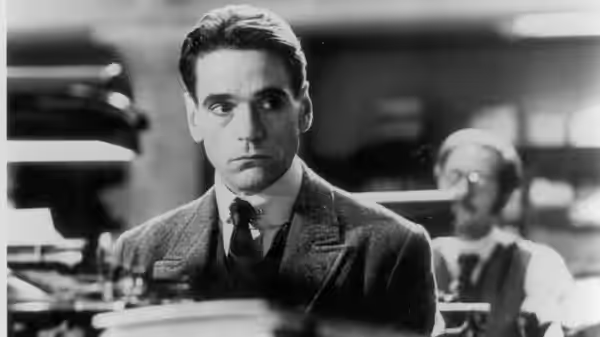
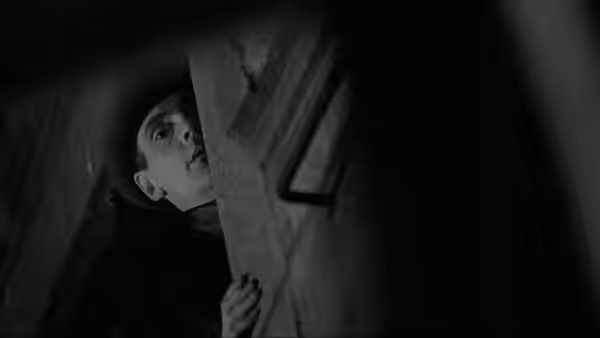
Walt Lloyd shoots the city in hard light and deep black, so that a lamp on a wet street throws one bright pool and everything past it is guesswork. Gavin Bocquet builds the office as ranks of desks under a high ceiling and a filing room where the shelves go up out of sight. Michael Jeffery puts everyone in stiff collars and dark coats that make the men look interchangeable, which is the point. When Kafka first stands at his desk and the only sound is a hundred pens, with Alec Guinness’s Chief Clerk coming down the aisle towards him, we felt a chill we had not expected from a film we had been told was a curiosity. Cliff Martinez keeps the score sparse and lets the scratching do the work.
Irons is good, and quietly so. His Kafka is polite, tired and cornered, a man who answers every question fully because he has never learned how not to. He is best when someone in authority is being kind to him and he cannot tell why. Guinness has only a handful of scenes and makes each one a small lesson in courteous menace. Armin Mueller-Stahl’s Inspector Grubach is the other pleasure, a policeman who listens more than he speaks and seems to have already read the report. Russell is less at home; Gabriela talks in slogans, and Russell delivers them as if she would rather not.
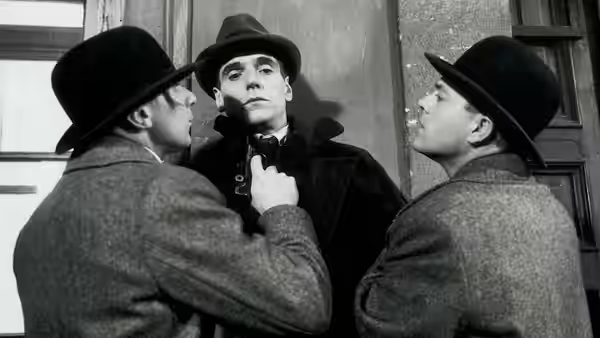
The plot is where it thins. Dobbs sends Kafka after a secret society, a conspiracy that reaches up to the Castle over the city, and the mechanics are those of a Saturday serial: a hidden entrance, a chase and a villain. Keith Allen and Simon McBurney play the two assistants the office assigns to Kafka as a music-hall double act, all synchronised nods and finished sentences. We laughed once and then wished them out of the building. The second half takes a turn we will not describe, into a kind of film we did not expect from the first half hour and did not much want, and the writer who gave us Josef K. becomes a man with a plan and a set of instructions.
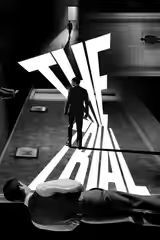
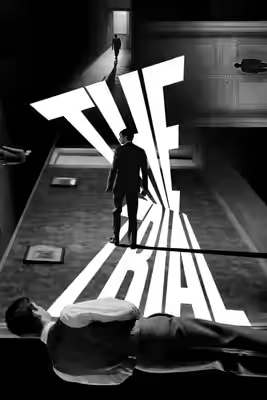
That is the difficulty in one sentence: Kafka’s clerks never get anywhere near an answer, and this one is allowed to look for one. Orson Welles’s The Trial (1962) understood that the horror was in the not knowing and made itself hard to sit through on purpose. Soderbergh’s film is much easier company and much less troubling, and we suspect he knows it. He edits the picture himself, cleanly; at 98 minutes nothing dawdles once the first half hour is done, and there are worse things to be than a handsome pulp mystery that keeps its appointments.
See it if you want to watch a young director find out how much a camera and a city can do for him, and if Irons and Guinness in stiff collars sound like an evening. Do not come for Kafka; he has been borrowed for his name and his shadows and sent home before the interesting part. At home the black and white loses little, which is more than can be said for most films of its ambition.