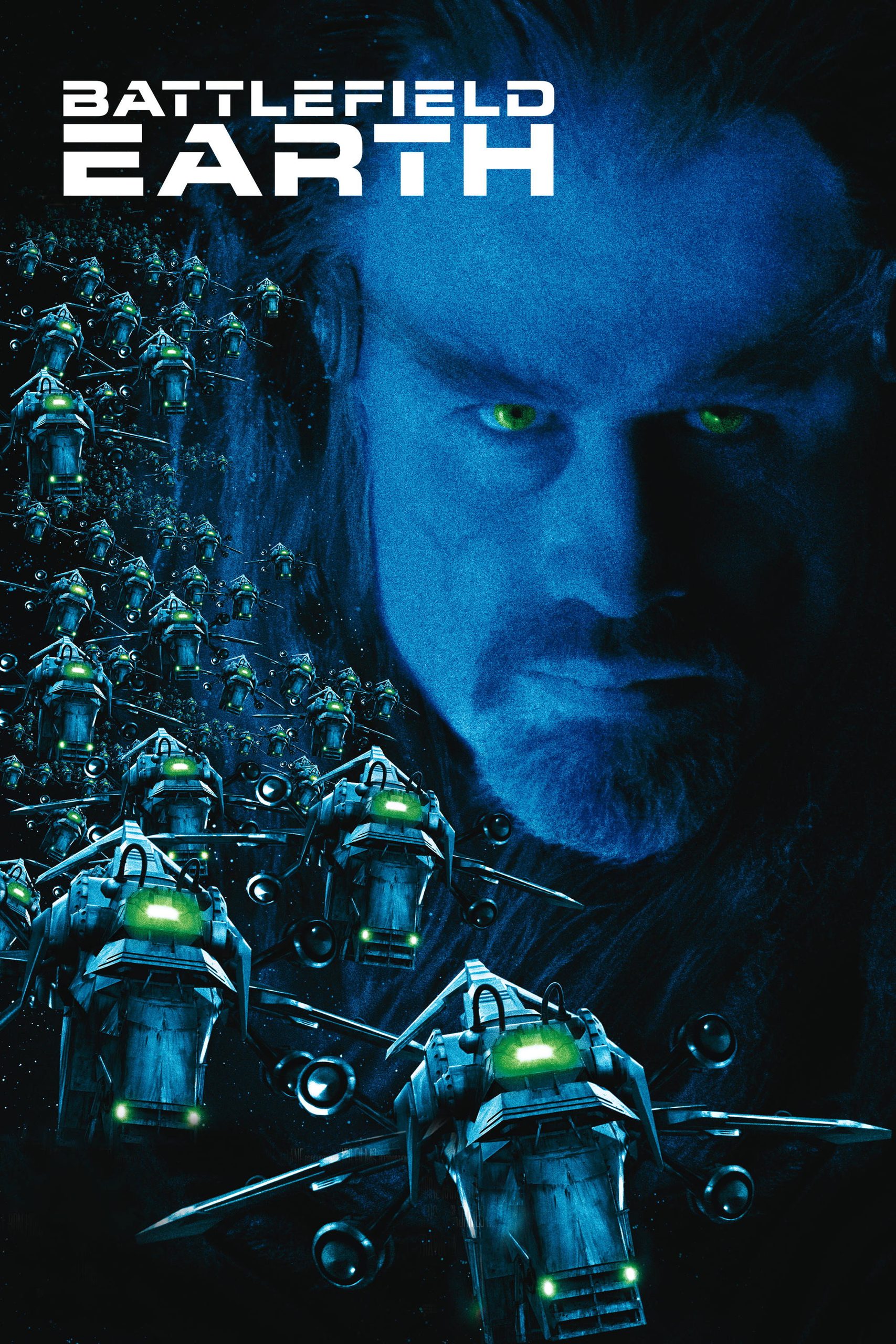
Roger Christian helped make science fiction look used and habitable. We value that practical imagination, but Battlefield Earth finds him directing without the clarity or restraint that might make its adventure worth following.
Fi1m perspective
In Battlefield Earth (2000), the frame keeps leaning when we need to see what is happening inside it. Cinematographer Giles Nuttgens’s persistent tilts make even the busy action tiring to watch. The muddy images make matters worse when the action gets busy, leaving too little that we can pick out clearly. We were irritated by the effort of following the fighting, because the framing kept drawing attention away from it. It is a tedious failure from a filmmaker whose earlier design work helped make science fiction convincing.
His set decoration on Star Wars (1977) and art direction on Alien (1979) offer a better starting point. Working with George Lucas and Ridley Scott, he helped make spacecraft look functional and lived-in. Scrap aircraft parts, pipes and machinery supplied the detail in his science-fiction designs. We value that attention to how a place might actually work: the equipment looks as though somebody has a use for it.
The move into directing took him through the short Black Angel (1980) and his feature debut, The Sender (1982). He also served as second-unit director on Return of the Jedi (1983) and, much later, The Phantom Menace (1999). As a director, he is drawn to myth and to images meant to affect us before we can explain them. There is room for that in science fiction and horror, but Battlefield Earth badly needs its basic storytelling attended to first.
Its humans and aliens ought to give the adventure a simple conflict, but the plotting makes their struggle difficult to invest in. John Travolta and Forest Whitaker provide occasional comic relief, a welcome break from the bluster. Christian allows the film to make plenty of noise without establishing the immediate stakes of its violence. We need to know what matters in a fight before there is much pleasure in watching it.
There is resourcefulness in the set dressing and model work. Christian’s practical skills survive here, though they cannot make the film worth an evening. Start with his contributions to Star Wars and Alien; we would leave Battlefield Earth alone.
Biography
Roger Christian (born 25 February 1944) is an English film director, screenwriter, art director and set decorator. He began his career as an assistant art director on British productions including And Soon the Darkness (1970). He won the Academy Award for Best Art Direction – Set Decoration for his work on Star Wars (1977) and received a further Oscar nomination for Alien (1979).
Christian directed the second unit on Return of the Jedi (1983) and Star Wars: Episode I – The Phantom Menace (1999). His feature directorial debut was the science-fiction horror film The Sender (1982). He later directed Nostradamus (1994) and Battlefield Earth (2000). He also made the shorts Black Angel (1980) and The Dollar Bottom (1981).