Terry Jones makes Life of Brian a sharp, generous comedy about people who cannot leave one another alone. Graham Chapman makes Brian worth caring about, though the chase begins to repeat itself.
Terry Jones understands that people can behave appallingly without becoming dull company. Life of Brian is an excellent comedy about the urge to tell other people what to believe, and the pleasure of having somebody to correct. Its religious and political quarrels are funny because the speakers care so much about distinctions that look so small from outside. The chase wears a little thin, but we recommend it for the precision of those arguments and the trouble Graham Chapman takes over Brian Cohen.
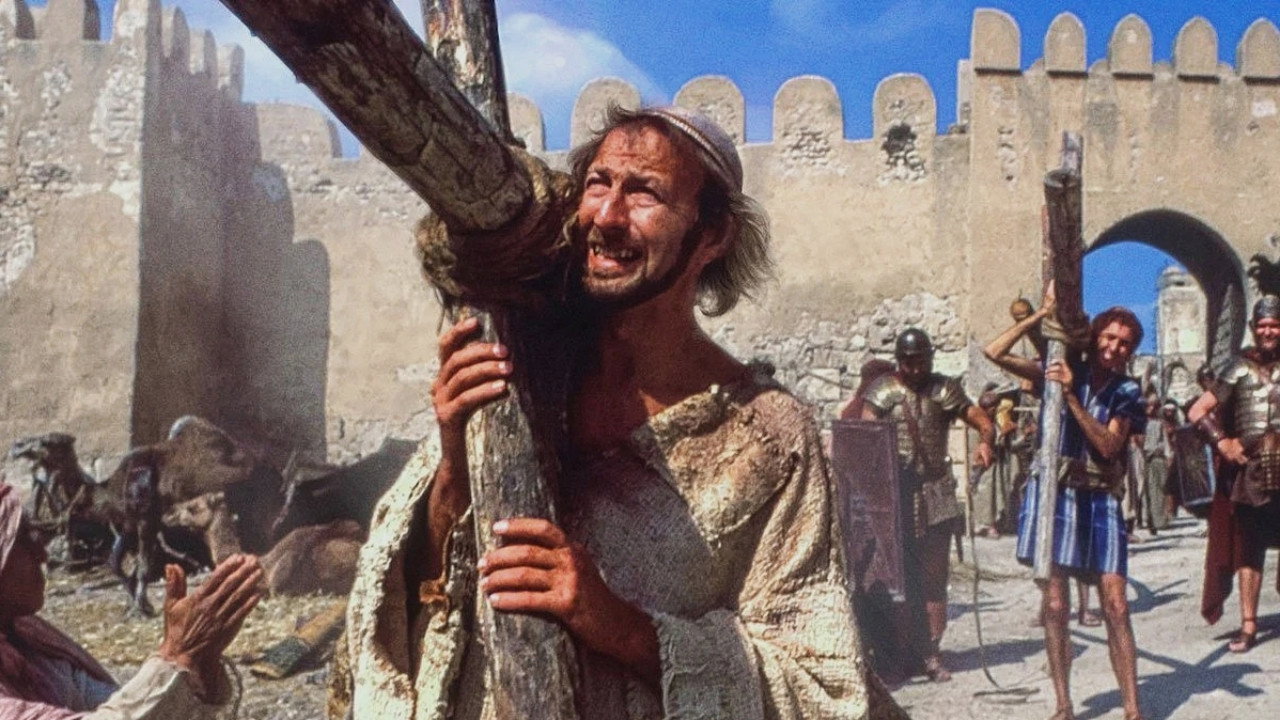
Graham Chapman gives Brian an impatience that feels earned. Surrounded by people with unshakeable convictions, he makes the effort of answering them look exhausting, and he never seems to be waiting politely for his next joke. John Cleese’s Reg and Terry Jones’s Mandy Cohen bring different varieties of certainty, each performed with an assurance that leaves little space for an objection. We remain interested in Brian even when the film seems more interested in arranging his next difficulty.
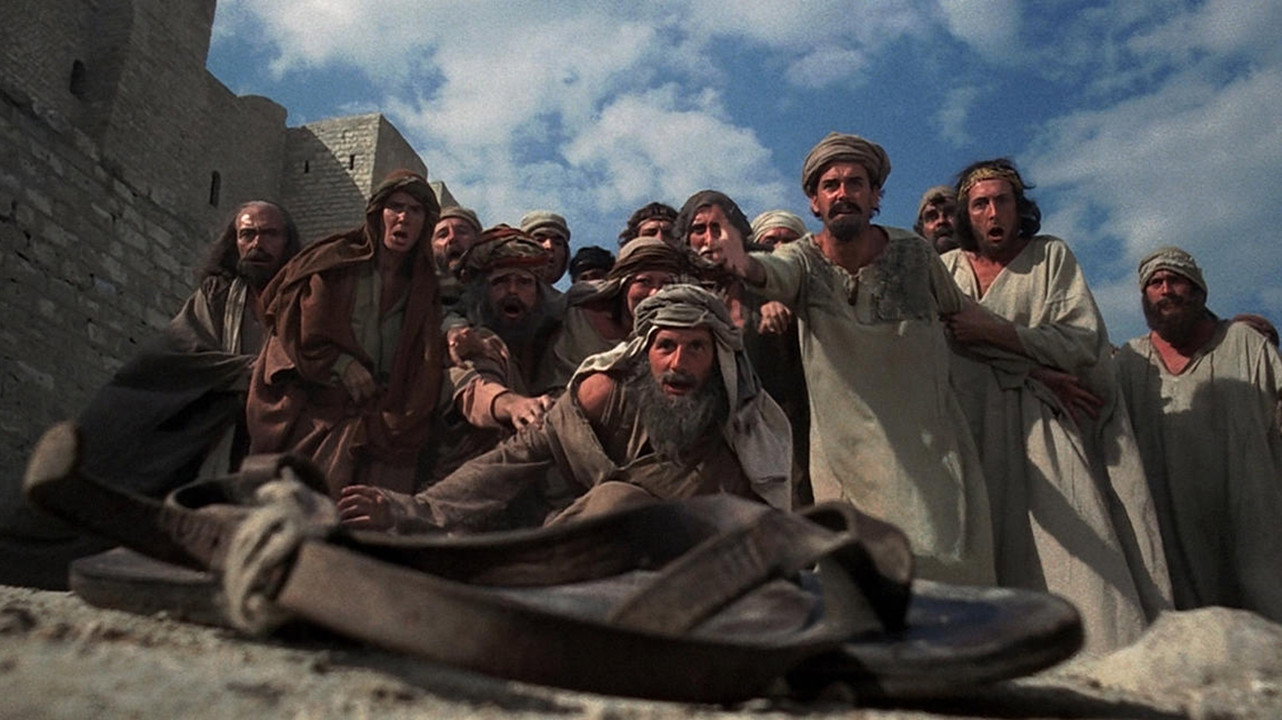
The Latin grammar argument is a particularly good example of how the comedy works. We laughed, then recognised an uncomfortable amount of ourselves in the pleasure of correcting someone. Getting the wording right becomes absurdly important, and the scene needs no explanatory speech. The stoning sequence is nastier, and its humour made us uneasy. Here, the performers’ commitment to treating punishment as ordinary business makes the laughter feel horribly easy.
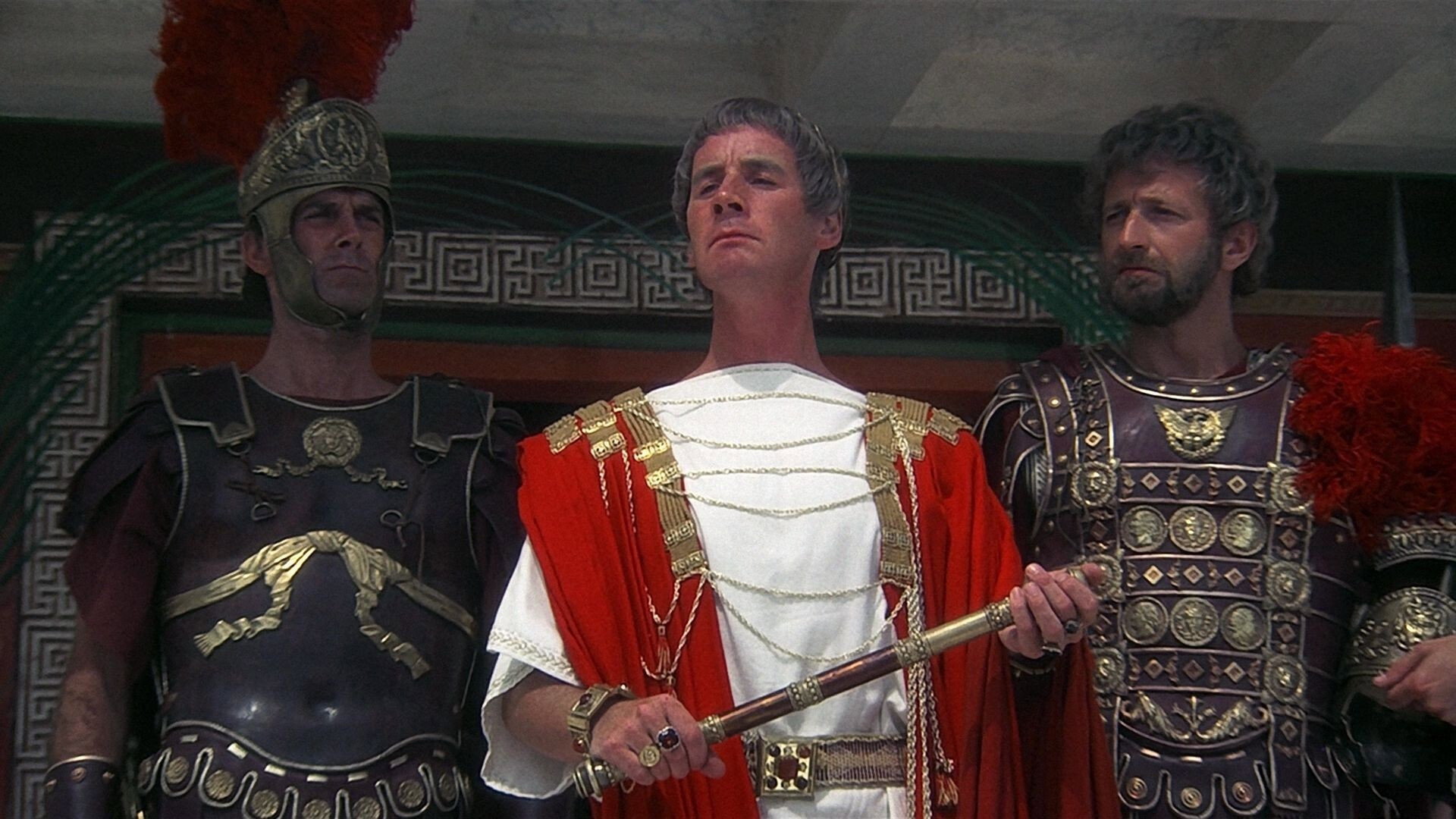
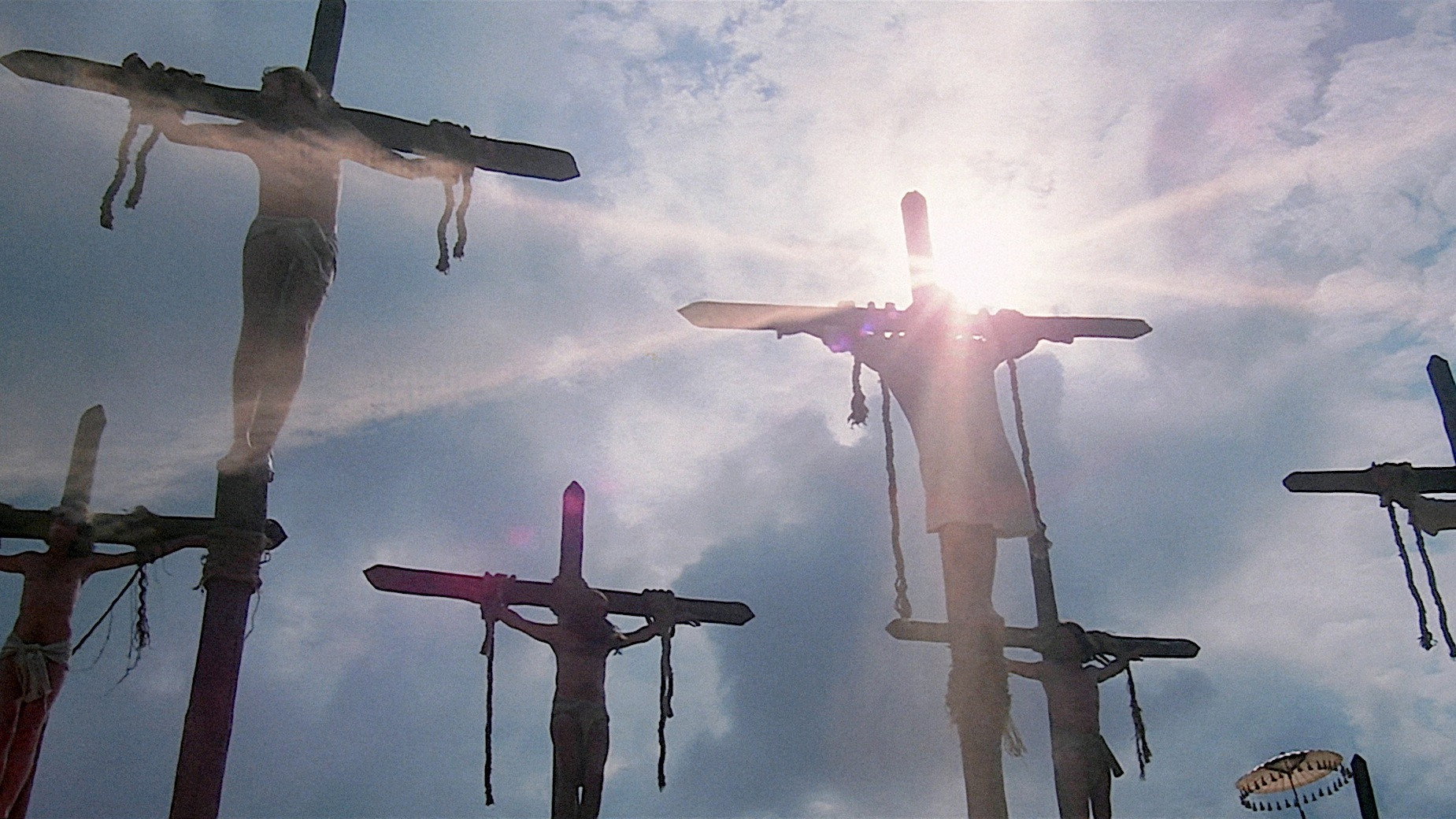
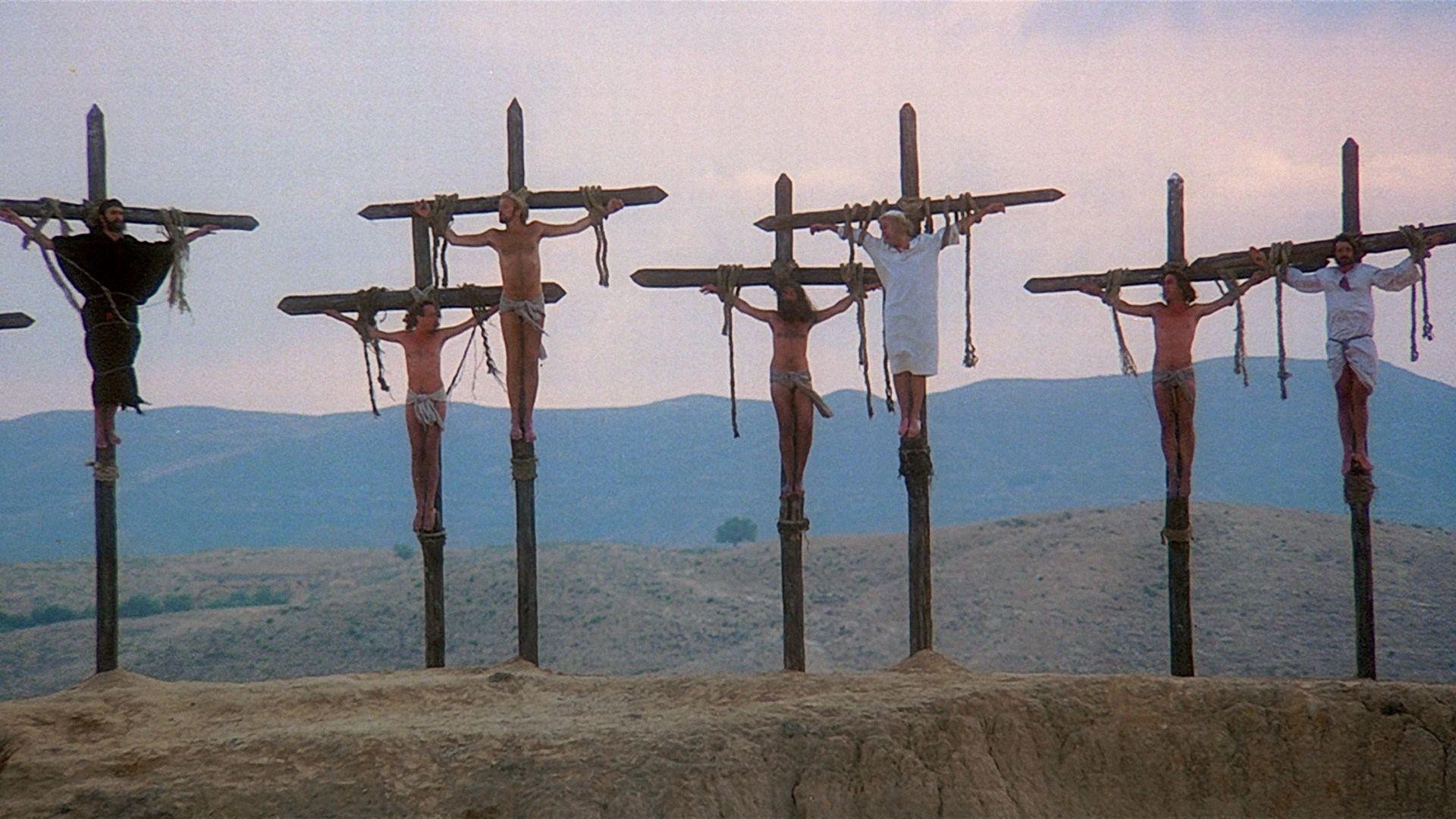
Peter Biziou’s cinematography gives the biblical setting a seriousness that makes its petty disputes funnier. The stoning benefits from looking like a credible public event, however absurd the behaviour within it becomes. Terry Gilliam’s production design provides that same useful solidity, so that these quarrels seem to occupy a functioning society. Geoffrey Burgon’s music also understands the value of solemnity here: it gives the nonsense the sort of accompaniment its participants feel they deserve.
Julian Doyle’s editing gives the individual arguments time to become maddening, and mostly knows when to leave them. Connecting those encounters is harder. The sustained chase becomes repetitive, and the succession of fresh obstacles occasionally makes Brian seem to exist chiefly so that another sketch can happen to him. At 94 minutes the film is hardly overlong, but there are stretches where the return to pursuit feels like an instruction to keep moving because the writers have not found a better reason.
As a parody of biblical spectacle, it is unusually interested in the people who would normally be standing somewhere behind the important figures. That shift in attention makes solemn material funny without requiring every character to be an idiot. The most effective satire concerns the sheer confidence with which people speak for others. Graham Chapman makes Brian’s frustration persuasive enough that we continue to care about his wishes through all the competing demands.
Go in prepared for some repetition and for jokes whose pleasure depends on watching people persist long after a reasonable person would stop. If that sounds too much like an ordinary afternoon, there is compensation in seeing the behaviour so accurately understood. Watch it with someone who can resist reciting the next line.