Series review

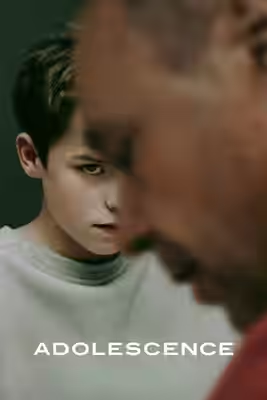
Adolescence

2025 · Directed by Philip Barantini · Series · 15

In a sentenceFour unbroken takes, and we still kept looking for somewhere to hide

DramaCrime

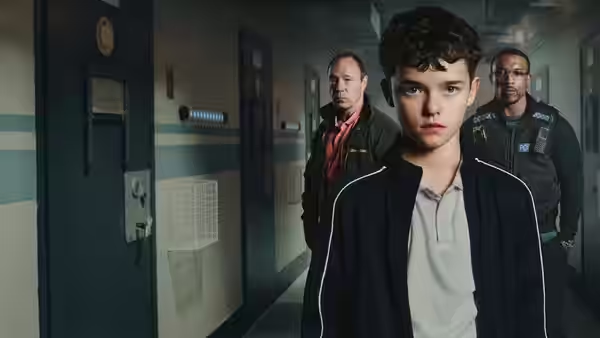
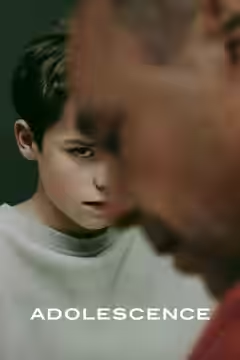
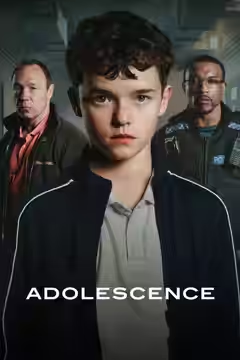
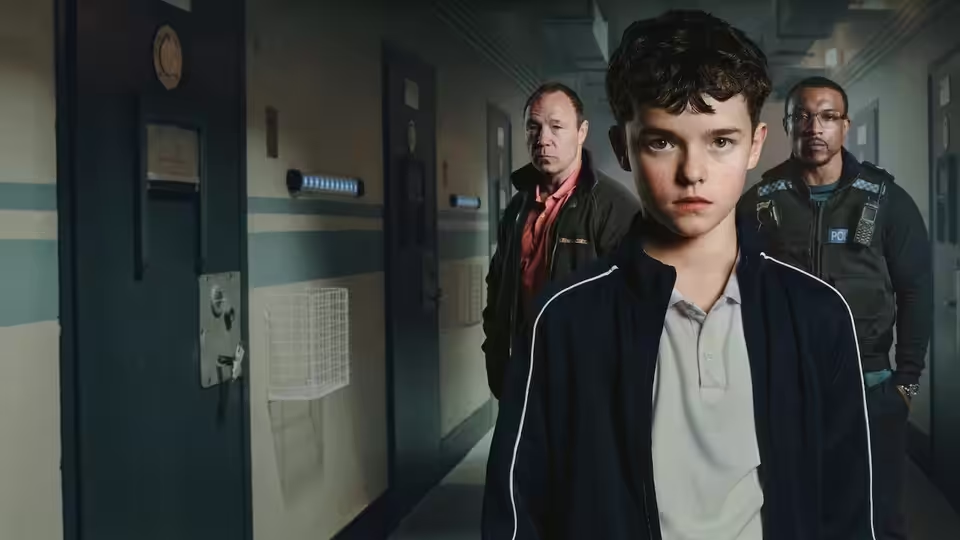
A 13-year-old boy is accused of murder, and the people around him have to confront what they know about his life. The investigation brings questions about violence, masculinity and the pressures boys face online into the lives of those trying to understand the accusation. Written by Stephen Graham and Jack Thorne and directed by Philip Barantini, Adolescence follows the impact of the case across four episodes, each filmed in a single take. The cast includes Amari Bacchus as Adam Bascombe and Fatima Bojang as Jade.

Plays from YouTube when you press play; nothing loads from them until then.

Fi1m review

Philip Barantini’s four-part drama is frightening, compassionate and worth the discomfort. Its single-take filming serves the performances, though the writing can become too insistent about explaining the pressures on boys.

Adolescence is a crime drama we recommend, with a reservation about how insistently it explains some of its concerns. Writers Stephen Graham and Jack Thorne use the accusation against a child to examine the pressures around boys and the damage those pressures can do. Across four episodes, the series asks adults to consider how much of a young person’s life they actually understand. That could make for a dutiful programme about a social problem, but Philip Barantini’s direction keeps the immediate human distress difficult to set aside.

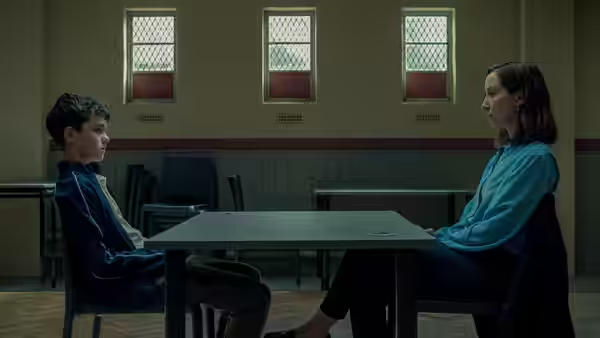
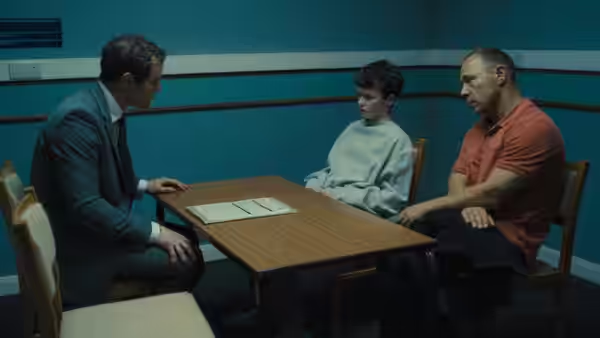
Each episode unfolds in a single take, and cinematographer Matthew Lewis makes that continuity oppressive without letting it become the only thing we notice. The opening interrogation gives the method a purpose: a question has to be heard, and the answer waited for. We were frightened by the strain of that exchange. There is no cut to offer even the smallest pause in watching a child being questioned. Barantini makes a familiar crime-drama scene uncomfortable by asking us to sit through it.

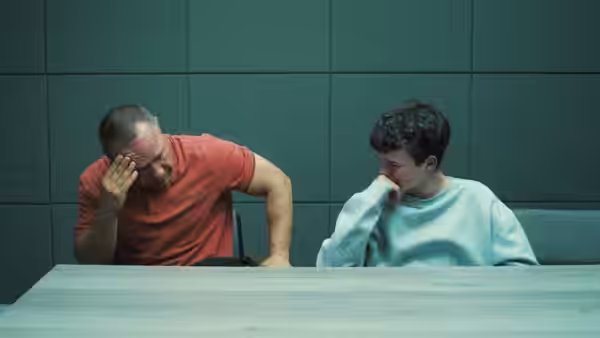
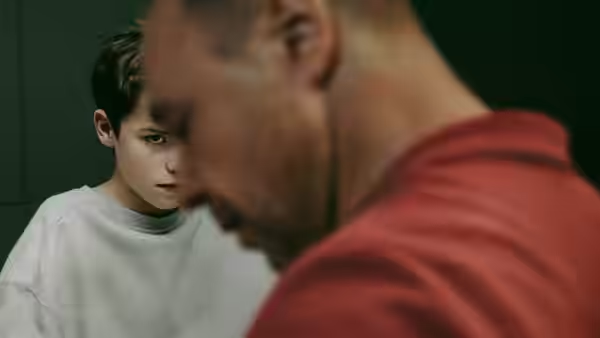
The acting is crucial to that discomfort. The performances feel unprepared in the useful sense: we cannot hear anyone aiming for the next emotional effect, even within such tightly organised filming. Adult distress feels painfully inadequate to the task of understanding what has happened. These performances give the discussion of masculinity a human urgency that the script cannot always achieve when it addresses the subject more directly.

Adam Tomlinson’s production design holds up to the prolonged attention, staying unobtrusive enough that we do not find ourselves admiring the surroundings while someone is in distress. The absence of cuts within each episode also places the work of changing pace on the actors and camera movement. Aaron May and David Ridley’s music contributes to the unease, though it is not what we remember most. The questioning supplies enough tension simply through the time it takes someone to answer.

The writing is less secure when it broadens from these encounters into an explanation of online misogyny. There are passages where Graham and Thorne seem anxious to ensure that nobody misses the lesson, and the dialogue becomes instructional. We understand the wish to make this material clear, particularly for viewers unfamiliar with the influences being discussed. But explanation starts to take time away from watching people respond.

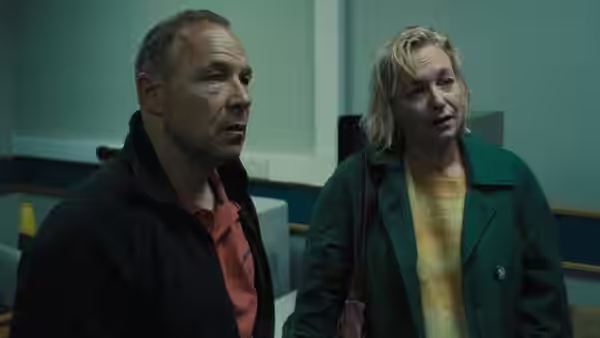
Crime dramas often get impatient with the distress that follows an accusation. This one asks us to stay with the damage around a crime instead of treating it as something to get through before the next revelation. That patience gives the performances their force, even when the writing grows too explanatory. It carries a 15 certificate. Save it for an evening when neither of you is looking for reassurance.
Critical consensus AI synthesised

89
Positive
14
Mixed
0
Negative
0

All 14 reviews are positive, with praise concentrated on the performances and the single-take filming. Stephen Graham and Owen Cooper receive particular attention for making the distress feel immediate and personal. Most critics find that the continuous shots deepen the tension rather than distract from the drama. The reviews also value the series’ examination of toxic masculinity, teenagers’ online lives and the effects of violence on families, frequently describing it as harrowing and compassionate.

The differences concern how fully the writing handles those wider issues. The Independent is the most reserved, finding the opening gripping but later episodes uneven and instructional. The AV Club also sees occasional difficulty with the broader themes, while NME questions the limited attention given to the female victim. Collider, by contrast, praises the treatment of online influences as nuanced rather than preachy. The spread runs from qualified approval to emphatic enthusiasm, with no outright dissent.

Evening Standard
14 March 2025 · ★★★★★ · Vicky Jessop
100

The critic hails it as possibly the year's most important and vital TV, an electrifying watch that is hard to look away from due to the one-take format and urgent storytelling, singling out outstanding performances especially from Owen Cooper.

Read the full review →
Radio Times
13 March 2025 · ★★★★★ · Abby Robinson
100

The critic calls the series a powerful and poignant study of toxic masculinity and its deadly impact on young men and boys, driven by the one-shot technique and standout performances, particularly from newcomer Owen Cooper.

Read the full review →
The Guardian
17 March 2025 · ★★★★★
100

The critic praises the series as powerful, issue-led television with staggering performances, especially from Stephen Graham and newcomer Owen Cooper, and technically ambitious single-take direction by Barantini. It singles out the unflinching exploration of online radicalisation and family impact for praise while noting its potential real-world influence.

Read the full review →
The Telegraph
19 March 2025 · ★★★★★ · Anita Singh
100

The critic calls it a quietly devastating drama that will chill the blood of parents, praising its exploration of pressures on boys today including social media and toxic masculinity, along with phenomenal acting especially from Stephen Graham and newcomer Owen Cooper.

Read the full review →
The Times
15 September 2025 · ★★★★★
100

The piece describes the series as jaw-dropping and immersive, praising the single-take direction, strong performances from Stephen Graham and others, and its urgent exploration of teenagers' online lives and toxic influences. It singles out the nightmarish quality and social relevance for parents as standout elements.

Read the full review →
Empire
18 March 2025 · David Opie
90*

The series is a triumph of creative and technical artistry, with Barantini's one-shot filming elevating the narrative about toxic masculinity and family tragedy. Performances, especially from Graham and newcomer Cooper, are extraordinary.

Read the full review →

Cast

Stills

Awards

Primetime Emmy Awards, 2025

Won
Outstanding Short Form Nonfiction or Reality Series

If you liked this, try…

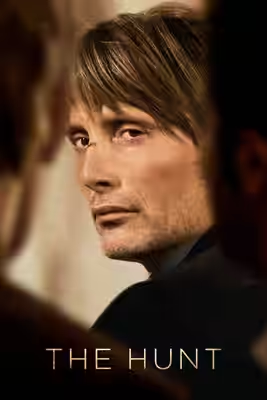
The Hunt poster

The Hunt

2012 · For the frightening speed with which an accusation becomes a community’s certainty.

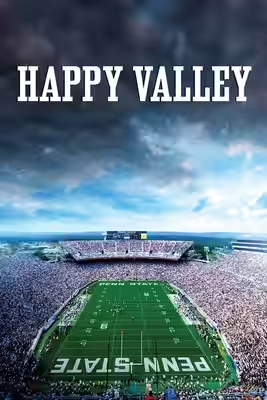
Happy Valley poster

Happy Valley

2014 · A police investigation shares space with family grief, exhaustion and stubborn affection.

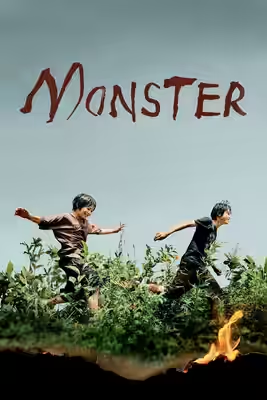
Monster poster

Monster

2023 · Another drama asking how much grown-ups miss when they think they understand.

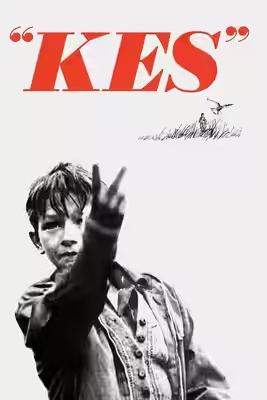
Kes poster

Kes

1969 · A neglected boy gets the patient attention his teachers struggle to offer.

The Class poster

The Class

2008 · A classroom becomes a testing ground for authority, resentment and mutual misunderstanding.