Joseph Fiennes gives Dear England a persuasive centre as Gareth Southgate, and James Graham makes thoughtful leadership worth watching. We recommend this warm football drama, with reservations about asking one team to explain a country.
Dear England is a warm, persuasive drama about leadership, with Joseph Fiennes giving its faith in Gareth Southgate a convincing human basis. James Graham uses the England football team to consider masculinity, shame and the difficulty of talking honestly about either. The football gives those questions an immediate setting, even if we are less persuaded by the larger claims about English identity. We recommend it for Fiennes, with that reservation.
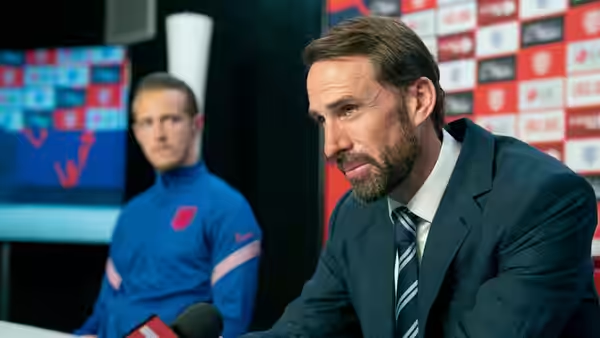
Fiennes is the reason to stay. His Southgate is thoughtful and decent, and the performance is restrained enough to make us take those qualities seriously as part of a manager’s work. We found that unexpectedly moving: Fiennes makes care for other people seem a credible basis for authority. The danger with such a portrayal is blandness, but there is enough precision in his Southgate to keep the decency from becoming a general advertisement for being nice.
Familiar sporting figures bring a particular problem to drama: we can spend more time assessing the likeness than considering the person. Fiennes’s precision makes that recognition useful, giving Southgate enough credibility for Graham’s questions about leadership to matter. Recognition is part of the appeal, though a convincing impersonation cannot by itself make a case about national character. The cast includes Will Antenbring as Harry Kane, David Shields as Jordan Henderson and Francis Lovehall as Raheem Sterling. Jodie Whittaker plays Pippa Grange, with Daniel Ryan as Steve Holland.
Graham’s focus on national character is the less convincing part. England is too varied for a football team to explain it, and the emphasis on masculinity risks making the nation sound exclusively male. Racism among fans belongs in this story; treating shame and emotional illiteracy as particularly English takes more persuading. We are interested in those questions without accepting that football can settle them, or that a decent manager can provide an answer to them.
Rupert Goold and Paul Whittington direct this adaptation of Graham’s stage play, and the transfer raises a useful question about scale. A television drama needs its people to remain interesting once the pleasure of recognising them has passed. Fiennes supplies that interest through restraint, which suits a story concerned with the value of thinking before speaking. The cinematography is by Ole Bratt Birkeland, with music by Kormac.
Against the usual demands of a sports drama, the interest in thoughtful leadership is welcome. Winning supplies an obvious reason to care, but Graham asks us to take an interest in how authority is exercised as well. That gives the series an appeal beyond an audience already invested in the England team, though its national ambitions need some questioning. Watch it for Fiennes’s Southgate, and allow yourself to disagree with the claims being made on England’s behalf