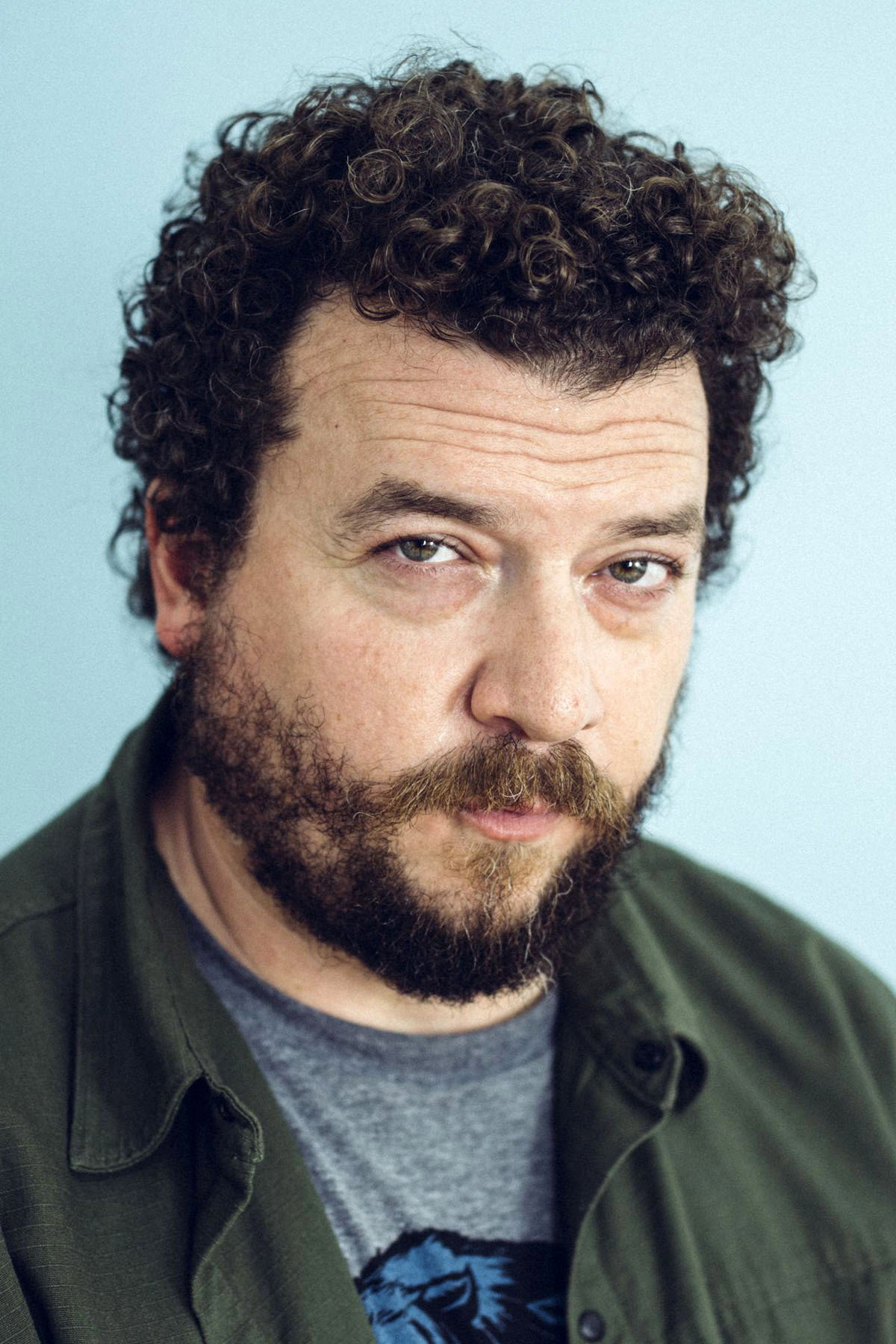
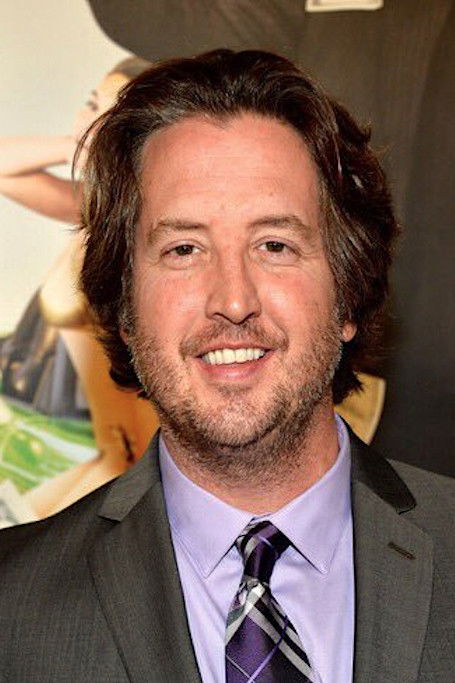
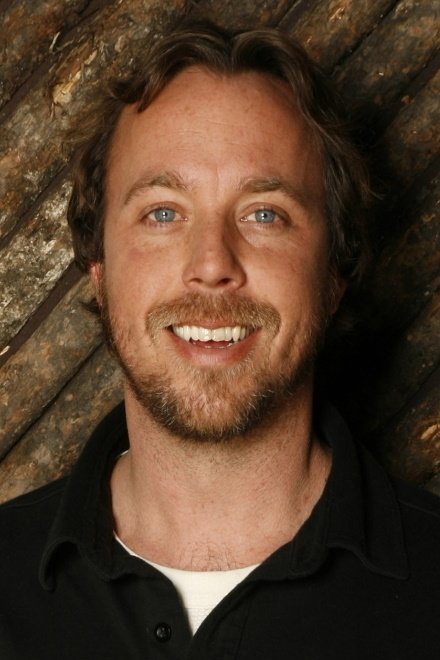
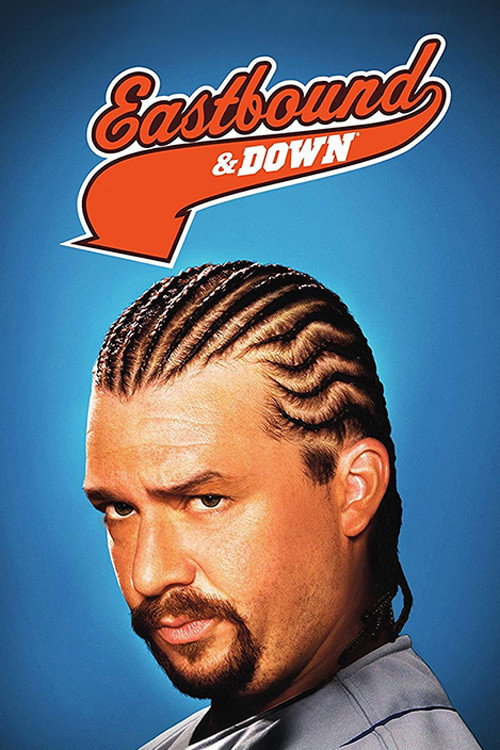
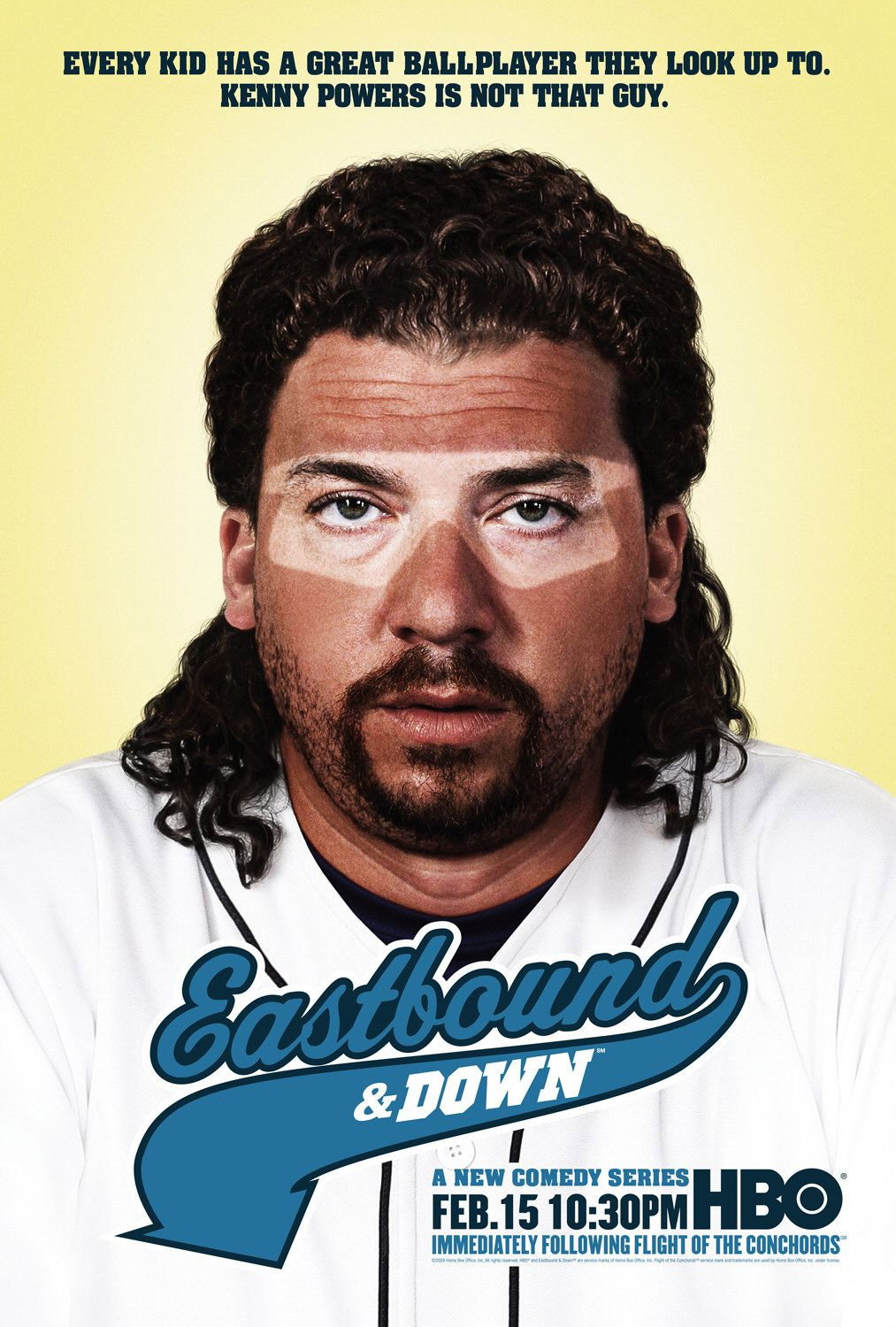
Danny McBride, Jody Hill and Ben Best build a whole comedy around one appalling man and then, without announcing it, make you mind what happens to him. It is crude, sometimes lazily so, and Kenny Powers is the best thing McBride has done.
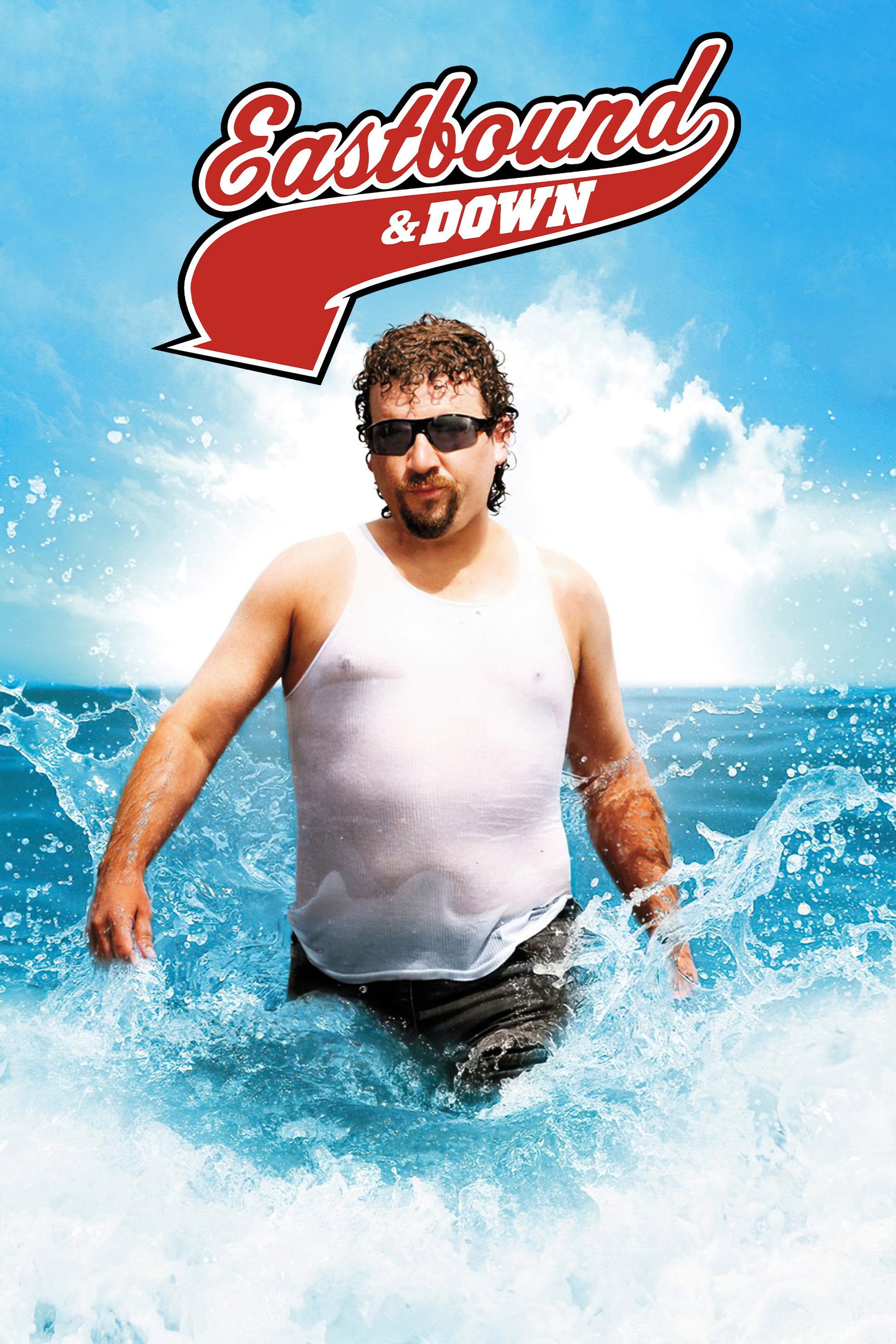
Kenny Powers pitched in the major leagues, once, and he has not stopped talking about it. Eastbound & Down opens with the end of that career and drops him back into the town he left: Shelby, North Carolina, a spare bedroom at his brother’s house, and a substitute job teaching PE at the middle school he attended. Danny McBride, Jody Hill and Ben Best created and wrote it, and the idea fits on a beer mat. Take a man with no talent left and all of his arrogance intact, and watch him refuse to notice. It is funnier than that sounds, and by the end of its first six episodes it is sadder too. We recommend it, with the warning that you have to be able to stand the man.
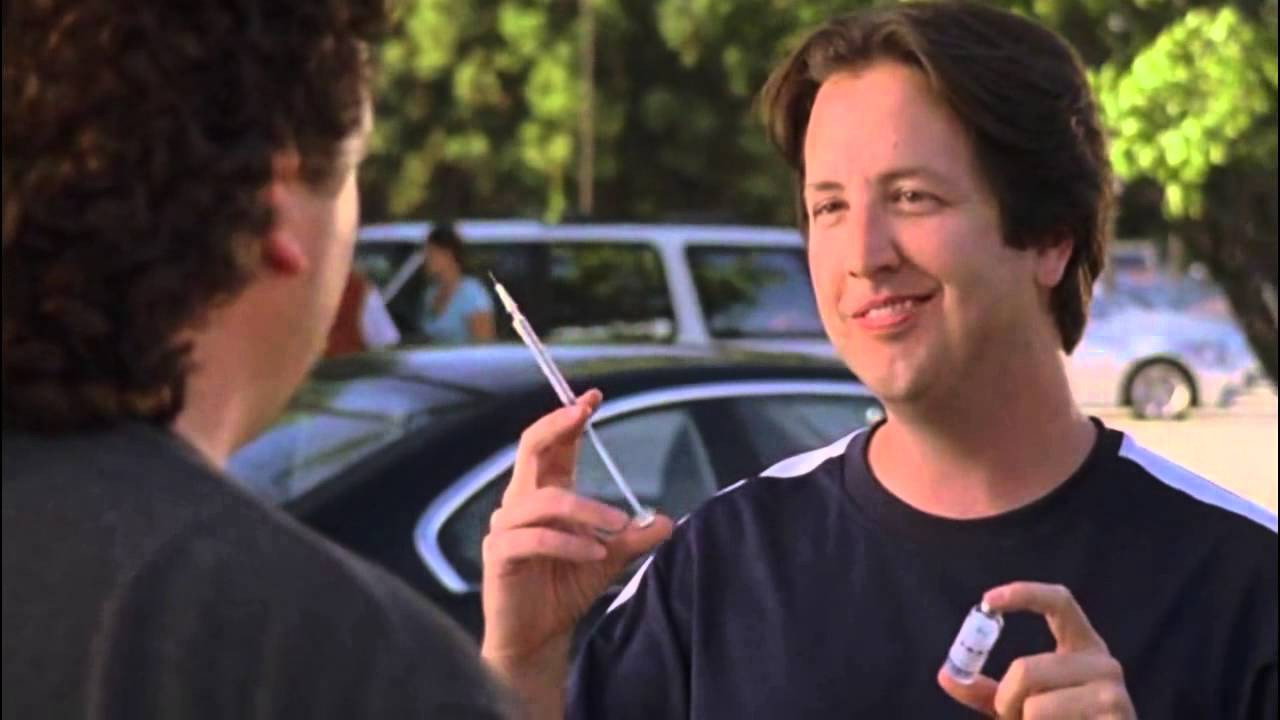
McBride is the whole show. Kenny wears his hair long at the back, keeps a jet ski he cannot afford, and speaks to twelve-year-olds as if they were reporters at a press conference. McBride plays him without a single wink; he never lets you know he is in on the joke, and that is why it works. Early on, Kenny sits alone in his brother’s spare room, listening to the motivational audiobook he recorded himself, mouthing along to his own advice. We laughed at it, and then we did not. A man cheering himself on from a tape because nobody else will is a bleak thing to look at, and the programme knows exactly how long to hold on it.
David Gordon Green directs, alongside Hill and Adam McKay, and Green shoots it like one of his small dramas rather than a sitcom. The camera sits back and lets the gymnasium echo. The light is flat and Southern and does Kenny no favours. There is no laugh track and no punchline rhythm, and scenes trail off into silence after Kenny has said something unforgivable. Will Ferrell produces with McKay, and the show has some of the Ferrell habit of letting a stupid man talk for longer than is comfortable. Here the discomfort is deliberate, and Hill has the nerve to keep it there.
The people around Kenny are drawn with care. Steve Little’s Stevie Janowski, the music teacher, worships him with a devotion that would be touching in a dog, and Little plays him as a man who has found his purpose and it is carrying another man’s bags. Katy Mixon’s April Buchanon, the art teacher Kenny once went out with, is the only person in the school who sees through him and still, against her own judgement, half likes him; Mixon makes that plausible. Andrew Daly’s Principal Cutler, her fiancé, is a decent man played as if decency were a character flaw. John Hawkes and Jennifer Irwin, as the brother and sister-in-law who took Kenny in, are quietly exhausted, and Ben Best’s Clegg, the old friend, gets the filthiest lines and delivers them flat.
The flaws are the ones you would guess. A fair amount of the writing mistakes a swear word for a joke, and when the show is coasting it coasts on Kenny saying something appalling about women and waiting for the wince. Most critics have forgiven this; the one who did not, and called it juvenile, is not entirely wrong about the weaker episodes. The first season is six half-hours and wastes none of them. The later ones are less sure of themselves; the second, which adds Ana de la Reguera and Ike Barinholtz to the cast, has the best stretch of the run, and the third is where the formula shows. Four seasons and 29 episodes is more Kenny Powers than most households will want in one go.
This is the rawest version of the thing McBride and Hill do: a man who is monstrous and pitiable at once. British viewers will recognise the type from Alan Partridge, though Kenny is louder, meaner and less likely to learn anything. Watch two episodes. If the audiobook does not make you laugh, stop there. If it does, you will finish the season by the weekend and feel slightly worse about yourself, which is the intended effect.