Paul Gay’s six-part domestic mystery is brisk, likeable and knows exactly how to end an episode. It is less sure how to fill the middle of one, and it asks its cast to carry a good deal of thin plotting.
There is a particular kind of British television mystery that exists to be watched two episodes at a time, on a weeknight, by people who will guess the twist and enjoy being right. Forever Home is one of those, and it is a better one than most. Paul Gay’s series runs to six episodes, and the first thing to say is that it moves. Nobody stands in a kitchen for ten minutes discussing their feelings. Something happens, someone lies about it, and we are on to the next thing.
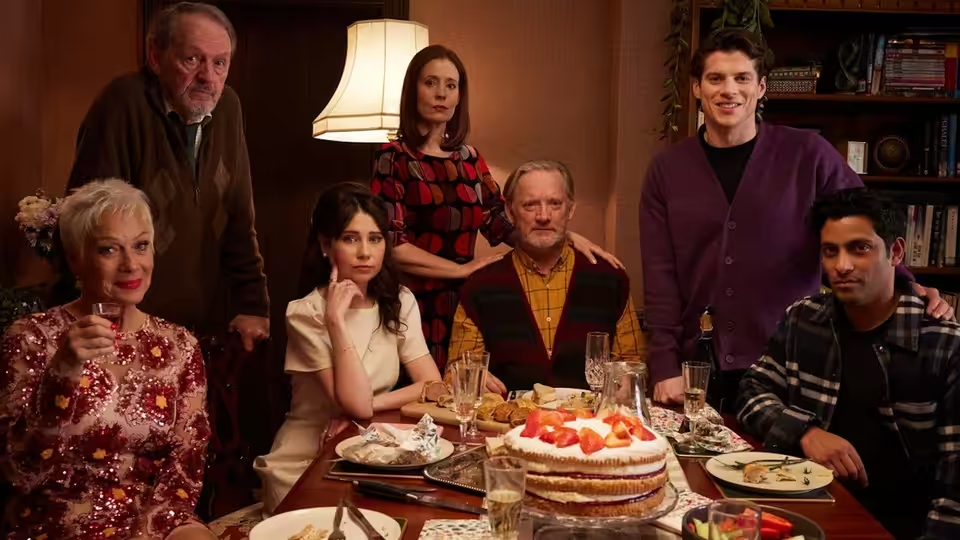
The set-up is old and reliable. A woman who has spent most of her life alone falls for a man who seems too settled to be trouble, and moves into his house. Amy Nuttall plays her without any of the wide-eyed business the part invites; she is a grown woman who has decided to be happy and is annoyed, rather than frightened, when the house will not let her. Douglas Henshall plays the man, and the performance is the reason the series works at all. He is warm and tired and reasonable, and every time we decided he was hiding something he did something kind, and every time we decided he was harmless he closed a door a shade too firmly.
The question of what is in the basement is the engine, and Gay is disciplined about it. He does not show us early and he does not tease us with it every five minutes. It sits under the house, and the series lets us forget it for stretches, which is why it works when it comes back. The episode endings are the best thing here: each one is built to land on a single new fact, stated plainly, and each one did its job on us. We finished one episode at eleven at night and started the next, which we had not planned to do.
We were also, once, properly horrified, and it was not by anything with blood in it. It was a scene in which a character explains, calmly and at length, why an earlier cruelty was for the best, and the series has the sense to hold on the face of the person listening rather than the person talking. That is good directing and better acting, and it made us trust the series more than its plot deserves.
Because the plot does not, in the end, quite deserve it. The reviews so far have compared it to a Harlan Coben thriller, and that is fair in both directions. The twists arrive on schedule and most of them work in the moment, but two or three of them require people to have behaved for years in ways nobody behaves, and the series does not stop to make that credible. Some threads are introduced with ceremony and then dropped in a line of dialogue. The town is drawn in broad strokes, a gossip here, a suspicious neighbour there, and the supporting cast, Denise Welch and Kevin Whately among them, are given attitudes rather than lives. Whately in particular has the air of a man who could have done a great deal more with a page or two of his own.
The look is clean and unfussy. The house is shot as a house, not a haunted one; the light is ordinary daylight and the corridors are just corridors, which is the right call, because the point is that nothing here should look wrong. We would have liked the interiors to tell us more about the man who has lived in them for twenty years, and they do not. The music is used sparingly and mostly to signal that an episode is about to end, which it does honestly.
Against the standard of the form, it is a good example. Against the standard of what these two lead actors are capable of, it is a shame the writing did not stretch further. Nuttall and Henshall have a couple of scenes together, early on, where two lonely people are simply pleased to have found each other, and those scenes are better than anything the mystery gets round to.
Watch it in pairs of episodes, with someone who likes to guess. You will both be right about half the time, and you will both keep going anyway.