A revenge thriller for the Epstein years, in which the serial killer is a woman and the victims had it coming. It opens as luridly as that sounds, then settles into something careful, well acted and two episodes too long.
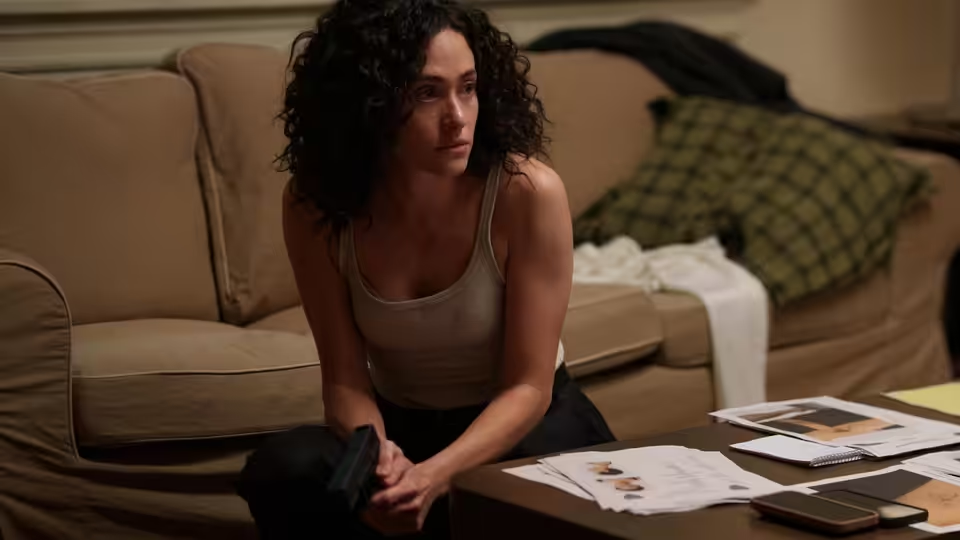
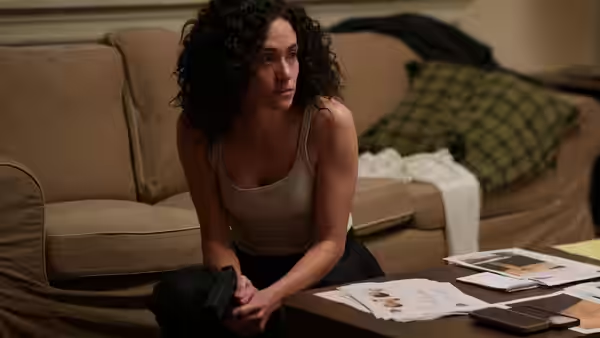
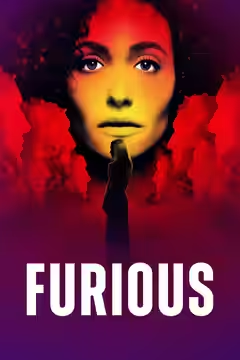
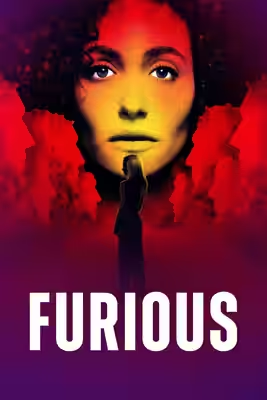
Furious is a serial-killer drama in which the killer is a woman and the dead are the kind of men the Epstein case taught everyone to picture: rich, protected, surrounded by people paid to look away. Emmy Rossum plays Alice Black, who was one of the girls once and is now something else. The pitch is revenge, and for most of the first episode the series behaves like a pitch. Bodies, bare skin, a camera that stays a beat longer than it needs to. We were repelled, and not in the way the writers wanted. It looked too much like the thing it was against.
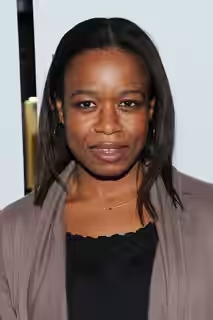
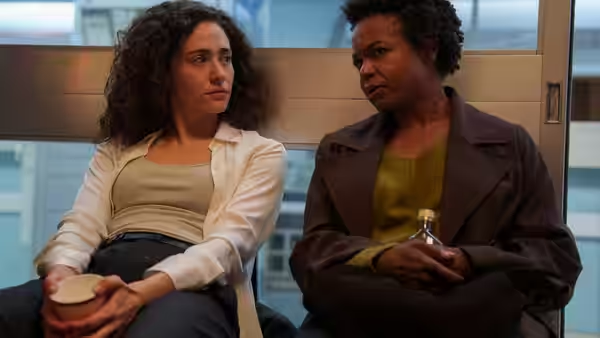
Then it slows down and starts to think, and from the second episode we were with it. The turn belongs largely to Quincy Tyler Bernstine as Nora Washington, an FBI veteran who is odd, unhurried and hard to read, and who is nearly always the cleverest person in any room she is put in. Bernstine plays her without a single tic that asks to be found endearing. Rossum, opposite her at a distance for most of the run, does the harder job: Alice has to be frightening and pitiable at the same time, and Rossum keeps both in the frame without letting either win.
Four directors share the eight episodes, Brian Kirk, Karena Evans, Cory Finley and Destiny Ekaragha, and four editors, Steve Welch, Ralph Jean-Pierre, Katie Ennis and Julie Kreinik, cut them. The look holds together better than that list suggests. Doug Emmett and Brian Lannin shoot the houses of the wealthy in flat, even light with nothing in shadow, so the crimes sit in plain view, which is the point. Chris Trujillo’s production design gives those houses acres of pale floor and very little on the walls. Ariel Marx scores it low and sparingly, mostly strings held under the dialogue, and has the good sense to go silent when Alice is working. Claire Parkinson’s costumes track Alice’s movement between worlds more clearly than the script sometimes does.
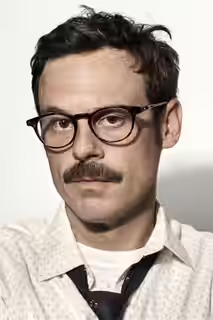
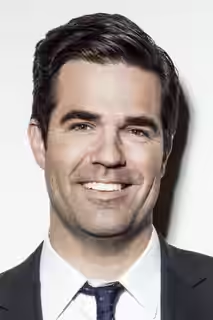
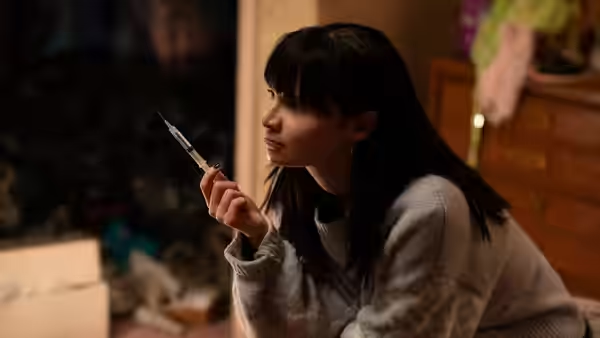
The supporting cast is the series’ quiet strength. Lola Petticrew’s Catherine gives the show what conscience it has, and her scenes are the ones that got at us most: a young woman working out, slowly, what was done to her and who knew. Scoot McNairy plays Danny Kelly as the tired, decent man he plays well, and does not waste it. Rob Delaney, cast a long way from comedy as Oliver Charles, is better than we expected and never asks for a laugh. Hope Davis and Peter McRobbie make the Eastons the sort of couple who mistake a good lawyer for a clear conscience.
The faults are the faults of the form. Eight episodes is too many, and the middle stretch repeats its shape: a man, a house, a reckoning, a scene of Nora catching up. The writers’ room, which includes Dan LeFranc and Elizabeth Meriwether, does not trust Alice’s silence and keeps having other characters say aloud what she must be feeling. Rossum has already shown us. And the first hour will lose viewers who would have liked the rest.
It sits in the line that runs from Monster through Killing Eve, dramas that ask us to keep company with a woman who kills, and it is more serious than the second and less searching than the first. Where it is new is the setting. The trafficking of girls to rich men is not a plot device here; it is the ground the whole series stands on, and it is treated with more care than the opening episode promised.
The 18 certificate is earned in the first hour and, after that, mostly by what the series asks you to think about. Give it two episodes. The first will put you off and the second will keep you up.