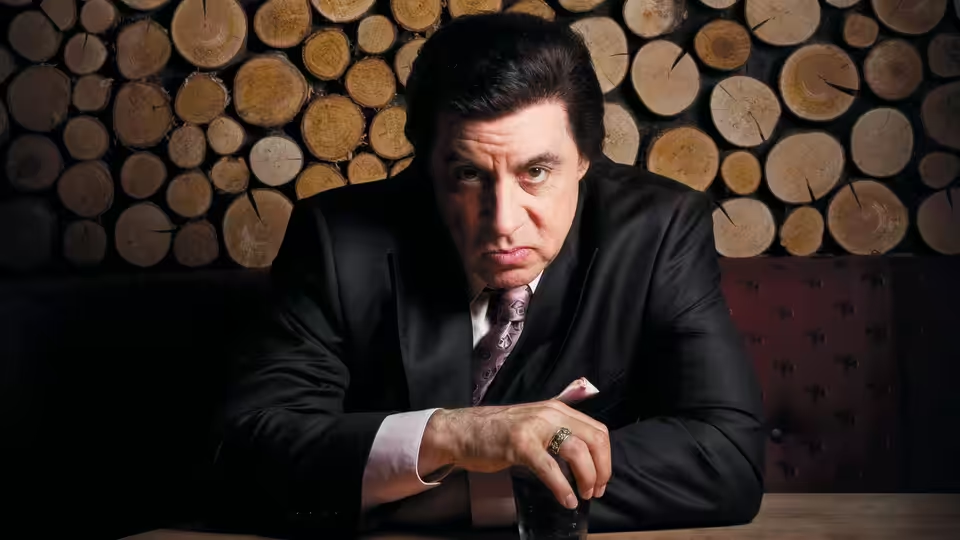
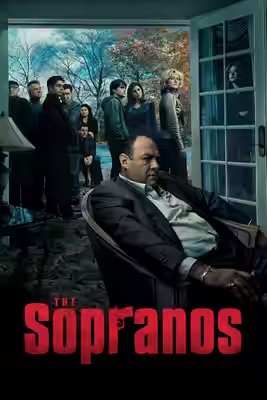
Steven Van Zandt’s mobster hiding in a Norwegian ski town is gentle, odd and good company, and the joke is a good one. It is also the only joke, and three series is a long time to keep telling it.
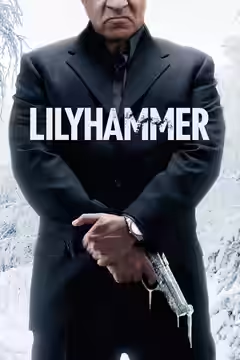
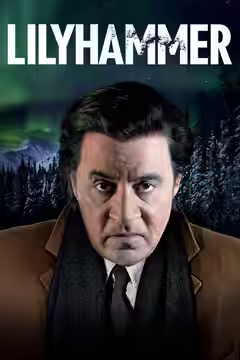
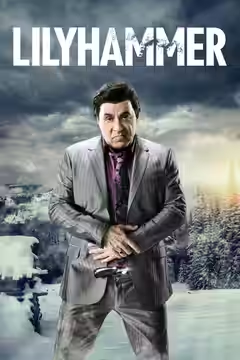
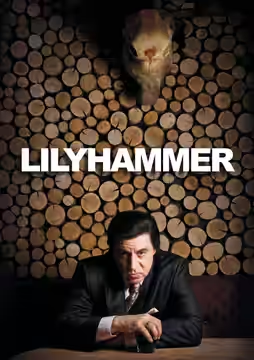
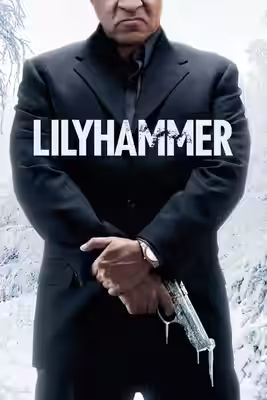
Frank Tagliano, a New York mobster, informs on his boss and asks to be hidden in Lillehammer, because he liked it during the 1994 Winter Olympics. That is the whole premise of Lilyhammer, and Anne Bjørnstad and Eilif Skodvin, who created the series and wrote it with Steven Van Zandt, know it is enough to carry an episode. Their problem, across three series of eight episodes each, is that they never found anything to put beside it. The result is pleasant and easy to watch. It is also thin, and the thinness shows by the fourth episode.
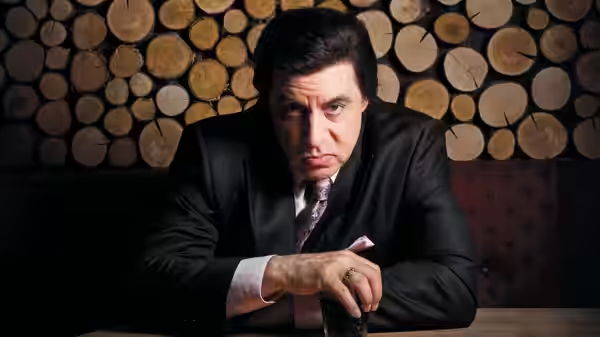
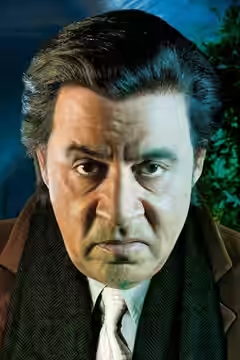
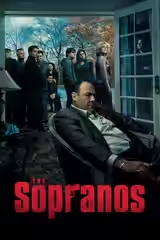
Van Zandt plays Frank, renamed Giovanni Henriksen, with the same slow menace and the same remarkable hair he brought to Silvio Dante in The Sopranos, and he is the reason to watch. He never raises his voice. He looks at a bus timetable, a municipal official or a snowdrift with the patient disappointment of a man who has seen worse and dealt with it. The script gives him a fur hat, a bar to buy and a town full of people who have never been threatened by anyone, and he goes to work on them with a kind of courtesy. It is a performance built on one expression, but it is a good expression.
The town is the better half of the joke. Trond Fausa Aurvåg’s Torgeir, soft and anxious, attaches himself to Frank in the hope of becoming a gangster if somebody will only show him how, and he is the best thing in the series after its star. Steinar Sagen, as his brother Roar, is not far behind. Marian Saastad Ottesen plays Sigrid, the single mother Frank meets on the train in, and she and Mikael Aksnes-Pehrson, as her son Jonas, give the series its one relationship that is not a set-up for a gag. Anne Krigsvoll’s police chief Laila Hovland watches Frank with the face of a woman who knows exactly what he is and cannot find the form to prove it.
The cast speaks two languages, and that is the best running joke. The Norwegians talk to Frank in Norwegian, he answers in English, and everyone understands everyone, which is roughly how a small country raised on American television works. Sometimes the rule slips and a character switches tongue for no reason we could see, and for a minute the whole arrangement looks like a muddle rather than a device. Geir Henning Hopland and Simen Alsvik direct the snow plainly, wide and white, and let the wooden houses and the ski jump above the town do the work. Frans Bak’s music keeps everything light, and nothing in the series ever suggests it should be otherwise.
We laughed, and more than once, at the sight of Van Zandt sitting in a Norwegian-for-immigrants class with his coat on, being asked to repeat a phrase as if he were the slowest pupil there. The joke is simply a large and dangerous man being treated as harmless, and the series knows it. By the fifth episode we had stopped laughing and started counting. Each week brings a small local problem, a bully, a bureaucrat, a planning dispute, and Frank solves it with a threat or a bribe and the town is a little better for it. That is the shape of the series and it does not change.
Underneath the charm is a question the series never faces. It likes Frank’s methods, and it likes them more than it likes the Norwegian way of doing things, which it draws as fussy, slow and faintly ridiculous. Some critics objected to that, and we see why: a comedy in which the welfare state is the straight man and the gangster gets the punchlines has taken a side, whether or not it says so. When Paul Kaye arrives in the second series as an Englishman called Duncan Hammer and the plots reach for proper villains, the lightness that carried the first eight episodes goes, and nothing much replaces it.
Northern Exposure put a New Yorker in a snowbound town and found a new reason to be there every week for years. Lilyhammer finds one reason and keeps it. Watch the first series, which is short, warm and strange in a way British television rarely manages. How far you go on from there depends on how much you like Steven Van Zandt in a hat, and we found we liked him a good deal, for exactly eight episodes.