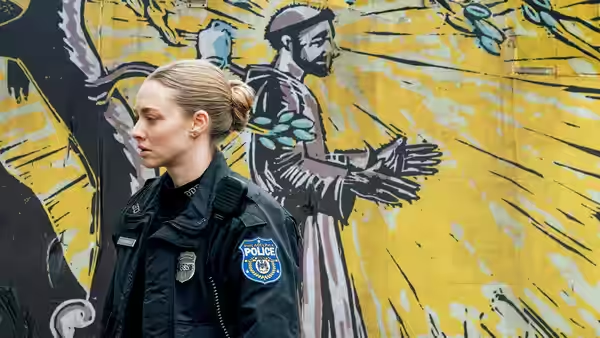
Liz Moore adapts her own novel with Nikki Toscano, and the sisters at its centre, Amanda Seyfried and Ashleigh Cummings, are worth your time. The murder mystery wrapped around them is not, and at eight episodes there is a great deal of wrapping.
Liz Moore’s novel Long Bright River was a crime story that cared less about who was killing women in Kensington than about what the neighbourhood had already done to them. Moore and Nikki Toscano have turned it into an eight-part series with the same priorities, and when it holds to them it is a decent, sorrowful piece of television about two sisters and a few blocks of Philadelphia. When it remembers it is also supposed to be a murder mystery, it slows to a walk and stays there. We would put it a little below the middle: for the interested, with reservations.
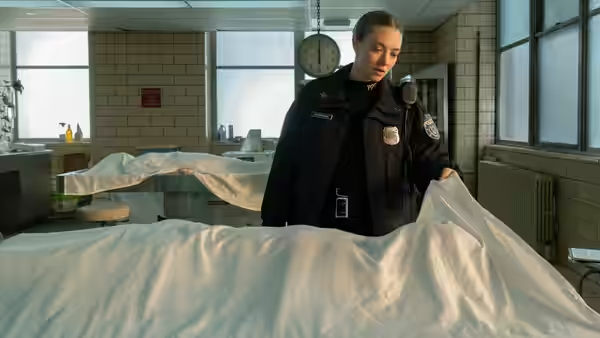
Amanda Seyfried plays Mickey as a woman who has decided to be correct about everything because the alternative is to feel any of it. She stands straight in the uniform, says the fewest words that will do, and lets the camera catch her looking at every woman on the avenue a second too long. The performance is built out of restraint, and it works because Seyfried lets small things through: a swallow when a body is described, the particular way she says her sister’s name. Nicholas Pinnock, as the former partner Truman, gives her the only scenes in which she is allowed to be tired, and the two of them have an easy, long-married rhythm the series could have used far more of.
Ashleigh Cummings is the surprise. Kacey is the sister everyone has written off, and Cummings plays her without the twitchy addict shorthand television usually reaches for: she is quick, funny, affectionate and furious, and in the flashbacks to the sisters’ childhood with Gee (John Doman) you can see exactly who she was before. Those flashbacks are the series’ best idea. They are short, shot warmer than the present, and they do the job the mystery keeps failing at, which is to make us mind. We did mind. There is a stretch in the first episode in which Mickey holds up her phone to woman after woman on the avenue, a photograph of Kacey on the screen, and each one shakes her head, and it got to us far more than we expected a procedural to manage.
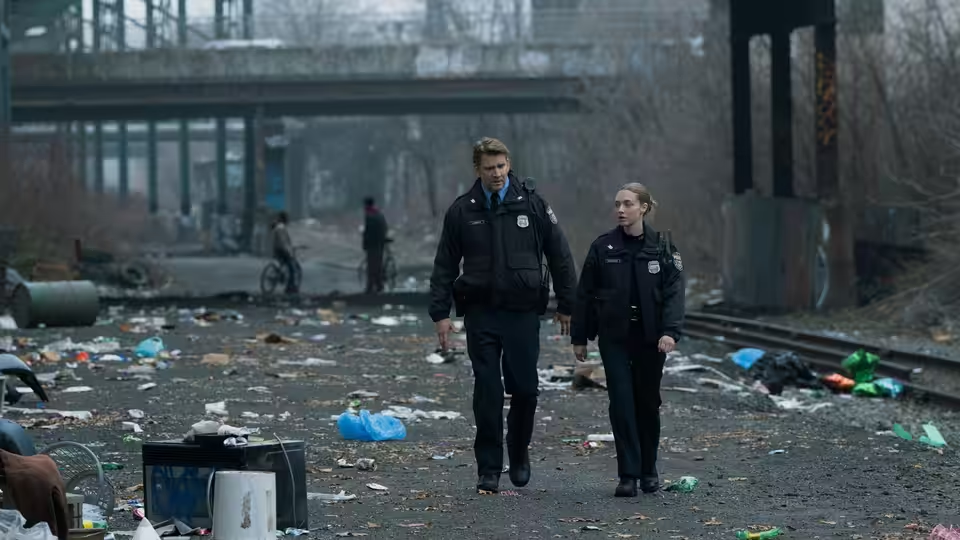
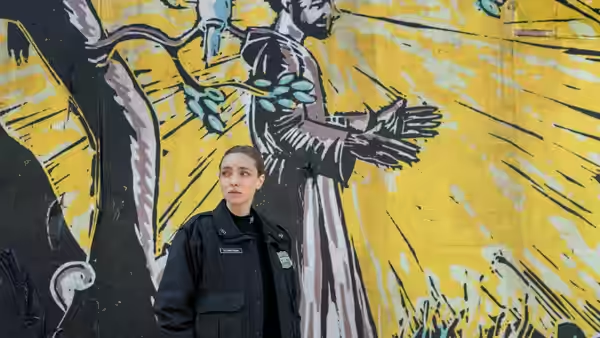
The neighbourhood is done with care. Mylene Santos and Amy Williams’s production design gives us the avenue under the El, rowhouse kitchens that have not been touched since the eighties, lots full of needles and mattresses, and none of it looks dressed. The three cinematographers, Tari Segal, Pepe Avila del Pino and William Rexer, keep the present in a cold flat grey and let the only colour come from shop signs and emergency lights, and the look holds across six directors, which is not nothing. James Poyser and Dimitri Smith score it quietly, piano and held tones, and it rarely gets in the way.
What does not work is the case. The editors, Aaron Marshall, Stephen Philipson and Matt Barber, have been handed a story that would fit comfortably in four hours and asked to make eight, and you can feel the stretching in every episode’s middle twenty minutes: another interview, another lead that goes nowhere, another conversation with Sergeant Ahearn (Patch Darragh) about staying in her lane. Dash Mihok’s Lafferty is written as a lump so that Mickey can be seen not liking him, and the show never finds anything else for him to do. The detectives, Matthew Del Negro’s Simon Cleare among them, arrive with the usual secrets, and the secrets are the usual ones. By the fifth episode we were bored, and then annoyed that a series this serious about real suffering could treat the killing of women as filler between the scenes it wanted to shoot.
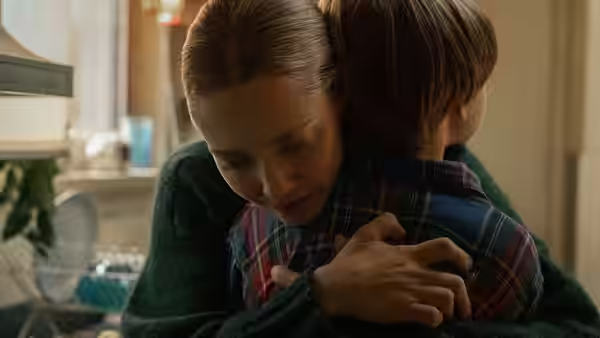
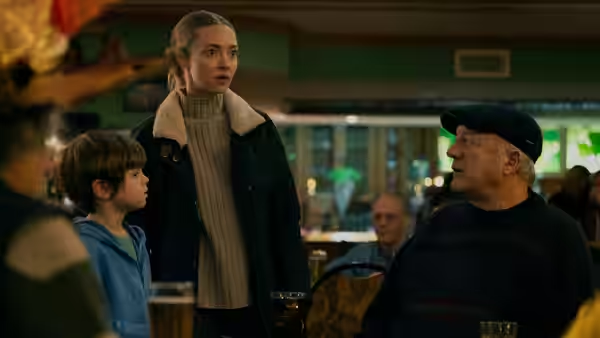
Set beside Mare of Easttown, which is the comparison it invites, this is quieter and kinder and much less sure how to be a thriller. Mare used its case to drag a whole town onto the screen. Here the case mostly drags Mickey away from the sister, the son (Callum Vinson’s Thomas, nicely unforced) and the grandfather, who are the reason to be watching.
It is worth an evening or two for Seyfried and Cummings, and for a Kensington that looks like a place people live rather than a place television visits. Watch the first two episodes and the last two, if your conscience allows it; we are not sure the middle four would notice.