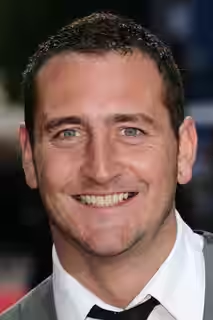
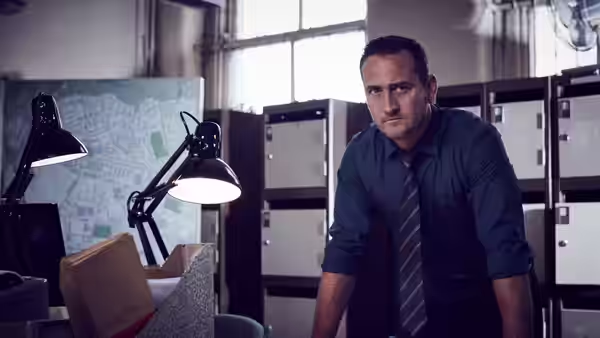
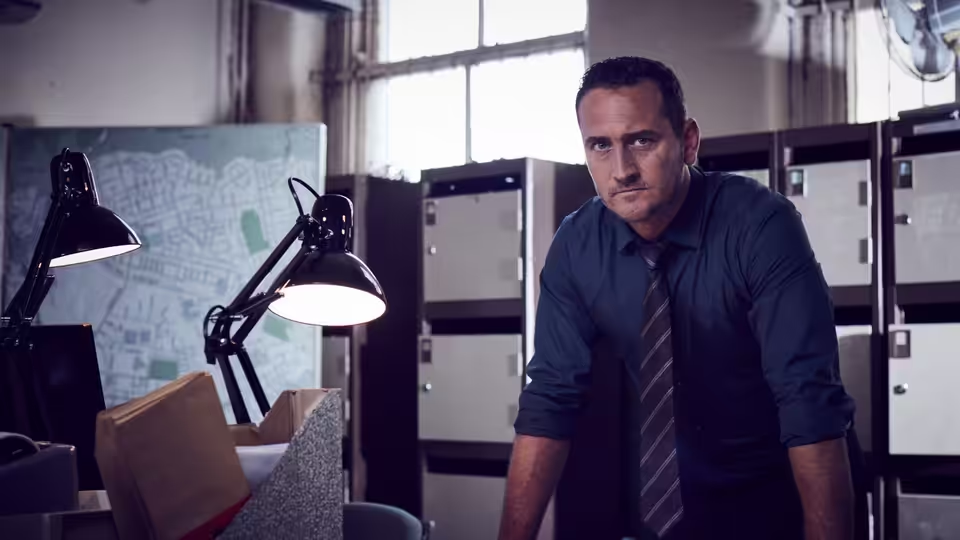
A man in a shirt and tie leans over a desk in a police office
Series review

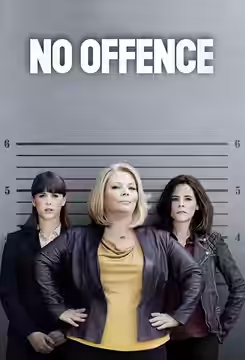
No Offence

2015 · Created by Paul Abbott · Series · 47m

In a sentenceJoanna Scanlan makes bad manners feel like a sound qualification for police work

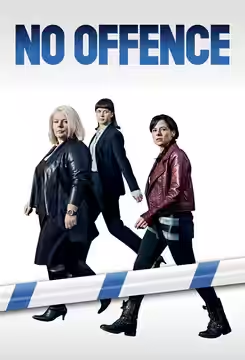
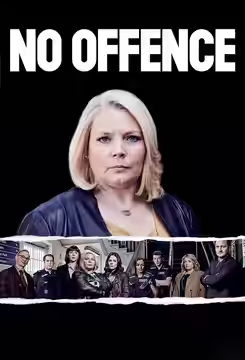
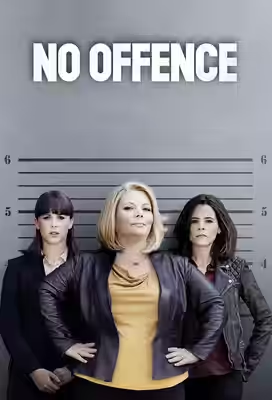
Detective inspector Vivienne Deering (Joanna Scanlan) is at the centre of Paul Abbott’s crime series, where police investigations share space with black comedy. The ensemble includes Dinah Kowalska (Elaine Cassidy), Spike Tanner (Will Mellor), Joy Freers (Alexandra Roach) and Randolph Miller (Paul Ritter). Police procedure supplies the cases, while the programme moves between grim drama and deliberately offensive humour. Across episodes running 47 minutes, the emphasis falls on the people involved in the investigations as well as the mysteries they are trying to resolve.

Plays from YouTube when you press play; nothing loads from them until then.

Fi1m review

No Offence is worth following for Joanna Scanlan and a cast who make its abrasive comedy feel human. The police plotting is less dependable, especially when its political villains become too easy to dismiss.

With No Offence, creator Paul Abbott has made a police series worth following for its actors, despite some ordinary plotting. The attempt to put abrasive humour next to grim crime drama is often rewarding, and occasionally exhausting. We recommend it to anyone who enjoys getting to know a difficult group of people over several episodes. Joanna Scanlan is the strongest reason to stay.

We laughed at Vivienne Deering, and the warmth in Joanna Scanlan’s performance kept the offensive humour from simply wearing us down. There is enough humanity here to make the bluntness bearable. Her authority matters as much as the jokes: she gives the programme somebody worth paying attention to when the comedy threatens to become too insistent. The character survives the weaker jokes because we remain interested in her judgement and her company.

The supporting cast also justifies the attention given to the people around her. Elaine Cassidy plays Dinah Kowalska, Alexandra Roach plays Joy Freers, and both help keep the series from becoming merely an opportunity for its leading actor to hold forth. Will Mellor’s Spike Tanner and Paul Ritter’s Randolph Miller give us further reasons to remain interested when a case runs along familiar lines. For a continuing police drama, wanting another episode with the same people counts for a good deal.

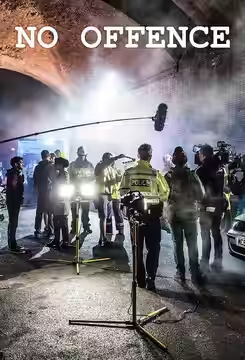
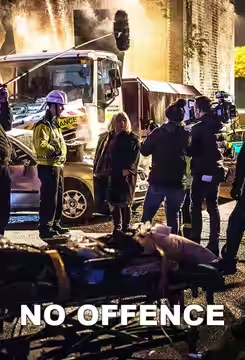
Harry Bradbeer is among the directors managing these awkward changes of mood. The third series opens with an action sequence that shows how gripping the programme can be when it concentrates on the immediate business of police work. Vince Pope supplies the music, which provides useful support without becoming what chiefly holds our attention. The harder task is moving from a joke into something grim without making either seem like an interruption, and those transitions are not consistently convincing.

The writing is least persuasive when the procedural plot becomes predictable. In the third-series opener, political villains are drawn too broadly to give us much to think about beyond our immediate dislike of them. That simplification is frustrating in a programme otherwise capable of finding humanity in abrasive people. More complicated opponents would give the officers something harder to reckon with, and give us more reason to follow the investigation beyond our affection for the cast.

For a police comedy, an important success is its willingness to let unpleasant material remain unpleasant. The humour does not automatically make the crime feel harmless, and that matters if we are to care about the investigations. Yet the appetite for provocation sometimes seems to take priority over whether a particular joke earns its place. A little less effort to be outrageous would leave more space for the actors, who rarely need that much help.

The unevenness is worth accepting, up to a point. There is enough affection for these people to carry us past the more routine plotting, though the strained jokes are harder to overlook. Try it for Joanna Scanlan and the ensemble, with some patience for a programme that occasionally works too hard to be rude.
Critical consensus AI synthesised

3 of 6
Positive
2
Mixed
0
Negative
1
The Guardian
6 May 2015 · Guardian staff reporter
90*

The critic is highly enthusiastic, calling the show bold, warm and hilarious despite its deliberately offensive humor. Joanna Scanlan’s performance as DI Deering is singled out for stealing the show.

Read the full review →
Radio Times
3 May 2015 · Kasia Delgado
70*

Delgado presents the series as an addictive, thrilling blend of comedy and grim drama. She singles out its dark humour and the humanity it shares with Shameless.

Read the full review →
Evening Standard
13 September 2018 · David Sexton
25*

Sexton finds the season opener’s mix of police procedural and black comedy strained, with little humor. He praises its strong opening action sequence but criticizes its standard plotting and simplistic political villains.

Read the full review →

Straight answers AI written, from our review

Is No Offence worth watching?
No Offence is worth watching for Joanna Scanlan and its engaging ensemble, particularly if we enjoy abrasive police comedy; we score it 73 out of 100. The characters make spending several episodes with them rewarding, though the investigations can become predictable and the effort to be offensive sometimes produces strained jokes.
How long is No Offence, and what is it rated?
No Offence has episodes of about 47m. It is a mystery and crime series.
Where can I watch No Offence in Czechia?
No Offence is not on any streaming or rental service in Czechia at the moment. It is available in 7 other countries; change your country at the top of the page to see where. Availability is checked daily.
How violent or frightening is No Offence, and is it suitable for children?
No Offence carries a UK 15 certificate and is not suitable for children under 15, combining grim crime drama with deliberately offensive humour. The unpleasant material retains its force despite the comedy, so we recommend caution for sensitive viewers; the humour does not make this a gentle police programme.
How does No Offence compare to Memories of Murder?
No Offence offers sustained company with an abrasive police ensemble, while Memories of Murder makes clumsy policing and appalling crimes the basis of an even more uncomfortable comedy. We regard Memories of Murder as the stronger work, despite a dragging middle stretch; No Offence suits those who value recurring characters more than consistently persuasive investigations.
What should I watch after No Offence?
After No Offence, try Memories of Murder (2003, Fi1m 91): Clumsy policing and appalling crimes make for an even more uncomfortable laugh. Then Fargo (1996, Fi1m 91): For black comedy that lets its decent policewoman remain decent.

Cast

Awards

BAFTA Television Awards, 2016

Nominated
Best Drama Series

If you liked this, try…

  1. Happy Valley (2014) · not reviewed yetAnother formidable policewoman, with more patience for grief and less for jokes.

  2. Spiral (2005) · not reviewed yetA police ensemble whose difficult loyalties matter as much as its investigations.

  3. Memories of Murder (2003, Fi1m 91)Clumsy policing and appalling crimes make for an even more uncomfortable laugh.

  4. Fargo (1996, Fi1m 91)For black comedy that lets its decent policewoman remain decent.

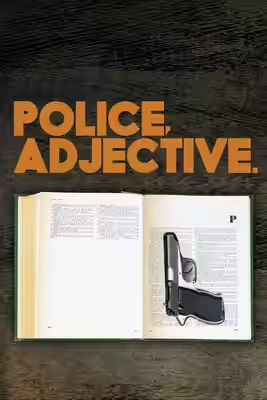
  5. Police, Adjective (2009) · not reviewed yetA quieter, drier examination of police work and the orders behind it.

Free account

Know what to watch tonight

Two lists that know where things are streaming, collections you can share, your own score beside ours, and Discover that remembers what you have seen.

  • Want to see, sorted by what is streaming now
  • Seen, with your score out of ten
  • No adverts, ever