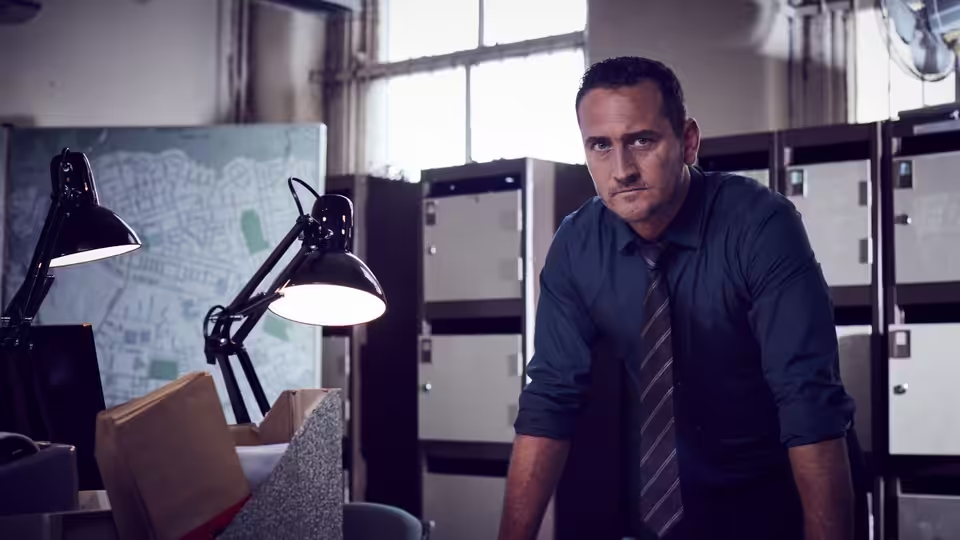
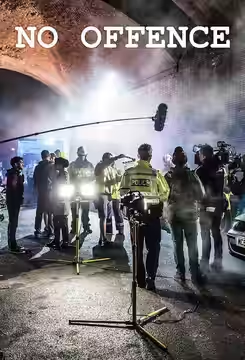
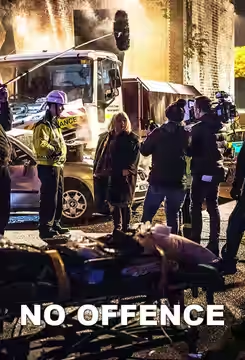
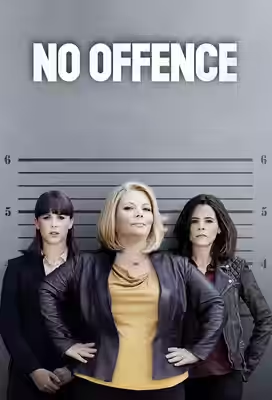
No Offence is worth following for Joanna Scanlan and a cast who make its abrasive comedy feel human. The police plotting is less dependable, especially when its political villains become too easy to dismiss.
With No Offence, creator Paul Abbott has made a police series worth following for its actors, despite some ordinary plotting. The attempt to put abrasive humour next to grim crime drama is often rewarding, and occasionally exhausting. We recommend it to anyone who enjoys getting to know a difficult group of people over several episodes. Joanna Scanlan is the strongest reason to stay.
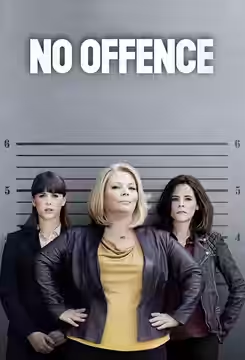
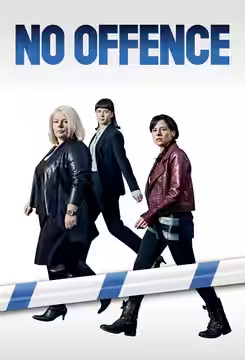
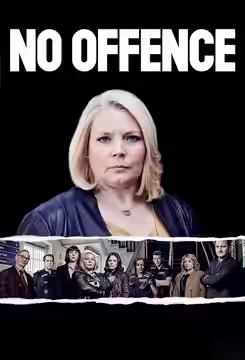
We laughed at Vivienne Deering, and the warmth in Joanna Scanlan’s performance kept the offensive humour from simply wearing us down. There is enough humanity here to make the bluntness bearable. Her authority matters as much as the jokes: she gives the programme somebody worth paying attention to when the comedy threatens to become too insistent. The character survives the weaker jokes because we remain interested in her judgement and her company.
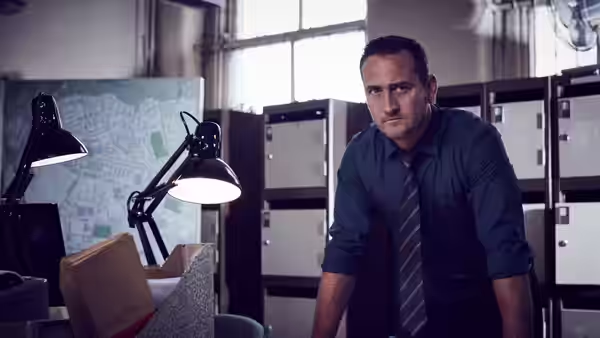
The supporting cast also justifies the attention given to the people around her. Elaine Cassidy plays Dinah Kowalska, Alexandra Roach plays Joy Freers, and both help keep the series from becoming merely an opportunity for its leading actor to hold forth. Will Mellor’s Spike Tanner and Paul Ritter’s Randolph Miller give us further reasons to remain interested when a case runs along familiar lines. For a continuing police drama, wanting another episode with the same people counts for a good deal.
Harry Bradbeer is among the directors managing these awkward changes of mood. The third series opens with an action sequence that shows how gripping the programme can be when it concentrates on the immediate business of police work. Vince Pope supplies the music, which provides useful support without becoming what chiefly holds our attention. The harder task is moving from a joke into something grim without making either seem like an interruption, and those transitions are not consistently convincing.
The writing is least persuasive when the procedural plot becomes predictable. In the third-series opener, political villains are drawn too broadly to give us much to think about beyond our immediate dislike of them. That simplification is frustrating in a programme otherwise capable of finding humanity in abrasive people. More complicated opponents would give the officers something harder to reckon with, and give us more reason to follow the investigation beyond our affection for the cast.
For a police comedy, an important success is its willingness to let unpleasant material remain unpleasant. The humour does not automatically make the crime feel harmless, and that matters if we are to care about the investigations. Yet the appetite for provocation sometimes seems to take priority over whether a particular joke earns its place. A little less effort to be outrageous would leave more space for the actors, who rarely need that much help.
The unevenness is worth accepting, up to a point. There is enough affection for these people to carry us past the more routine plotting, though the strained jokes are harder to overlook. Try it for Joanna Scanlan and the ensemble, with some patience for a programme that occasionally works too hard to be rude.