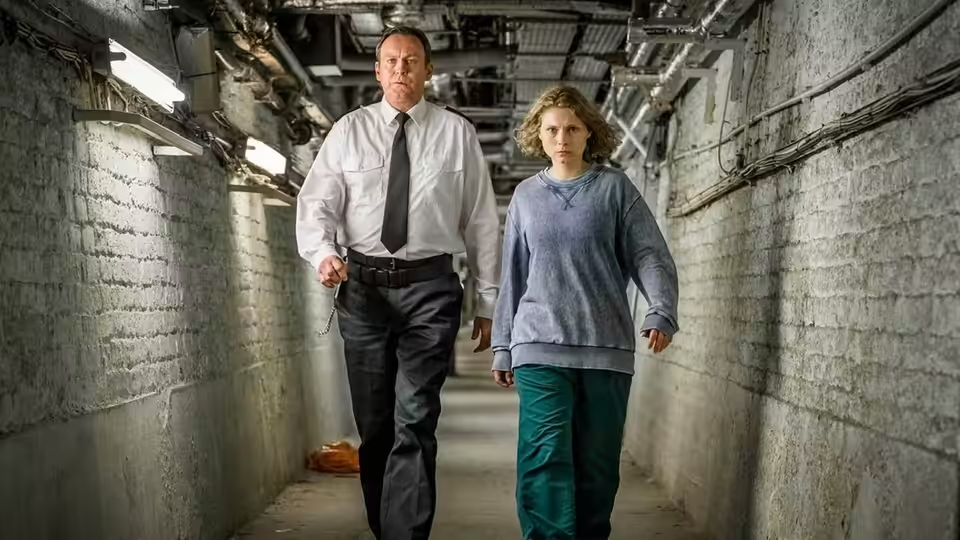
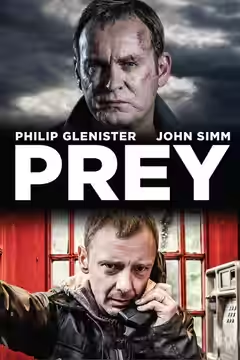
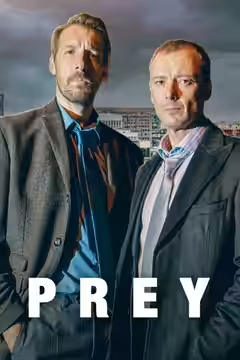
Prey is a brisk, well-acted chase thriller whose plotting cannot always keep up with its pursuit. John Simm and Rosie Cavaliero give us people worth following, though the writing makes less of their lives than it should.
Chris Lunt’s Prey is good, brisk crime television, with performances that make its familiar pursuit worth following. It wants us anxious about what happens next, and usually gets its wish before we have finished asking what just happened. Across two series of three episodes each, that approach gives the programme useful discipline, but the plotting sometimes struggles to explain itself at speed. We recommend it to anyone who enjoys a chase and can tolerate some untidy writing.
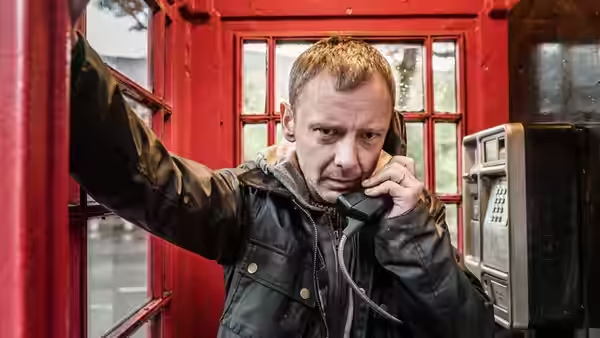
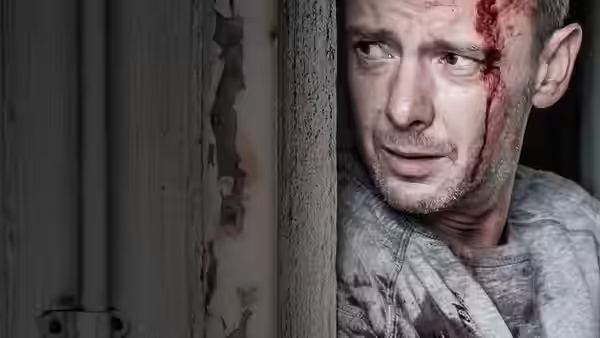
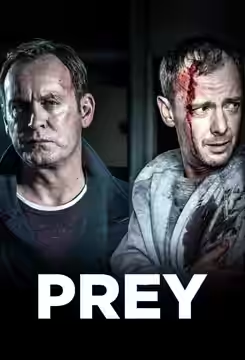
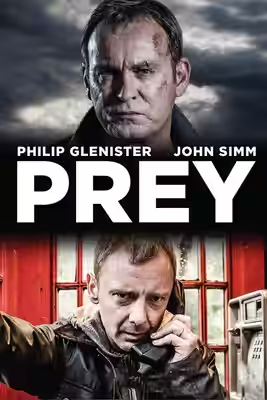
We were gripped by Marcus Farrow’s chase, even when we had lost track of the plot. John Simm makes the pressure on him feel immediate, so a familiar pursuit gives us someone to worry about. Philip Glenister is similarly persuasive as David Murdoch, and both actors carry material that can be thin. Their conviction helps us accept the next complication before we have examined it properly. That is an asset to the series, although it also lets some hurried writing escape scrutiny.
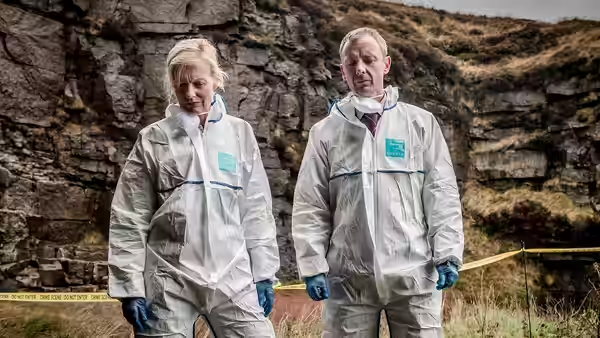
Rosie Cavaliero gives the series its most interesting presence as DS Susan Reinhart. Her performance suggests a person whose life extends beyond the demands of a crime story, which makes the limited treatment of that life frustrating. The personal material ought to deepen our interest in how she does her job, but it receives too little attention to do enough with the opportunity. We want to spend longer with her, and keep finding the programme impatient to move on.
The momentum reflects well on director Lewis Arnold and editors Johnny Rayner and Paul Knight, though speed sometimes makes the plotting harder to follow. A development needs time to register, and the programme can be pressing ahead before it has done so. Sarah Warne supplies the music and Duncan Howell the production design, but the performances remain the chief attraction. The series needs more of those quieter stretches where a character can hold our attention without another complication arriving.
The chase thriller is allowed to have modest ambitions, and Prey does not need to offer a large statement about policing to justify its existence. Keeping us interested in who catches whom is a perfectly respectable aim. It still requires clear plotting, and the combination of haste and limited character development costs this series something once the immediate excitement has passed. We can enjoy its urgency while wishing Chris Lunt’s creation had trusted its characters to hold our attention without quite so much pushing.
The compact structure helps contain those weaknesses: each run has three episodes, so trying it does not mean agreeing to a long acquaintance with the entire ensemble. That suits material whose urgency is more dependable than its depth. There is enough energy and enough credible acting to make the time worthwhile for a crime-drama audience. Choose it when a tense chase sounds like enough, and some untidy explanations will not spoil the evening.