Woman watches as man points handgun out of a living room window
Series review

Run Away

2026 · Created by Harlan Coben · Series · KMRB 19

In a sentenceJames Nesbitt has enough family trouble without the dialogue making things worse

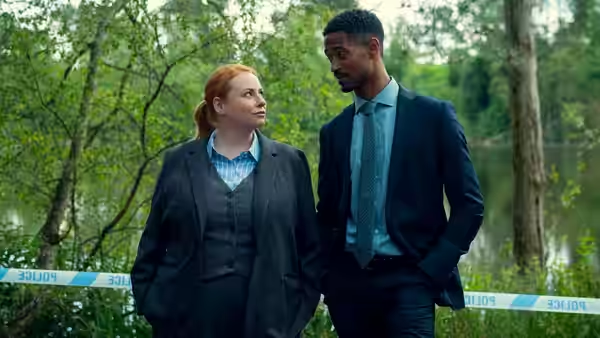
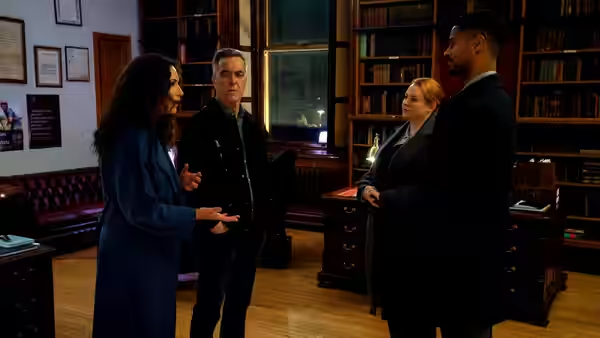
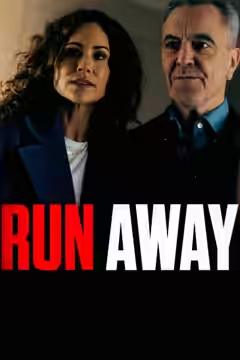
Simon Greene (James Nesbitt) is a father in distress, caught in a mystery involving family secrets and buried trauma. As revelations accumulate and violence enters the story, the question becomes how far someone will go to bring another person back. Minnie Driver plays Ingrid Greene, Ellie de Lange plays Paige Greene, and Ruth Jones appears as Elena Ravenscroft, alongside Alfred Enoch as Isaac Fagbenle. Based on a novel by Harlan Coben, the eight-episode series follows a family whose present troubles are bound up with what has been kept hidden.

Plays from YouTube when you press play; nothing loads from them until then.

Fi1m review

James Nesbitt keeps Run Away involving even when its twists become difficult to believe. Family secrets give the mystery some weight, but melodramatic handling and clichéd dialogue restrict its appeal to those already fond of this sort of thriller.

Run Away is a decent, uneven family mystery whose cast makes its less believable turns easier to tolerate. Adapted from Harlan Coben’s novel, it has eight episodes in which to turn a father’s distress into a succession of questions about the people closest to him. The appeal is straightforward: we want an answer, then another complication makes us want the next one. It keeps that process moving briskly enough, although we occasionally wish it would spend longer with an emotion before introducing another surprise.

James Nesbitt plays Simon Greene, and his distress supplies a reason to care that the plotting cannot provide on its own. He makes the parental fear convincing without requiring us to believe every development surrounding it. Ruth Jones, as Elena Ravenscroft, is another reason to stay: her performance holds our attention even when we have begun to question the story. The ensemble is less consistent elsewhere, and the weaker passages leave the stronger actors doing too much of the work.

The writing, credited to Tom Farrelly, Amanda Duke, Daniel Brocklehurst and Charlotte Coben, works best when family secrets have consequences beyond supplying another surprise. The buried trauma gives the mystery some weight, and helps explain why the series remains involving despite its improbabilities. We are interested in what people have kept from one another and what it costs them. The trouble comes when the next revelation matters more than making the behaviour around it plausible.

Directors Isher Sahota and Nimer Rashed understand how much this sort of programme depends on forward movement. The editing contributes to a melodramatic tone that the performances do not always withstand, even while the plot hurries us towards another question. There is too little relief from the insistence that each development matters enormously. Some quieter handling would make the family disclosures easier to take seriously.

We were irritated by the hospital dialogue: its stock phrases make distressed people sound as though they are reciting other thrillers. Luke Richards supplies the music, but no score could make those exchanges convincing. The writers need to give the actors fewer words here. When Nesbitt has already made the distress credible, spelling it out again only gives us time to notice how it has been written.

The violence is harder to dismiss. We winced at its gruesomeness, which interrupts the comfortable pleasure of following a twisty mystery with something nastier. That discomfort gives the danger force, though it also makes the more preposterous turns harder to shrug off. Once the series has asked us to take suffering seriously, we become less patient with its melodrama.

The family-secret thriller depends on our willingness to suspect almost everyone, and there is pleasure in surrendering to that habit here. Anyone who needs each development to survive close questioning will have a less agreeable time. Eight episodes is a fair commitment to a mystery this uneven. Try it for Nesbitt and Jones if a few unlikely turns will not spoil the evening.


Critical consensus AI synthesised

70
Positive
2
Mixed
2
Negative
0
Variety
26 December 2025 · Aramide Tinubu
80*

The critic finds the series an entertaining Harlan Coben thriller full of shocking twists, gruesome violence and a stellar cast that keeps it engaging despite some preposterous elements. They single out the compelling exploration of family secrets and buried traumas for praise.

Read the full review →
The Guardian
1 January 2026
70*

The critic finds this Harlan Coben adaptation a solid, comforting return to form with strong performances, especially from James Nesbitt as a tormented father and supporting turns by Tracy-Ann Oberman and Ruth Jones. The fast-moving plot with frequent twists is praised as deeply pleasing, though some elements like hospital dialogue are noted as clichéd.

Read the full review →
Radio Times
6.9/10 · David Brown
69

A slick Harlan Coben adaptation follows the usual New Year’s Day formula of a family plunged into crisis after a loved one disappears. Parents Simon and Ingrid become entangled in nightmares when reuniting with their missing daughter takes a violent turn, revealing respectable lives existing alongside society’s underbelly, though supporting characters feel more like plot cogs than fully fleshed-out figures.

Read the full review →
Collider
1 January 2026 · Jeff Ewing
55*

The series is an engaging, twisty Harlan Coben thriller with strong moments from the ensemble cast, but it is undercut by overly melodramatic style, editing, and uneven performances that prevent it from fully landing.

Read the full review →

Straight answers AI written, from our review

Is Run Away worth watching?
Run Away is worth watching for anyone already fond of family-secret thrillers who can forgive a few implausible twists, and we scored it 68. James Nesbitt and Ruth Jones keep the eight episodes involving, but clichéd dialogue and melodramatic handling hold it back. Viewers who need every development to make sense will be less patient.
How long is Run Away, and what is it rated?
Run Away is rated 19 by the KMRB in South Korea. It is a drama and mystery series.
Where can I watch Run Away in South Korea?
Run Away is streaming on Netflix in South Korea. Availability is checked daily; the links above go straight to each service.
How violent or frightening is Run Away, and is it suitable for children?
Run Away carries a UK 15 certificate, and its violence is gruesome enough that we winced, so it is not suitable for children. The nastier scenes cut sharply into what is otherwise a comfortable twisty mystery, and the squeamish may find them harder to shrug off than the plot's improbabilities. Older teenagers used to adult thrillers should manage.
How does Run Away compare to Prisoners?
Run Away is the gentler and less consistent of the two, while Prisoners is the harsher and better-made examination of what desperation can drive a parent to do. Denis Villeneuve's film keeps the fear painfully credible even when its mystery grows elaborate; the series leans on melodrama and stock dialogue. Choose the film for intensity, the series for a longer, more forgiving evening with James Nesbitt.
Is Run Away based on a true story or a book?
Run Away is based on a novel by Harlan Coben, not on a true story. The series expands his book into eight episodes of family secrets and buried trauma, and knowing the source is not necessary to follow it. Our review does not assess how closely the adaptation tracks the novel.
What should I watch after Run Away?
After Run Away, try Prisoners (2013, Fi1m 81): For a harsher examination of what desperation can persuade a parent to do. Then The Vanishing (1988, Fi1m 88): A disappearance mystery that takes its time and makes curiosity uncomfortable.

Cast

If you liked this, try…

  1. Tell No One (2006) · not reviewed yetAnother Coben adaptation, with a tighter grip on grief and pursuit.

  2. The Missing (2014) · not reviewed yetA missing-child investigation that gives parental anguish room to become difficult.

  3. Prisoners (2013, Fi1m 81)For a harsher examination of what desperation can persuade a parent to do.

  4. The Vanishing (1988, Fi1m 88)A disappearance mystery that takes its time and makes curiosity uncomfortable.

  5. Mother (2009) · not reviewed yetAnother parent’s search for answers, with sharper doubts about where devotion leads.

Free account

Know what to watch tonight

Two lists that know where things are streaming, collections you can share, your own score beside ours, and Discover that remembers what you have seen.

  • Want to see, sorted by what is streaming now
  • Seen, with your score out of ten
  • No adverts, ever